'Delicate balance' needed to tackle vulture funds in housing market
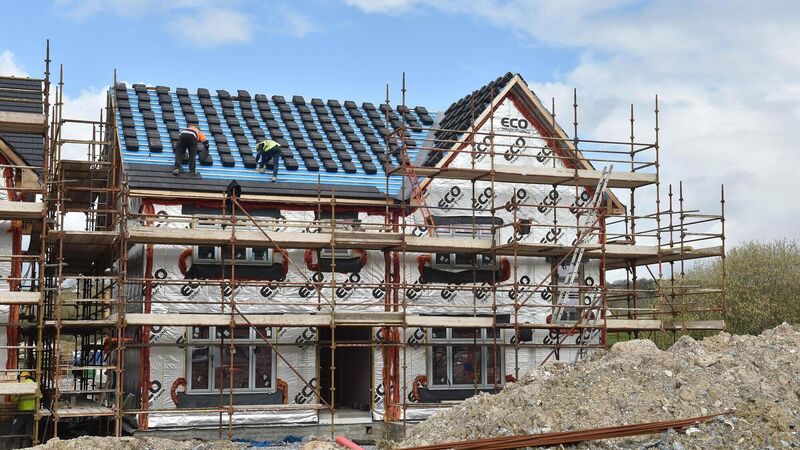
Changes are required in planning and tax laws, according to senior government sources. Picture: Dan Linehan
Plans to stop vulture funds gazumping first-time buyers will not be ready to go to Cabinet on Tuesday as complex issues have arisen.
Senior Government sources have said “a delicate balance” needs to be walked in whatever solution is arrived at, both in terms of potential tax changes and alterations to the planning laws.
Moves are underway after first-time buyers were squeezed out of purchases in a number of housing estates, including one in Kildare and one in Dublin, as the properties had been snapped up by international investors.
While there is a political urgency to ensure large estates are not “swooped upon” by investment funds, the understands that a quick fix is unlikely.
“There is a huge element here of unintended consequences here. There is the constitutional right to property governing this as well as how do you differentiate in law between funds and couples seeking to buy their homes,” a source said.
The former Secretary-General of the Department of Finance John Moran said the State should have moved in 2014 and 2015 to limit the ability of foreign investment funds to outmuscle individual buyers.
“You have to have control on how much rent can increase. You need to look at whether we need this investment. We can change things now that the taxation on these are imposed in Ireland so these investors are treated the same,” he said.
Mr Moran said we need to find a way to finance the building of another 500,000 homes by 2040.
Mr Moran, who was former minister Michael Noonan’s chief official, said the introduction of such investment funds were important to “put a floor on the market” a decade ago.
However, he said as soon as we as a country realised we did not have a glut of houses, then we should have been able to turn on a tap to deliver the supply of houses that was needed.
“The problem we have at the moment is that we have lots of people wanting to rent, lots of people wanting to buy and we are not building any social homes, or at least not enough,” Mr Moran said.
“It is not fixed so the people with the biggest pockets are beating other people to the homes,” he added.
He also said the government should buy distressed mortgages from vulture forms in a bid to reduce the mortgage rates on people.
Labour Finance spokesperson Ged Nash called on the government to introduce an immediate increase to the Stamp Duty rate on sales of residential property to investor funds which would work to quickly block the insidious practices being used to snap up new and second-hand homes.
The current 1% stamp duty rate applies to all residential property sales up to €1m and then 2% on the balance above that, whether the purchaser is an owner occupier, REIT or investment fund.
Whatever the Minister for Finance brings forward it must hit these investment funds where it hurts and quickly. We can’t be waiting months for this to happen, Mr Nash said.
Mr Nash wants a targeted increase to the stamp duty rate that applies to the sale of residential property to investment funds, whether it is a new estate or an existing second hand home, would act as a deterrent, once the rate increase was big enough.
In the UK a stamp duty land tax rate of 12% applies to property costing over £1.5 million pounds and an extra 3% applies if you already own one residential property taking the rate to 15%.
CONNECT WITH US TODAY



Be the first to know the latest news and updates