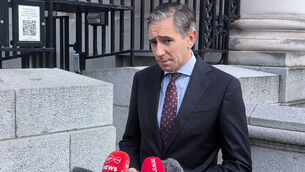
Varadkar defends quarantine approach and insists Covid roadmap ends mixed messages
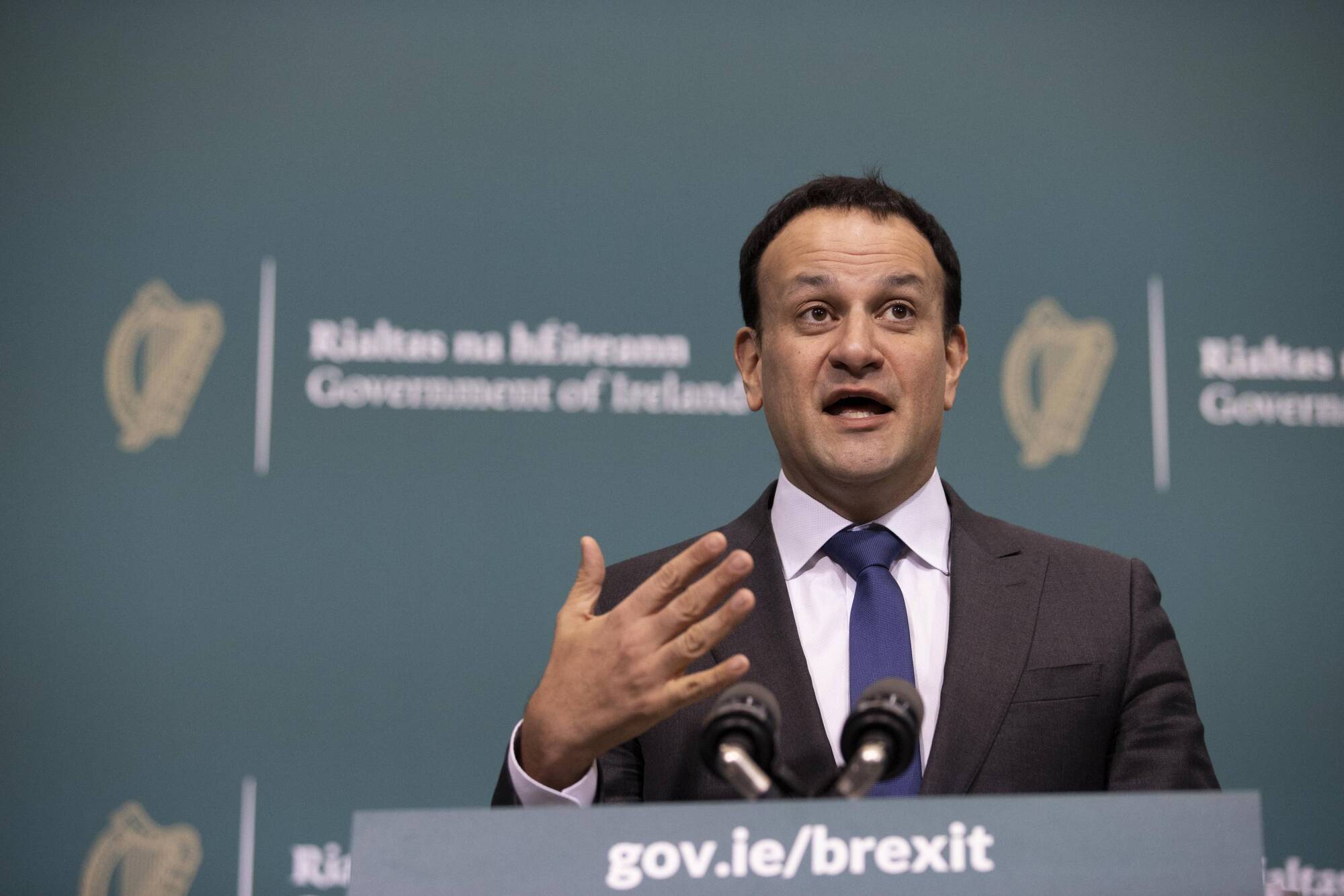
Varadkar defends quarantine approach and insists Covid roadmap ends mixed messages

Tánaiste Leo Varadkar today said the government had laid out "a very clear plan as to what is and is not going to happen for the next 10 weeks".

The Tánaiste says the new Covid roadmap will "draw a line" under mixed messages from the government and has defended the decision not to introduce a blanket approach to quarantining incoming travellers.

Last night, the Taoiseach announced the phased reopening of schools from March 1 and that government will consider easing the 5km travel limit and restrictions on people meeting outdoors in its April 5 review.

Despite criticism around the vagueness of the plan, Tánaiste Leo Varadkar today said the government had laid out "a very clear plan as to what is and is not going to happen for the next 10 weeks".

"There are factors outside of our control, like supplies and new vaccines like Johnson and Johnson being approved, so it's based on certain assumptions, but we're confident that we're going to go from about 100,000 vaccines a week to 250,000 a week in April, up to 300,000.  That's a huge scale-up," he said.

"We're ready for that, with 7,500 people trained to give those vaccines, vaccine centres now popping up all over the country, the community pharmacists being vaccinated shortly so that they can be ready to give the vaccines in April as well."

The Government’s intention is that 82% of adults will have received their first Covid-19 vaccine by the end of June despite the fact AstraZeneca will miss its delivery targets to the EU by 50% in quarter 2.

"The plans are contingent on (Johnson and Johnson) coming on stream from April, but they're not contingent on Curavac being approved so we've given ourselves a bit of headroom in that regard. We have factored in the AstraZeneca issue as we were aware that it was going to arise," Mr Varadkar added.

"If we vaccinate everyone over 60 and if we vaccinate everyone under 60 with a chronic condition, that's actually 98% of the job in terms of deaths and hospitalisations so we may really see the vaccines making a real difference in terms of hospitalisations and people getting sick and deaths.

"We'll reconsider the situation again in early April, and the next decision date if you'd like, for any easing of restrictions, will be the fifth of April, and then we'll work on three or four-week intervals after that."

"We do have mandatory quarantine at home, what will be brought in with this new legislation is mandatory quarantine and hotels for people coming from high-risk countries or people who somehow managed to get here without having a negative test,' said Mr Varadkar

Mr Varadkar added that the government picked the date of June 30 for review of business supports to give people security no matter what happens, however, some may open before that date.

Mr Varadkar also defended the specified list of countries for hotel quarantine rather than a blanket ban.

"We do have mandatory quarantine at home, what will be brought in with this new legislation is mandatory quarantine and hotels for people coming from high-risk countries or people who somehow managed to get here without having a negative test.

"The number of countries we add to that list can increase, but I think a differentiated approach does make sense,

"The Isle of Man, for example, no Covid there... There are places in the world where the virus either is at a very low level or there is no community transmission.

"We think a differentiated approach actually makes sense.

"Say in theory somebody wants to fly here from the Isle of Man or from Iceland, for example, why would you put them in 14 days hotel quarantine when there is no Covid in those places?

"We can have a debate and we should have a discussion about what countries should be on that, but I think that differentiated approach actually makes sense.

"We may find over the course of the summer and maybe next year that there are places where Covid is very low are successfully suppressed that we could then have a travel bubble with those places."

x

More in this section

Politics

Newsletter

From the corridors of power to your inbox ... sign up for your essential weekly political briefing.

Cookie Policy Privacy Policy Brand Safety FAQ Help Contact Us Terms and Conditions

© Examiner Echo Group Limited