Cork cancer transport charity sees 70% demand increase amid fuel cost surge
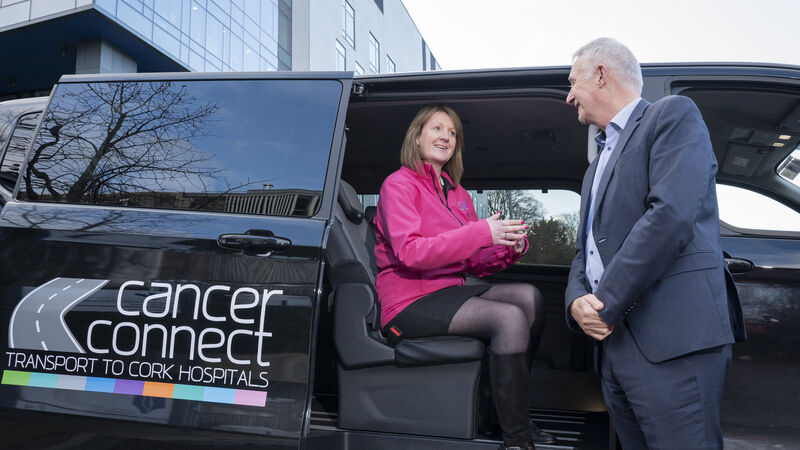
Helen O’ Driscoll, CEO of Cancer Connect with Harry Canning, CEO of Bon Secours Hospital Cork. Since its inception in 2011, the charity has grown to include nine vehicles and more than 300 volunteers. Picture: Gerard McCarthy
A charity that transports cancer patients who travel for hours for chemotherapy is facing a 70% rise in demand for its services as the fuel crisis intensifies nationally.
Helen O’Driscoll, the manager of West Cork-based Cancer Connect, said she was startled to discover they had completed 1,186 journeys in the last five weeks in comparison to 670 journeys during the same period last year.
Since its inception in 2011, the charity has grown to include nine vehicles and more than 300 volunteers.
Read More
It comes amid a fuel shortage and spike in prices that is sparking protests nationwide and plunging the country into chaos. Ms O’Driscoll estimates that the charity’s costs will rise by €10,000 per year if the situation remains the same. Volunteer drivers availing of their own transport are offered a contribution towards their fuel. However, Ms O’Driscoll fears this may have to increase in the months ahead due to the current situation.
While the charity is based in Bantry, West Cork, its services also extend to East and North Cork.
"When we’re taking into account the 1,186 journeys, we have to think about their context," Ms O'Driscoll said. "Each journey is somebody being collected and brought into hospital to receive chemo or radiotherapy. These are not just numbers. These are people going for cancer treatments.
"We don’t usually measure things in numbers because our focus is on who we have rather than how many. However, it was quite shocking to see that increase from last year. The last couple of years, I would have thought that we were steadily rising, but these figures are very stark.”
Fortunately, people are still signing up to volunteer with the charity.
"People are inherently good, and they will sign up to volunteer with Cancer Connect. However, the fuel situation may impact how many journeys they do. As fuel costs rise, cancer figures are also rising, which is why we are looking for more drivers at the moment anyway.
"Half of the journeys happen in our vehicles, but the other half happen in the driver’s own vehicle. When a driver is going to bring someone to Cork for a journey in their own vehicle, we offer them a contribution, so ideally it doesn’t cost them anything. We know they shouldn’t have to be out of pocket when driving for us. Our issue now is that our contributions are going to have to increase in line with fuel costs. We can see day to day that people who weren’t taking contributions before are really in need of them now."
She stressed that no cancer patient should ever have to miss an appointment.
“We have spoken to the hospitals, who told us that there are people who couldn’t get to the hospital because they had nobody to bring them. As a result, they'll miss their treatment, and there's a huge health risk with that. The issue is that this, in turn, upsets the cycle of radiotherapy or chemotherapy, and people inevitably miss scans or treatment. Not having transport was making people's cancer journey more chaotic for them, and they weren't getting their treatment in time or even finishing their course of treatment. Healthwise, this is going to be detrimental.”
Helen is urging people who need the charity’s services to continue reaching out.
“The important thing is that people keep coming to us for help. Our aim is to take just one piece of the cancer journey off their shoulders.”
CONNECT WITH US TODAY



Be the first to know the latest news and updates