Drunk driver crashed three times in one week but may avoid charges due to testing time limit
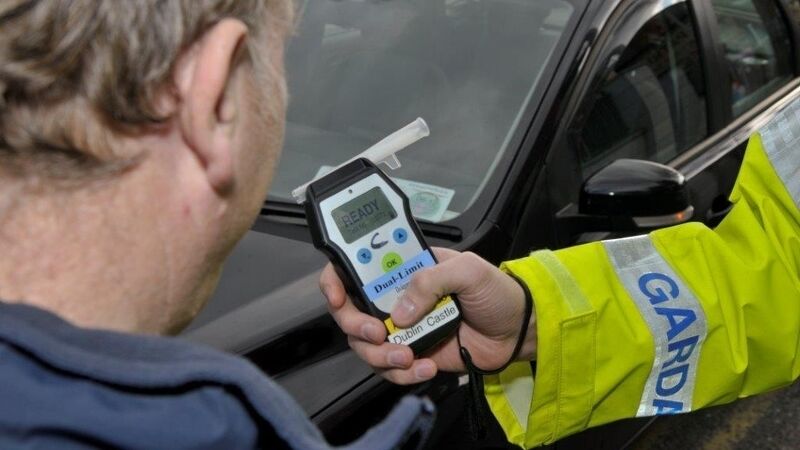
One man Mr Fogarty tended to recently in CUH crashed his vehicle three times in one week while intoxicated but has so far evaded prosecution, he said. FIle picture
A man who crashed his car drunk driving three times in one week in Cork may evade prosecution because no blood sample was taken within the legal three-hour window.
Dr Eoin Fogarty, Consultant in Emergency and Retrieval Medicine in Cork University Hospital (CUH), said that drink driving laws are so lax that he is now seeing repeat offenders come for treatment after drunken crashes in CUH’s emergency department.
One man Mr Fogarty tended to recently in CUH crashed his vehicle three times in one week while intoxicated but has so far evaded prosecution, he said.
"The crash was just outside Bantry [approximately 2.5 hours round-trip from CUH]. So the ambulance had to find him, the fire service had to cut him out and transport him."
Read More
Three hours does not give gardaí enough time to direct a medic to take a sample in cases like this, Mr Fogarty said. And emergency doctors should be permitted to automatically take blood samples to test for intoxication from all road traffic patients, he said.
“When this [road crashes] happens, it’s invariably 3am or 4am, the gardaí are trying to preserve a scene, it could be a crime scene, there could be other victims they’re looking after.
"A GP usually comes in from the community with the gardaí to take a sample, which is ridiculous. I or one of my nurses should be able to take a sample instead."
No blood samples were taken from the man who crashed in West Cork within three hours after the crash, Mr Fogarty said.
And despite three drink-driving crashes in one week, his car could not be seized.
“On the third occasion, he wrote off his car, so he didn’t have a vehicle, but otherwise, he would have kept drinking and driving," Mr Fogarty said.
“He was in front of me, intoxicated. He said he had a problem with alcohol.”
Had the man been arrested in Australia, the vehicle would have been seized. And if he was convicted, the State would take permanent possession of the vehicle, Mr Fogarty said.
“But here, gardaí just have to give him back the keys."
Cork City’s delegates at the recent Association of Garda Sergeants and Inspectors (AGSI) annual conference called for increasing the timeframe permitted for gardaí to take a sample from a suspected intoxicated driver from three hours to five hours after the time of driving.
Although not a silver bullet, it would help gardaí secure better evidence which should result in more successful prosecutions, Sgt Robbie Stone, a delegate who proposed the motion, said.
“Particularly in rural areas where Gardaí respond to a traffic collision very late at night, they may have a significant journey to get down to that collision, the driver may then have to be arrested and conveyed back to a garda station.
“In the cities, the doctor services are under ever more demand. And oftentimes, you will have a situation where a drunken driver is in a garda station. You're looking for the doctor to come to the station, but the doctor may already be dealing with a medical emergency. There may be a mental health case that's in another garda station.
“All the while the clock is ticking [...] and if the three hours is up, it's up, and we have to release this person."
People do occasionally get caught for intoxicated driving but evade charges because they are not tested in that three-hour timeframe, he said.
Ireland's intoxicated driving laws need major improvement, Mr Stone believes.
“The intoxicated driving legislation is the most contested in the country. I think there are close to 40 proofs required from Gardaí to successfully prosecute a case," he said.
“The legislation is very technical. The case law that has developed around it creates massive burdens on garda members in terms of the admissibility of evidence."
And while road deaths are falling in other countries, they are tragically increasing here, Dr Eoin Fogarty said.
According to garda figures, 42 people were killed on the roads this year as of April 2.
"I'm talking to the children, the siblings, the parents of these poor, unfortunate people who are drinking and driving and dying and getting seriously injured. It is terrible. And these people now have a life ahead of them without their loved one.”
About 30% of attendances at night in emergency departments during weekends are alcohol-related, Mr Fogarty said. And alcohol feeds into other crimes like domestic violence, he said.
Tending to road traffic accident victims is “a significant amount of the burden of our workload”.
Alcohol Action Ireland (AAI), the national independent advocate to reduce alcohol harm, welcomed this week's vote by the AGSI in favour of extending the time limit for taking blood samples from drivers after road traffic collisions.
AAI chief executive Dr Sheila Gilheany said: “This vote by AGSI is an acknowledgement that the current system needs updating, which includes not only an extension to the time limit that a blood sample can be taken but also changes to the procedures around how that sample is collected.
“Current Government strategy on road safety set an ambitious target in 2021 of a 50% reduction in road deaths and serious injuries by 2030. However, recent years have seen a significant toll on Irish roads, with 2025 being the worst year for fatalities since 2014, and tragically, 2026 so far is even worse.
“Alcohol is involved in over a third of driver deaths on our roads. Around one in eight drivers in Ireland admits to having driven after consuming alcohol in the past 12 months, while Ireland has the lowest level of roadside breath testing in the EU. This means that around 380,000 people drink drive each year – that’s on average more than 1,000 drink drivers on our roads every day – yet in 2025 there were only 4,867 arrests for drink driving, meaning drink drivers have a mere 1.3% chance of being caught at a checkpoint in Ireland."


CONNECT WITH US TODAY



Be the first to know the latest news and updates