Delving through the mists of time to the depths of the ocean
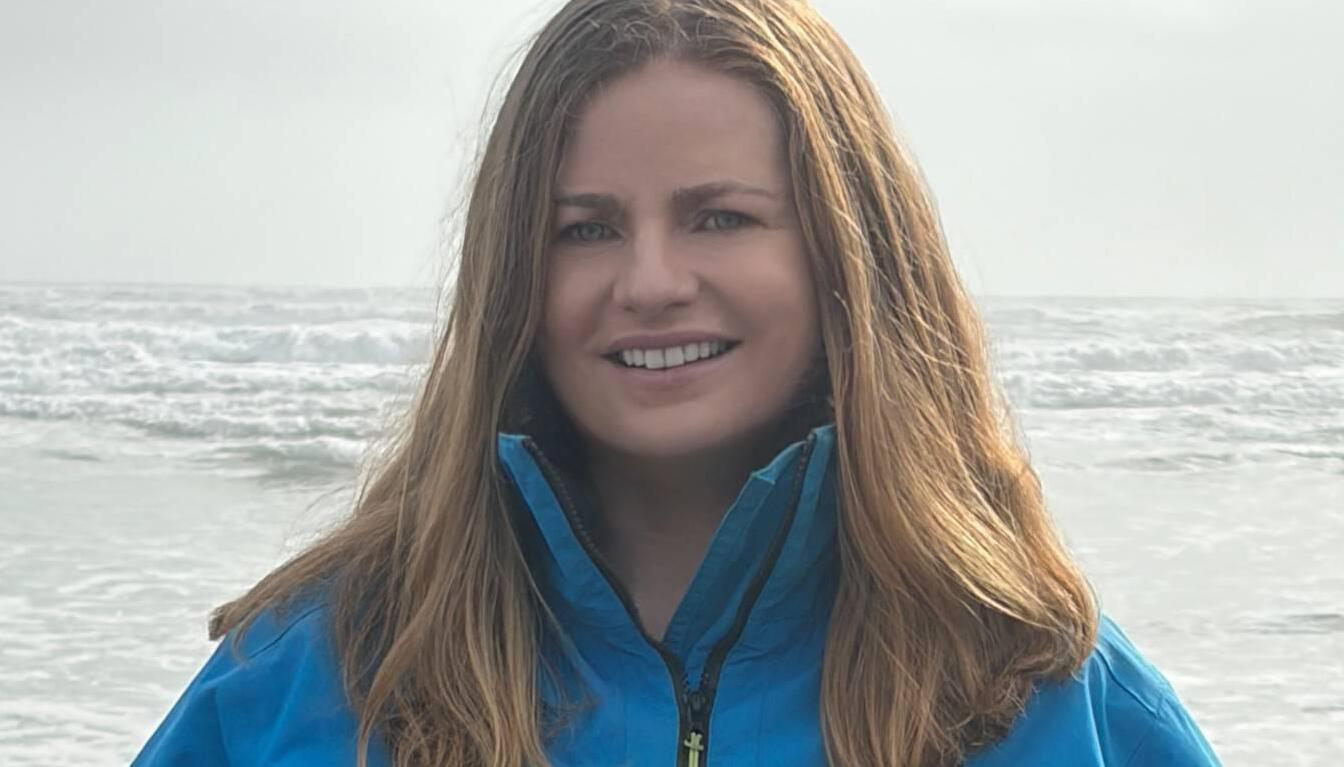
Marine archaeologist Julianna O’Donoghue set up Mizen Archaeology in Kinsale 15 years ago.
Julianna O’Donoghue has visited rarely-seen worlds that, despite having once been populated by humans, now lie deep under the sea.
The underwater archaeologist couldn’t imagine her extraordinary life any other way.
After studying archaeology in UCC, the Kerry native wanted to explore more than dry land had to offer.
In 2003, she undertook a commercial diving course in South Africa and then decided to marry her love of the sea with ancient history through a role with Eachtra Archaeological Projects in Co Waterford.
She later set up Mizen Archaeology Ltd in Kinsale, which has been operating for the last 15 years.
The company offers underwater archaeology and commercial diving services.
“When people hear that I work in underwater archaeology, they immediately think of shipwrecks.
“While that is a significant part of what we do, our work ranges from prehistoric dugout canoes preserved in rivers and lakes through to more complex wooden vessels dating back to the 17th and 18th centuries.
“Submerged landscapes are areas of land that were once dry and inhabited by people but are now underwater due to natural changes in sea level. At the end of the last Ice Age, around 12,000 years ago, melting ice caused sea levels to rise, gradually flooding coastal plains, river valleys, and shorelines.

“These drowned landscapes can preserve evidence of past human activity, such as settlements, tools, fish traps, and ancient forests, as well as former natural environments. For underwater archaeologists, discovering these areas allows us to understand how early communities lived, moved, and adapted to changing climates and shifting coastlines.”
The work has led to some fascinating discoveries.
“Recently, we found layers of peat stretching several hundred metres into the harbour that had submerged forests in them.
“It was 5,500 years old. It was incredible to see that in the harbour in West Cork which is now under 15m of water, there was a forest where people were living.”
She recalled a shipwreck that had been discovered by workers laying underwater outflow pipes for a waste water treatment plant in Schull in 2012.
The merchant ship, which was believed to be returning from the Caribbean, had been carrying coconuts.
“This shipwreck was found on a construction site when they were building an outfall pipe in Schull.
“Finding a shipwreck carrying coconuts in West Cork is unusual so, from an archaeological perspective, this was very interesting and reflected the complexity of maritime activity along the Atlantic coast in the 17th century.
"We believe that the shipwreck was associated with piracy. The wreck is perfectly preserved, which has allowed us to understand aspects of a vessel and its cargo that would never have survived on dry land.
“Developmental discoveries like this remind us of just how connected Cork’s coastline was to the global trade routes. Even in remote parts of the coasts it was part of a much wider international movement of goods and people.”
Other shipwrecks have been equally memorable.
“The UC-42 was a very important one. This was a First World War submarine at the mouth of Cork Harbour.
“Initially, we recovered a propeller which was in danger of being damaged. The project was initiated by Blackwater Sub Aqua Club who contacted us about it.
“These are war graves as well as shipwrecks, so we have to be very sensitive in how we treat them and preserve them accordingly.
"This really highlights the responsibility involved in underwater archaeology.”
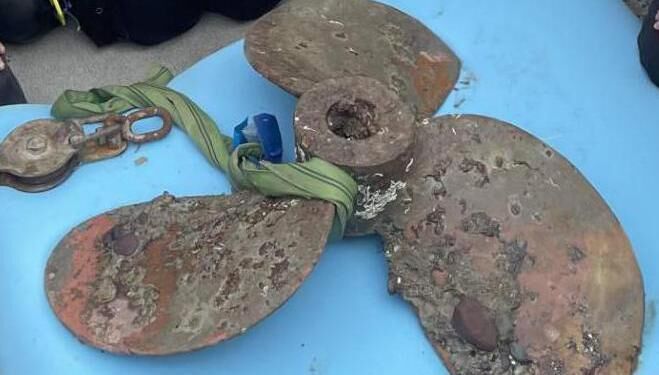
Organisation is key when preparing for a dive.
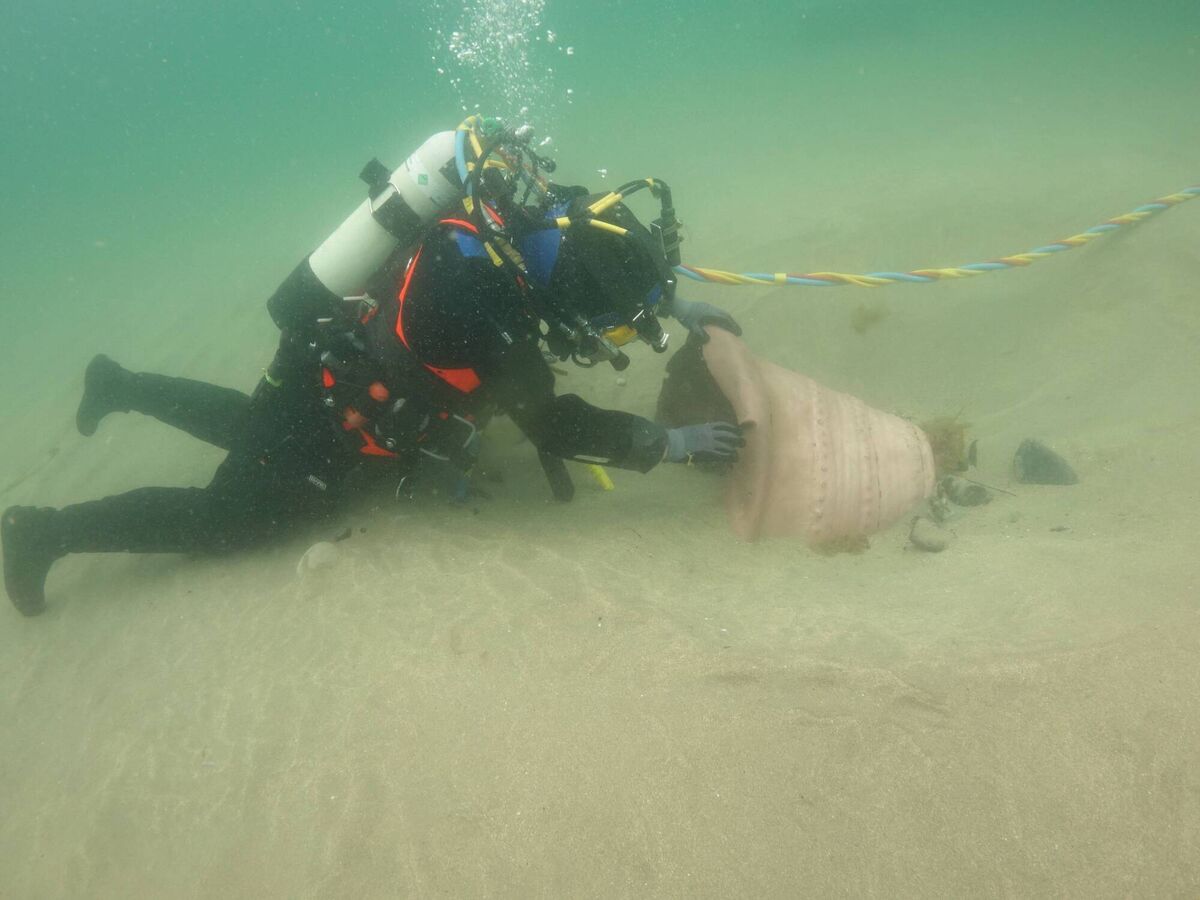
“Rather than carrying cylinders on our backs, we receive breathing air from the surface through an umbilical connected to a support vessel. This umbilical also includes communications, allowing constant voice contact between the diver and the surface team, as well as lines for monitoring depth, time, and safety systems.
“The system allows us to work safely for longer periods and with greater stability than is possible using standard scuba equipment.
"This is particularly important in archaeology, where work often involves careful excavation, recording, and handling of fragile material rather than free swimming.
“The continuous air supply, communications, and surface monitoring allow the diver to focus on precise work while remaining closely supervised, which is essential in the low-visibility conditions often encountered in Irish coastal and river environments.
“We would typically undertake dives of up to three hours using this equipment.”
Much of Julianna’s work is carried out under the cover of darkness.
“Sometimes you could have visibility of 10m. Other days, you could be working in crystal clear water. Then there are the days when you are working in zero visibility. The reality is that you might be working on an incredible archaeological site in complete and utter darkness. This is in addition to ensuring that we’re doing everything safely, using surface supplies and diving equipment.
“The commercial diving sector is very heavily regulated and we work under strict diving regulations.
“There is usually a minimum of five on the team and most of our work is carried out with surface-supplied equipment.
“I always had an affinity with the sea. If you’re going to work in underwater archaeology, it can be a very challenging environment to be in. That’s why you really need to have that passion for the sea and its heritage.”
Julianna and her team often encounter marine life in the course of their work.
“We don’t try to get close to any of them. However, when we’re doing our job, we often have very curious sea life that approach us during our work.
“Seals in particular are known for this. When we’re doing our recordings and searches it’s very common for them to approach us to see what’s going on. You see spectacular sea life under the water. Also, on the surface when we’re working on boats, dolphins and whales are a very common sight.
“It’s an amazing opportunity to be so fully immersed in your surroundings. The ecology surrounding us at work too is incredible.”
She spoke about the damaging impact of pollution on our waters.
“We see the state of our rivers and our oceans and it’s very worrying. We are looking at climate change and how coastal erosion can affect sites and their survival over time.
“In some cases, the sediment protects archaeological materials very well.
“Nonetheless, when those environments are disturbed, through human activity and climate change, these archaeological sites can then deteriorate very quickly.
“Understanding these processes is an important part of managing underwater heritage.”

CONNECT WITH US TODAY



Be the first to know the latest news and updates