Cork fish kill report calls for single agency to lead pollution responses after it finds 'detection gap'
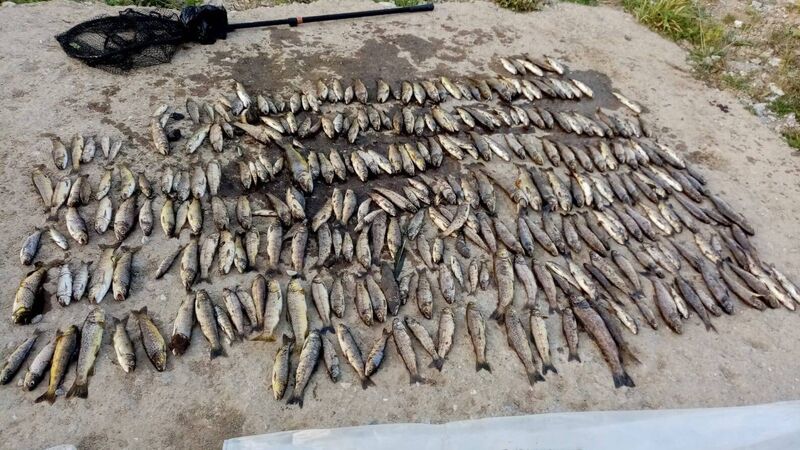
Pictured are some of the 41,801 fish killed during the Blackwater incident, of which up to 32,178 were brown trout and salmon.
An independent report on the Blackwater fish kill investigation in Cork has highlighted a "detection gap" in pollution events across the country and recommended a single agency lead and direct responses from now on.
That is just one of number of recommendations in the report compiled by the European Commission’s Joint Research Centre (JRC).
The incident, which was the largest of its kind recorded in Irish history, saw more than 40,000 fish killed along a 30km stretch of the River Blackwater last year.
However, the suspected source of the pollution remains undetermined despite Inland Fisheries Ireland investing almost €43,000 into the investigation.
The JRC said that while the initial response to the incident was rapid, an “intensification of ongoing restoration efforts” is now needed in Cork.
It identified eight areas where the investigation could have improved and highlighted a “detection gap” in pollution events across the country, leading to their recommendation of designating one agency to lead and direct a response going forward.
It also recommended improving general knowledge and monitoring of major rivers, the establishment of a national fish kill response action plan and the streamlining of response times when dealing with uncertainty as “uncertainty around causes can lead to delays in communication and action”.
Read More
Another area highlighted included the regulation of licences as “frequent pollution” reduces the chance of fish surviving harmful pollution events.
Concluding the report, the JRC said, while the “logic of the investigation was correct”, warning and prevention of such events should be the government's focus.
Taoiseach Micheál Martin said there is now “an acute need” for relevant bodies to work together on improving a response to fish kill incidents.
“It was a horrible fish kill, it was really bad,” said Mr Martin.
"The most important thing is that the recommendations within that report, which I have not yet read, are implemented as soon as possible.
“There is an acute need for different authorities to work together to address this issue and to implement a better programme to prevent things of this nature."
CONNECT WITH US TODAY



Be the first to know the latest news and updates