Cork City Council did not levy derelict site tax on former tax office site for 20 years
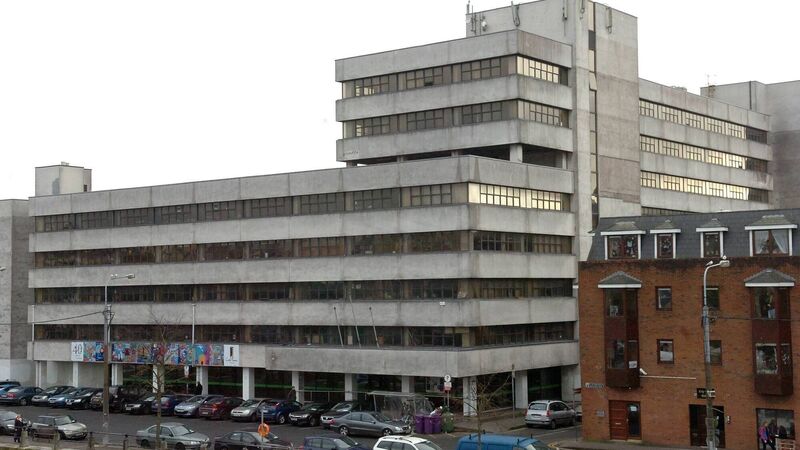
BAM recently lodged an application for a student accommodation development to house more than 500 students on the site, after buying it from the Revenue Commissioners when it moved to new premises in Blackpool. Picture: Larry Cummins
Cork City Council has not levied any derelict site taxes on the site of the former tax office on Sullivan’s Quay, 20 years after Revenue moved out and the site was bought by BAM.
BAM recently lodged an application for a student accommodation development to house more than 500 students on the site, after buying it from the Revenue Commissioners when it moved to new premises in Blackpool.
It subsequently sought permission for a 183-bed hotel, which was never built, and 10 years later, it was given permission for a 193-bed hotel, but that also failed to go ahead.
The site, which has been surrounded by hoarding since the building was demolished in 2019, has been described as an eyesore for several years.
Sinn Féin’s Fiona Kerrins asked at Monday’s council meeting if BAM construction was paying the derelict site levy on the site.
Niall O’Donnabhain, the council’s director of planning and integrated development, said: “The former tax office site on Sullivan’s Quay is not on the Derelict Sites Register and therefore is not incurring the derelict sites levy.
“The site, however, has been identified as a site qualifying for Residential Zoned Land Tax and Cork City Council progressed its placement on relevant maps. The Residential Zoned Land Tax scheme is administered and operated by the Revenue Commissioners.”
The council identifies sites or buildings which are derelict and charges owners levies to incentivise development on them.
The tax has been controversial for many years, with public representatives saying councils ask for too few levies. The amount of levies issued by Cork City Council has varied widely over the years, and rates of payment are on average less than a third, with €6.7m in levies owed to the local authority as of the end of last year.
Under legislation, a “derelict site” does not have to refer to a building. It is defined as “any land which detracts, or is likely to detract, to a material degree from the amenity, character or appearance of land in the neighbourhood”, because of “ruinous, derelict or dangerous” structures on the land, “the neglected, unsightly or objectionable condition of the land” or the presence of litter, debris or waste.
Meanwhile, the Residential Zoned Land Tax, designed to encourage the building of homes on land that is already zoned and serviced for housing, was introduced by the Finance Act 2021, and the first date for liability was just over a year ago, February 1, 2025.
Local authorities publish annual Residential Zoned Land Tax maps to identify land that is liable for the tax, which is collected by Revenue.
Ms Kerrins asked why this site was not included on the register at Monday night’s council meeting, saying: “I was surprised to see it wasn’t on the register, given how long it’s been empty and lying idle.”
Mr O’Donnabhain said: “The property that was on the site was demolished, and there was a live planning application in place for a significant time, as a result it was declared a vacant site and decided that the RZLT was the most suitable.
“Another planning application is now being progressed on the site, so efforts are being made to deal with this site, and in the longer term we are hoping to achieve the removal of dereliction.”
CONNECT WITH US TODAY



Be the first to know the latest news and updates