First-time father penguin 'not coming back to the nest' to help with endangered chicks
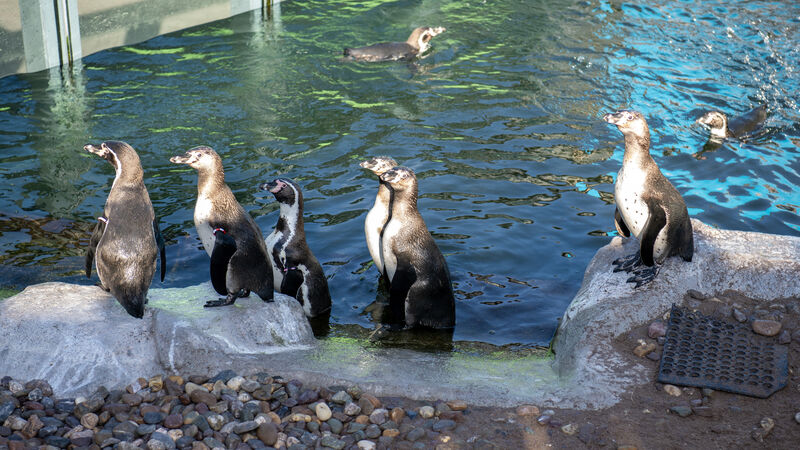
While the arrival of the chicks is being celebrated in Kerry, aquarists have had to step in to assist with the care of one chick after its father, Gary, repeatedly failed to return to the nest from swims in the pool. Picture: Domnick Walsh © Eye Focus LTD
Three endangered Humboldt penguin chicks have hatched at Dingle Oceanworld, but one new dad is struggling with his parental duties.
While the arrival of the chicks is being celebrated in Kerry, aquarists have had to step in to assist with the care of one chick after its father, Gary, repeatedly failed to return to the nest from swims in the pool.
“They’ve arrived in the past three weeks,” the director of Dingle Oceanworld, Kevin Flannery, said.
“They’re little balls of grey fluff. They only weighed a few grams when they were born.”
The chicks are a welcome addition to the colony of Humboldt penguins, largely named after different types of cheese, which was established at the aquarium in 2019.
Humboldts are among the world’s most at-risk penguin species and are listed as "vulnerable to extinction" by the International Union for Conservation of Nature (IUCN).
While two of the new penguin couples have proved to be devoted parents, Gary has been reluctant to take on his new responsibilities.
“Gary has a tendency to wander off”, said the marine biologist.
“He enjoyed having a swim too often in the pool, and the mother was left virtually on her own.”
Head aquarist Marie Kelly stepped in to assist with feeding after noticing the male penguin was ignoring Wensdale’s calls for help.
“She would go in every four hours with a fish paste in a baby’s bottle, which was open at the top. The mother would stay there sometimes, and other times she would go to the pool while Marie was feeding the chick.
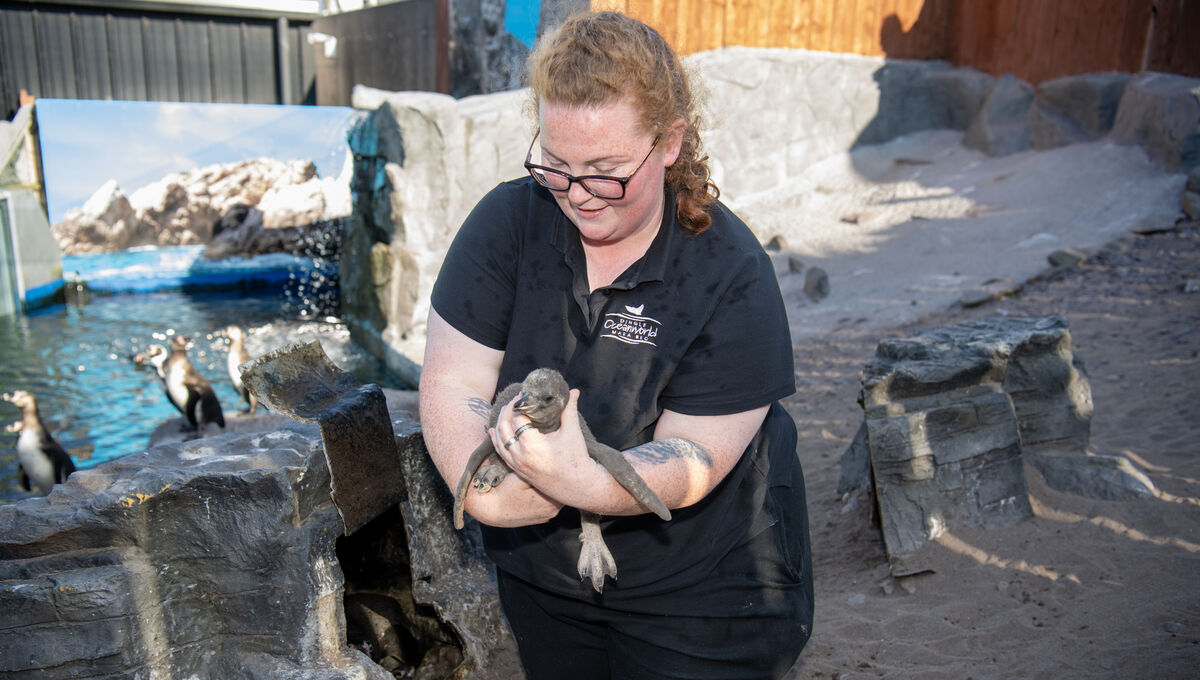
“She spent around two weeks doing this every four hours, but the chick is flying it now — although I suppose that’s the wrong word for a penguin — it’s thriving now.
“He’s a young father, he didn’t know ... or maybe he did, and just liked being in the pool all the time.
Mr Flannery said it has been fascinating to observe the different parenting styles among the penguin pairs.
“It’s a whole learning process of parenthood in the penguins that we've seen through observation. It’s interesting to see some human traits coming through," he said.
“It should be every second turn. One goes off fishing, another comes back, and then the other will probably go off fishing again. They have to maintain the nest and they have to maintain the safety of the chick in it because, in the wild you, would have plenty of predators."
Chicks are also at risk of being taken by females who have no chicks of their own.
“We've noticed other females will come along and pick at the chick, or maybe try and take the chick for themselves," Mr Flannery added.
Other penguins in the outdoor enclosure, who were more experienced parents, happily shared the chick-minding duties.
“The other parents were brilliant. The dad would wander off, and when the mother needed him, she'd give a squeal and he'd come back. But they were being very good, they would just run over and it was not an issue."
There are currently six couples among the 16 Humboldt penguins in the colony, with three of them breeding this year.


CONNECT WITH US TODAY



Be the first to know the latest news and updates