Recovery of body parts from Michael Gaine's farm leads to arrest in murder investigation
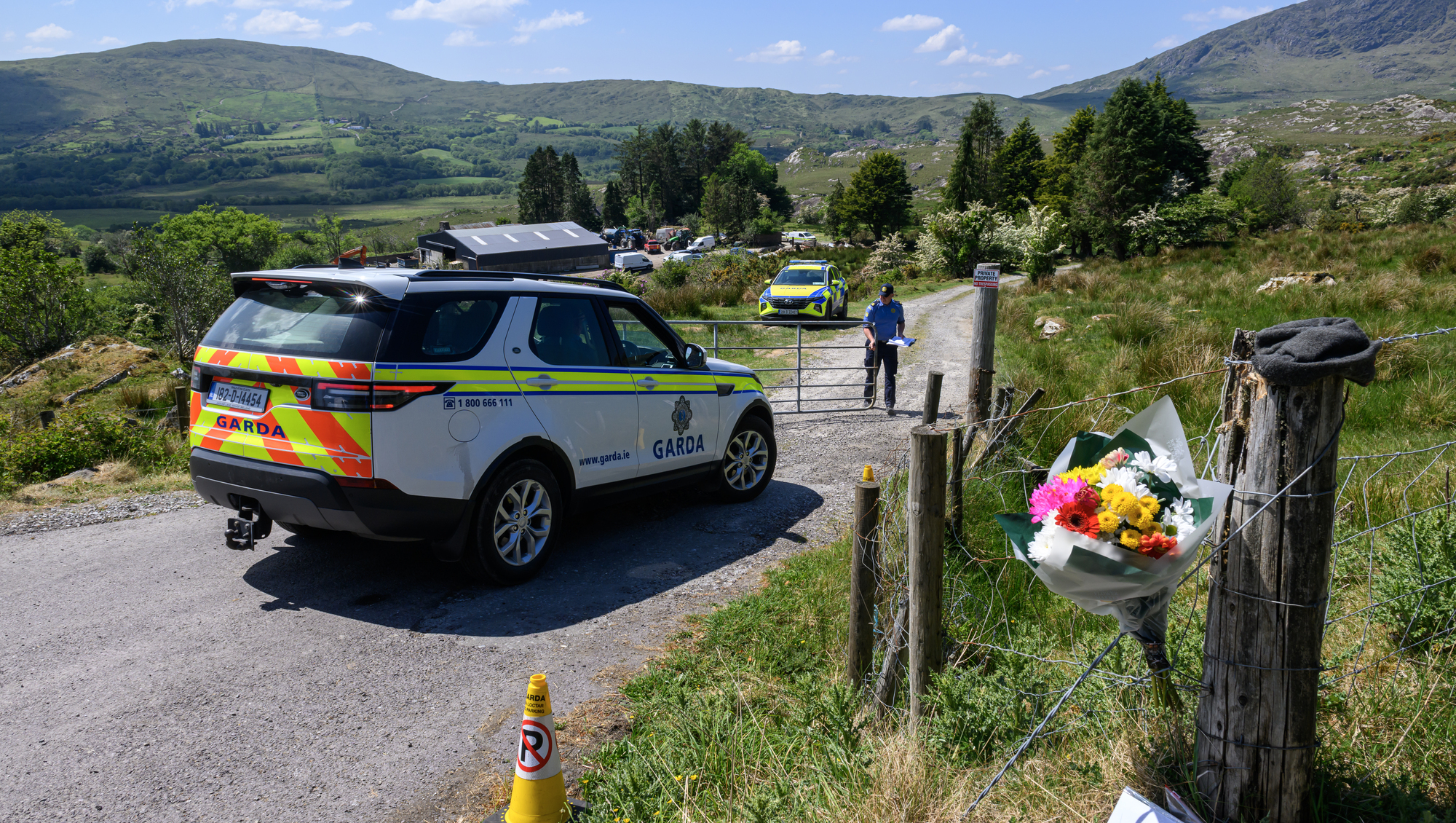
Flowers left at the entrance of Michael Gaine’s farm at Carrig East, Kenmare, Co Kerry. Members of the Forensic and Technical Bureau are continuing examinations at the scene. An Garda Síochána confirmed that partial human remains have been found on the farm. Picture Dan Linehan
A dramatic 24 hours in the homicide investigation into missing farmer Michael Gaine saw the arrest of a man on suspicion of murder and the recovery of human body parts at his Kerry farm.
Detectives were last night questioning a man, aged in his 50s, after arresting him on suspicion of murder on Sunday afternoon.
The development came after intense garda activity over the weekend at a site on Mr Gaine’s 1,000-acre farm, sparked by the shock discovery of human tissue from a slurry spreader on Friday.
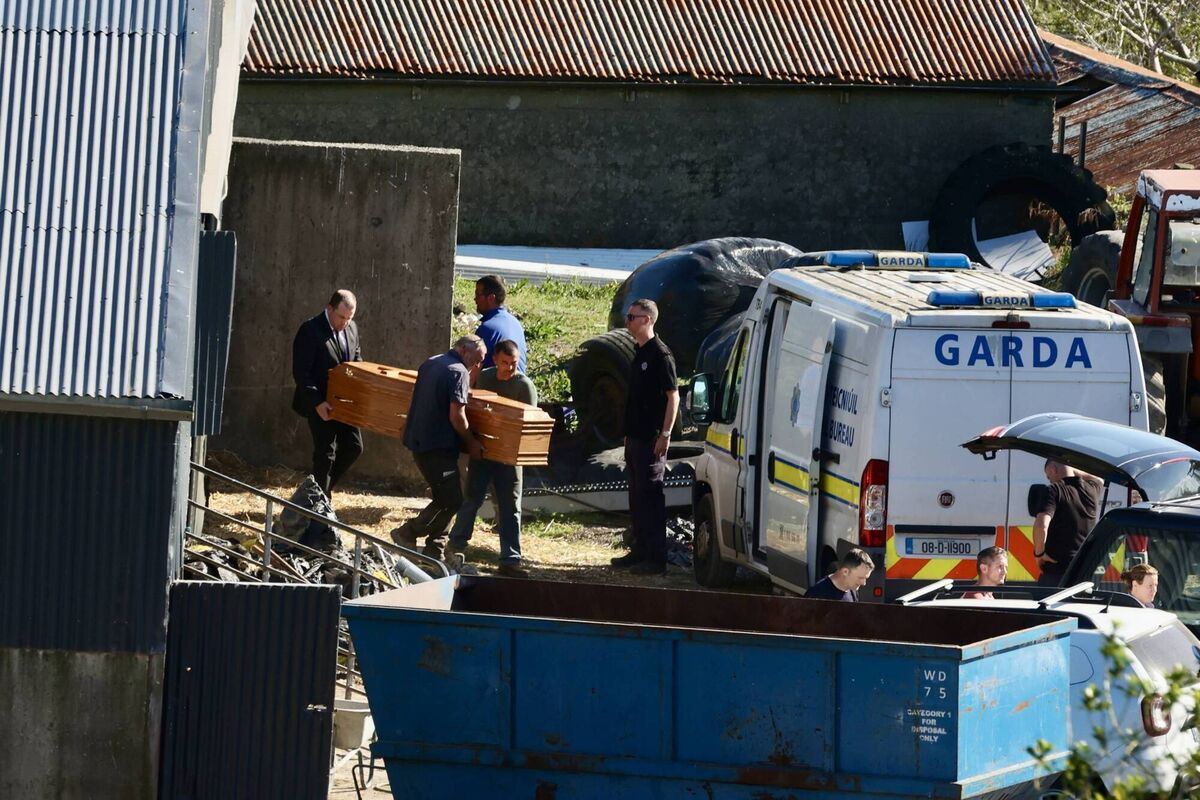
Garda HQ announced yesterday that an arrest had been made and, shortly after, at about 5.20pm, a hearse carrying a coffin arrived at the farm, indicating that significant human body parts had been found.
A curate arrived at the scene and went into the cattle barn at the centre of the examination. Men could be seen coming and going, their heads bowed and some wiping their faces.
At about 5.45pm, a coffin was brought out from the barn and placed carefully into the back of the hearse.
A short while later, the hearse, escorted by a garda car, pulled up the drive and headed in the direction of Moll’s Gap, towards University Hospital Kerry in Tralee for an autopsy.
The grim scenes followed extensive examinations on Saturday and yesterday, with the specialist Garda Water Unit yesterday joining the Garda Technical Unit in examining a slurry tank, a spreader, and a large agitator, used to mix and pump slurry.
The decision to conduct the arrest so quickly came as a surprise but sources stressed this would not have been done without reasonable grounds and/or pressing operational reasons.

The garda statement said: “This afternoon, Sunday, May 18, a male [aged in his 50s] has been arrested on suspicion of murder.
“The male is being detained under the provisions of Section 4 of the Criminal Justice Act 1984 at a garda station in Kerry division. An Garda Síochána continues to carry out searches and technical examinations at lands at Carrig East, Kenmare, Co Kerry.”
It said the family of Mr Gaine had been informed of the arrest and that the garda family liaison officer was providing support.
Mr Gaine, aged 56, went missing on March 21, with the investigation upgraded to homicide on April 29. His wife Janice and his sister Noreen made an emotional plea for information the following day.
Before the arrest, it was thought that gardaí had identified a shortlist of potential male suspects.
The man arrested can be held for a maximum of 24 hours, excluding sleep breaks. During this period, he will be subject to a number of interviews, where evidence gathered to date will be put before him.
Investigators will be in contact with the office of the DPP to determine if there is sufficient evidence to press charges or if the person should be released to allow for further investigations and the preparation of a file for submission to the office.
Initial discovery
Some three dozen gardaí were gathered at the scene on Sunday after the discovery of suspected human tissue on Friday. The grim find came after a worker operating a slurry spreader spotted unusual material when trying to clear a blockage in the machine.
Other potential samples of tissue were subsequently identified across a number of fields where the slurry had been spread.
Gardaí confirmed on Saturday evening that tests conducted by State pathologist Sally Anne Collis and forensic anthropologist Laureen Buckley showed the tissue was human.
DNA is being extracted from a number of tissue samples to build a DNA profile, which will be then compared to a reference sample of Mr Gaine to see if they match.
Sources said that, in order to build a profile, scientists need a sufficient amount of DNA from samples and enough DNA that has not been degraded by environmental factors, such as contaminated, or even toxic, material in a slurry tank.
Sources said that if the technical process of testing is expedited, it could still take a week to get preliminary results back but also stressed that it could be longer.
The discovery yesterday of more significant human remains will assist and, following the autopsy, should also help in determining the cause of death.
Throughout Sunday, gardaí lifted slatted slabs covering an underground slurry tank in the large slatted-unit cattle shed in the yard, and sifted through material from the tank. An excavator assisted in the procedure.
The slurry tank was thought to have been emptied during an initial examination towards the end of March but may have been filled since.
Sources have said that if human tissue, and the further remains discovered Sunday, come from the tank, there could be two possibilities — that the tank may not have been fully emptied and checked the first time, or that human remains were put into it after the first examination.
The Garda Water Unit has the necessary expertise and equipment to search and gather material from hazardous environments, including noxious liquids and solids in slurry tanks and spreaders.
Members of the unit assisted in examining the slurry spreader and a large agitator, used to mix and pump the slurry.

Subscribe to access all of the Irish Examiner.
Try unlimited access from only €1.50 a week
Already a subscriber? Sign in
CONNECT WITH US TODAY
Be the first to know the latest news and updates