Has the Dunkettle interchange upgrade worked? Traffic data shows mixed results
New data reveals Cork’s €215m Dunkettle Interchange has improved peak journey times, but some routes still face delays
Has the Dunkettle interchange upgrade worked? Traffic data shows mixed results

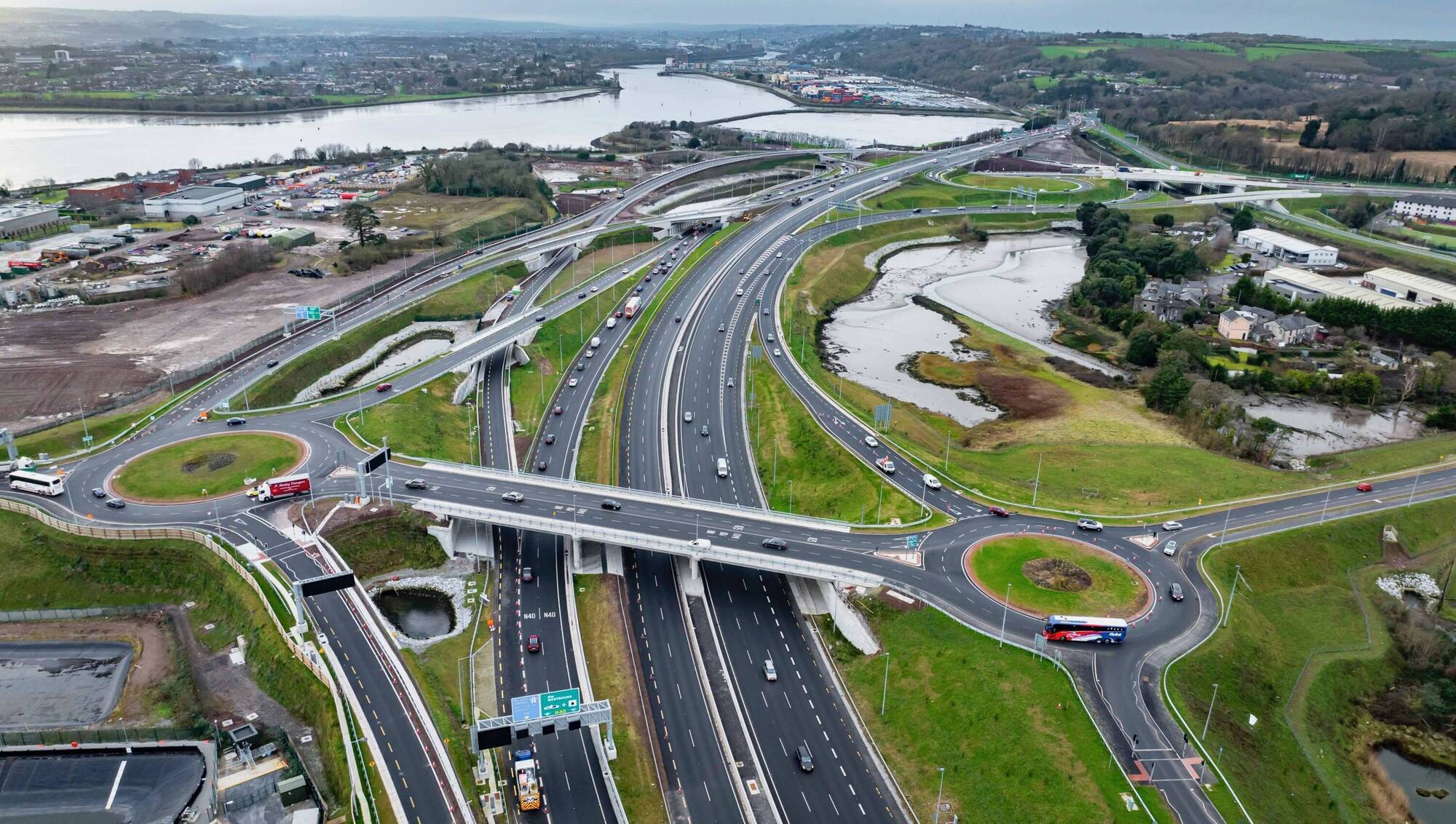
The €215m Dunkettle Interchange east of Cork City was officially opened on February 12, 2024. File picture: Michael O’Sullivan/OSM

It might not feel like it when you’re stuck in a tailback, but the €215m upgrade to the Dunkettle interchange in Cork has reduced peak journey times and the length of rush hour, new data shows.

But motorists approaching the interchange from the east have seen the least benefits, especially during the evening rush hour.

Ahead of Wednesday’s first anniversary of the full scheme opening, there are calls for additional measures to improve traffic flow in the congested areas, especially where several link roads merge into one lane leading to the Jack Lynch Tunnel.

The interchange, 5km east of Cork City, is at the junction of four national roads — the M8 Cork-Dublin motorway, the N25 Cork-Waterford/Rosslare route, the N40 South Ring Road and the N8 Dunkettle-Cork city national route.

It underwent a massive four-year upgrade to deliver free flow traffic movement, and was officially opened on February 12, 2024.

However, motorists have been complaining since about ongoing tailbacks on the approach roads.

Transport Infrastructure Ireland (TII) has been analysing traffic data as part of its evaluation of the impact of the scheme by comparing journey times through the interchange from 2019 to May 2024.

And while the evaluation is ongoing, and the analysis has yet to be published, TII says preliminary findings indicate journey time reductions during the peak traffic hours of 7.30am to 8.30am and 4.30pm to 5.30pm, including:

  • A saving of 14-16 minutes (over 50%), of journey time, during the morning peak for traffic travelling from the M8 via the interchange through the Jack Lynch Tunnel to the Kinsale Rd on the N40, or to the city centre on the N8, Lower Glanmire Rd;
  • A saving of nine to 13 minutes (40% to 60%), during the morning and evening peaks for motorists travelling from the N40 through the tunnel and the interchange to the N8, M8, or N25;
  • Savings of eight to nine minutes (over 50%) during the morning peak, travelling from the N25 via the interchange, through the tunnel to the Kinsale Rd.

However, journey time reductions on the N25 during the evening peak are “more modest”, at approximately three minutes, or 25% of journey time.

And, despite a rise in traffic volumes, the TII analysis also suggests a reduction in the duration of peak times.

The duration of the morning peak, when journey times are more than 30% above free-flow journey times, has reduced from over two hours in 2019 to around one hour in 2024.

The ‘evening peak’ shows a similar reduction, from around 2.5 hours to 1.5 hours.

A busy morning near the Bloomfield interchange on the N40. File picture: Dunkettle Traffic Cams

The analysis also shows there were 31 recorded incidents — which include collisions and breakdowns — on the interchange between February 12 and December 31 last year.

The figure for February 12, 2019 to December 31, 2019, pre-covid, was 81.

“It is important to note in this context, however, that given the Dunkettle Interchange links so many major routes, traffic incidents downstream of Dunkettle on the N8, M8, N25, and N40, can lead to tailbacks extending back through the interchange, resulting in queues on the interchange approaches,” it said.

The details were given in a response to a parliamentary question by Fianna Fáil TD for Cork North-Central Padraig O’Sullivan.

He said that despite complaints about tailbacks and night-time tunnel closures, the figures seem to show an improvement in traffic flow.

“It’s encouraging, but it’s not perfect,” he said.

The stats seem to show journey times have improved for traffic coming from the Dublin side, but less so for traffic coming from the east, and I can see those tailbacks myself every morning.

He suggested that TII should introduce measures to slow or stagger peak-time traffic approaching from the northern side to give local traffic coming from the east, from Glanmire or from North Esk, a chance to filter into the interchange.

He also called for the publication of the full impact analysis as a matter of urgency.

Daily traffic volumes through the Dunkettle interchange are approaching 120,000 vehicles on the busier days of the week.

More in this section

Lunchtime News

Newsletter

Keep up with stories of the day with our lunchtime news wrap and important breaking news alerts.

Cookie Policy Privacy Policy Brand Safety FAQ Help Contact Us Terms and Conditions

© Examiner Echo Group Limited