Public invited to drink in remarkable story of Bronze Age 'face' teacup found in Cork

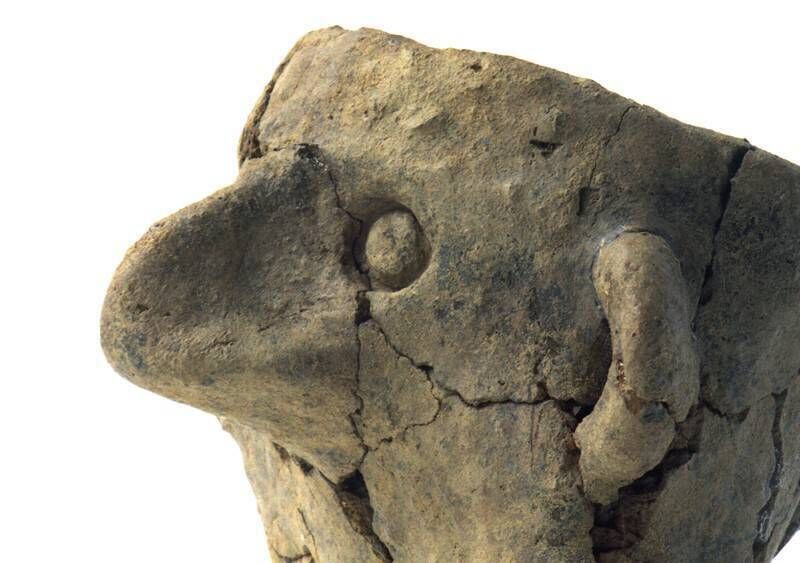
The Mitchelstown Face Cup was made during the Bronze Age, between 3,800 and 3,600 years ago.
People can now come face-to-face with their own 3D copies of one of Ireland’s most remarkable and mysterious archaeological finds — a near 4,000-year-old teacup with a big personality — thanks a new online resource.
To mark Culture Night on Friday, Transport Infrastructure Ireland (TII) has published a free story map resource which tells the fascinating story of the unique Mitchelstown Face Cup — a prehistoric teacup in the shape of a human face — whose discovery in north Cork over two decades ago sent shockwaves through the archaeological world.
The small ceramic cup was made during the Bronze Age, between 3,800 and 3,600 years ago. Moulded in the shape of a human face, it stands just 96mm high. Its lugs, or ears, are inverted — one faces front, and one faces backwards.
It was found in a pit next to the river Gradogue in association with a curious tub-shaped pot, who lugs are also inverted, and a ceramic spoon, by archaeologists undertaking pre-construction excavations along the route of the N8/N73 Mitchelstown Relief Road in 2004.
TII archaeologist Ken Hanley, who oversaw the excavations, said when images of the cup were first shown at an international conference a few months after its discovery, experts in the room gasped.
“No one had seen anything like it before,” he said.
It has since been described as the most exceptional Bronze Age pottery ever to have been found in Ireland, and is of wider European significance.
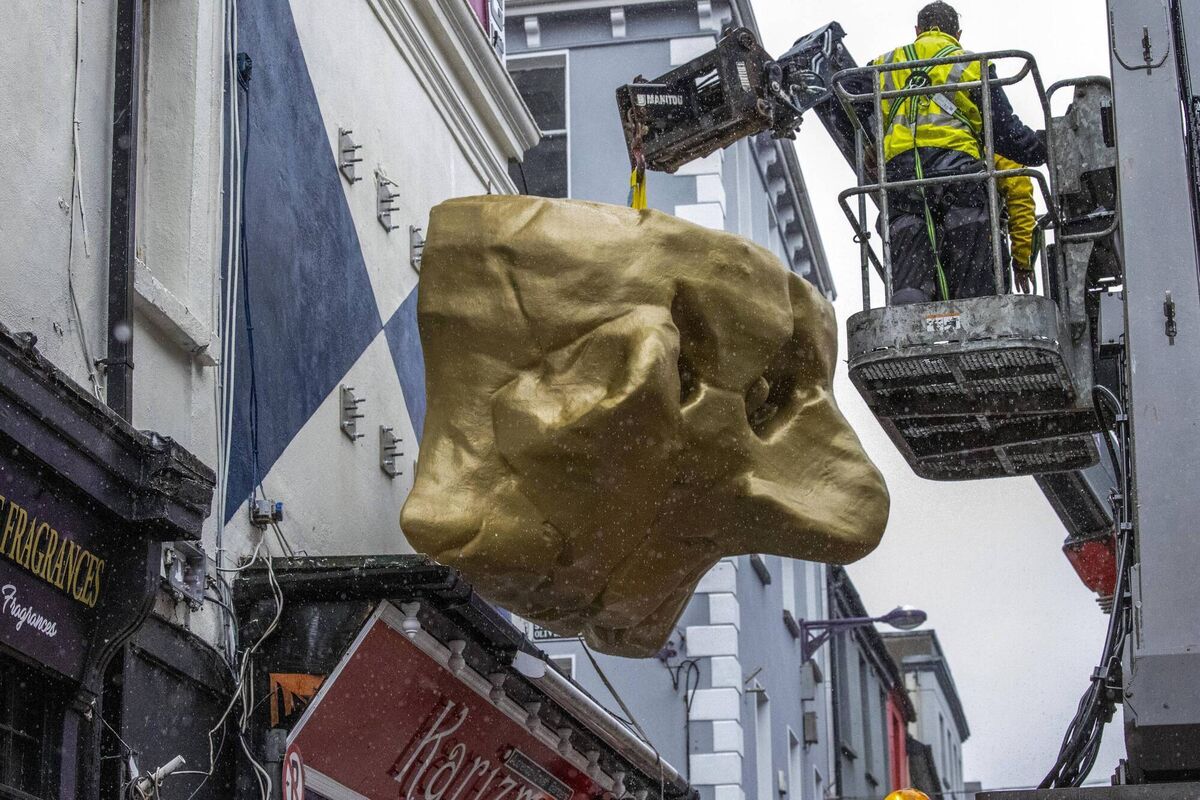
It is still intriguing people today, and was the inspiration behind a giant public artwork which was installed in Cork city centre last year.
There are various theories about the face cup and the highly unusual collection of pottery with which it was found, including that it represented a cenotaph burial — a symbolic burial of someone whose remains are buried elsewhere; or that the spoon and two vessels were used for ritual libations, with a Bronze Age settler using the spoon to scoop offerings out of the face cup and sprinkling them into the Gradoge River, perhaps as a funerary rite, to appease a deity or to wish for a bountiful harvest.
Whatever the truth of it may be, Mr Hanley said it continued to intrigue.
Renowned artist Fiona Mulholland used it as her inspiration for her larger-than-life art installation at the junction of Oliver Plunkett Street and Prince’s Street in Cork city centre, commissioned by Cork City Council last year.
The online portal complements Ms Mulholland’s art installation, and includes text, photos, video clips, interactive 3D models and downloadable files for 3D printing.
The artefact is currently undergoing conservation work at the National Museum of Ireland but is due to go on public display next year.
See more here.

CONNECT WITH US TODAY



Be the first to know the latest news and updates