€18m housing plan for regeneration of Traveller halting site in Cork city
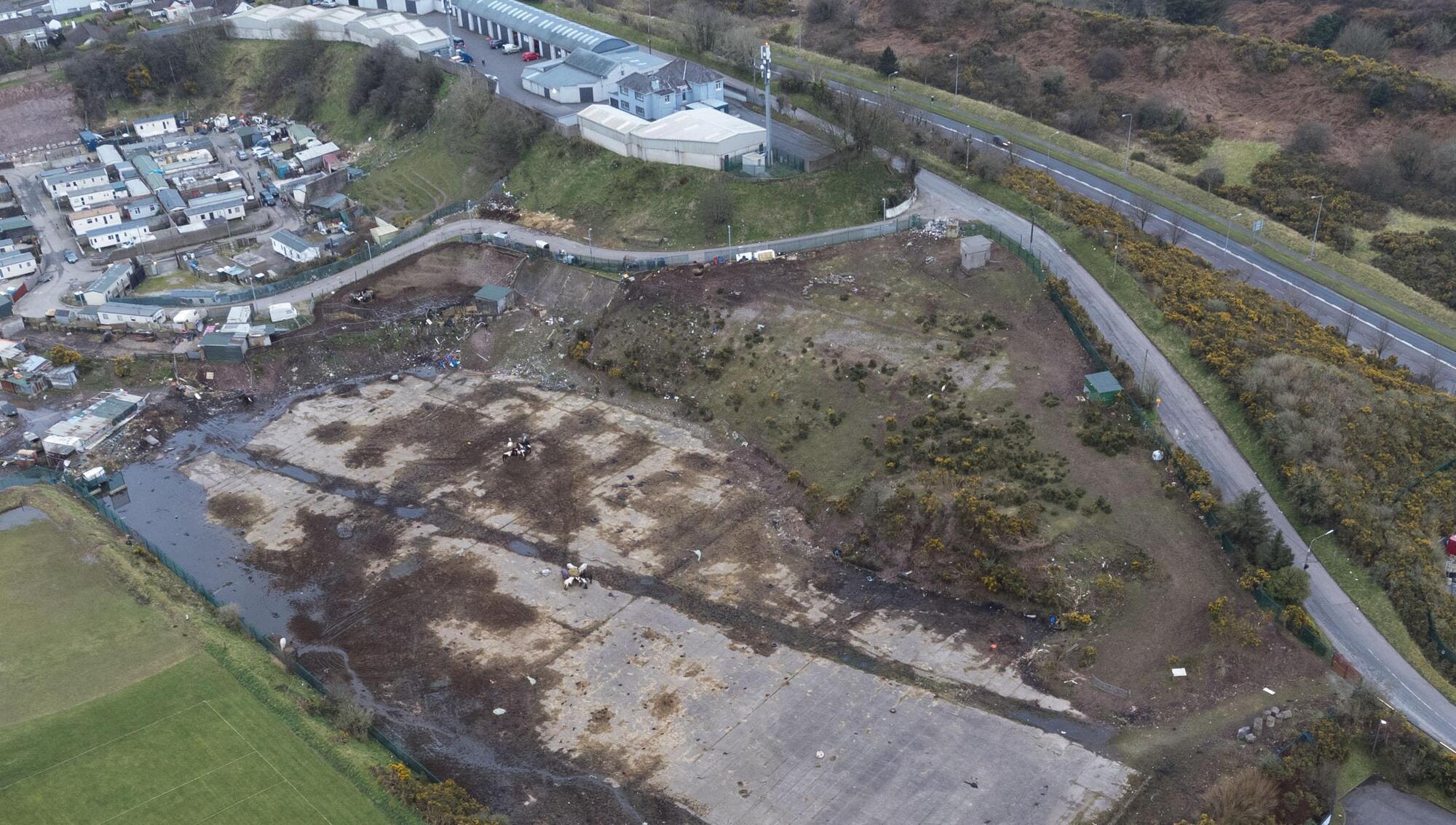
The new city council blueprint for the redevelopment of its Spring Lane halting site in Ballyvolane includes plans for 27 Traveller-specific residential units on the site and the adjoining council-owned Ellis’s Yard, as well as extensive landscaping and site improvement works.
An €18m housing plan has been drawn up for the complete regeneration of an overcrowded Traveller halting site in Cork city where living conditions have been described as amongst the worst in Ireland.
The new city council blueprint for the redevelopment of its Spring Lane halting site in Ballyvolane includes plans for 27 Traveller-specific residential units on the site and the adjoining council-owned Ellis’s Yard, as well as extensive landscaping and site improvement works.
Details of the project have emerged following a meeting of the Joint Oireachtas Committee on key issues affecting the Traveller community, and almost three years after the publication by the Ombudsman for Children, Dr Niall Muldoon, of a damning report about living conditions on the site.
Assistant chief executive of Cork City Council, Brian Geaney, told the committee that the council has carried out extensive engagement over the last two years with the residents of Spring Lane.
“A stakeholder engagement specialist has been engaged from the outset to work directly with the residents on each resident’s long-term housing needs and requirements,” he said.
“The proposed design of each house, site layout and family grouping of houses have been discussed with each family, which has proved very beneficial in securing buy-in, building trust and identifying key issues throughout the process.
“While lengthy and resource-intensive, this form of direct consultation is necessary and will hopefully lead to better outcomes in terms of greater co-operation throughout the planning process, build phase of the development and future management of Spring Lane.”
He said all design work, on-site surveys, environmental assessments and internal and agency consultation are complete, funding is in place and it is the council’s intention to commence the formal Part 8 process "without delay".
The Cork Traveller Visibility Group's head of advocacy, Breda O’Donoghue, welcomed the progress but sounded a note of caution.
“This plan is long overdue. There has been a lot of engagement between the council, Traveller groups and the city council over the last two years,” she said.
“But we have been at this point before where attempts have been made to refurbish this site. This now needs political will to get over the line.
“People must realise that this is not investment in additional traveller accommodation — it is replacement accommodation of what is effectively shanty town-style accommodation."
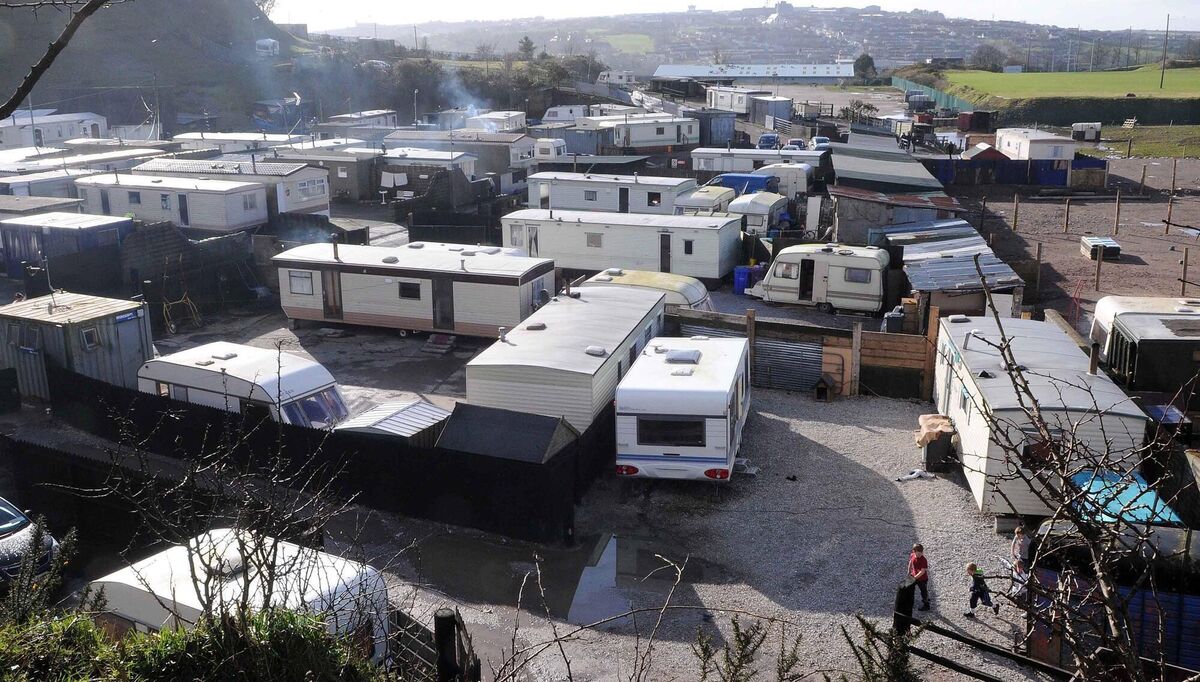
She said the focus has to be on the children and the families who have been "torn through the mud on the issue over the years".
“There are three generations living there now. These families are embedded in the community, their children are going to school in the area and whatever happens in relation to this housing project, the families will not be moving," Ms O'Donoghue said.
“We have been told by some people that a local councillor voting for Traveller accommodation is like a turkey voting for Christmas.
“So what we need now is support from local public representatives.”
Spring Lane, a former sand and gravel quarry, was opened in 1989 as a 10-bay halting site. As family numbers expanded over the years, there was unauthorised expansion into adjoining fields and living conditions disimproved.
Today, the site is home to around 50 families, with an average family size of six, which means that up to 300 people are sharing toilets and washing facilities designed for a quarter of that.
While the Ombudsman’s report shone a national spotlight on the site, it had been the subject of criticism for years, with several attempts to find solutions.
Council proposals to extend the site into Ellis’s Yard to accommodate the increased numbers were voted down by city councillors in 2011.
In 2014, the highlighted the appalling and unsafe living conditions on the site, when it revealed details of unpublished engineering and public health reports prepared in 2012 warned of how a large lagoon of water and raw untreated sewage on the site posed a serious health and drowning risk to almost 100 children living alongside it, and how a near-vertical 20m-high unstable cliff face towering over homes on one side of the site should be made safe to prevent its collapse.
The public health report also focused on high infection rates among children, with conditions including upper respiratory, lower urinary tract infections, and skin infections. It also raised concerns about Traveller women attending GPs for stress-related illnesses, mental health illnesses, chest and skin infections, and said there was a high percentage of children with special needs, speech and language, and learning difficulties.
Aware of those reports, former junior minister Kathleen Lynch, a TD for the area who had responsibility for equality, established an independent review of the complex issues in 2013.
But when that inter-agency group process broke down, she invited the former county manager of South Dublin County Council, the late Joe Horan, to head up an independent review.
He published a comprehensive roadmap for improvement the following year, which, if implemented, could have led to the phased closure of the site by March 2020.
But sadly, Mr Horan died in November 2016 and this process failed too because of “a lack of outcomes” — there was no high-level implementation group driving the required changes, Traveller advocates said.
Relationships and trust between the authorities, residents on the site and their advocacy groups deteriorated further, as did conditions on the site.
A report to city councillors in April 2016 revealed just how bad things had become.
Councillors were told that city attempts to resolve certain issues on the site had been frustrated, leading to substantial cost overruns on contracts and the triggering of several court proceedings.
Delays caused one electrical contract to soar 98% – rising from €171,820 to €340,000.
Four court dates were required to secure an injunction to support contractors engaged in cliff face stabilisation works.
The council said it had made 13 court appearances in relation to the site since December 2014.
The city fire brigade was called to the site 46 times in 2015 alone to deal with 39 fires and seven false alarms.
The council spent €620,000 removing illegally dumped waste from Ellis’s Yard site between January 2003 and February 2015.
As well as repeated antisocial behaviour on the site, which has plagued the residents of nearby housing estates, the report cited severe and regular intimidation of contractors and council officials, including one incident where an axe was thrown at one contractor working on the site, and a pellet gun was involved in another incident.
In 2018, the city council spent some €430,000 replacing 33 mobile homes on the site.
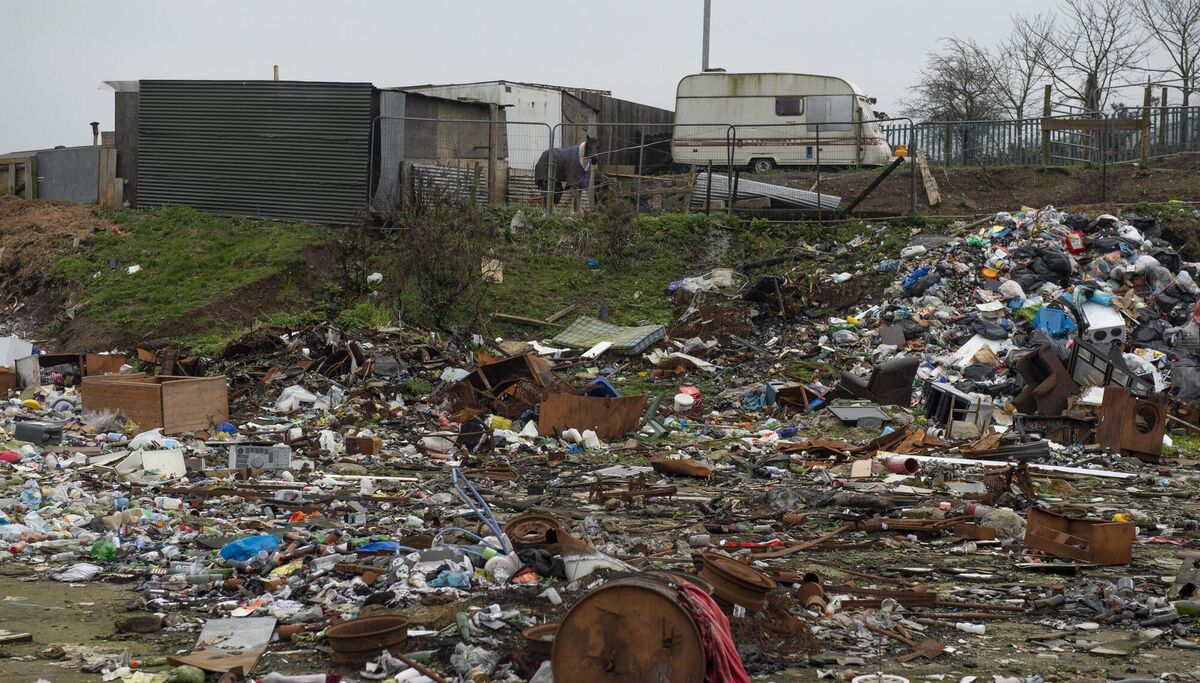
In February 2019, the council mounted another large clean-up operation to remove an estimated 200 tonnes of illegally dumped rubbish, including asbestos, from Ellis’s Yard, at a cost of about €53,000.
Around the same time as this clean-up, a Traveller advocacy group contacted the Ombudsman, which led to 11 families and their children, being interviewed about their complaints.
The redevelopment of the site was included in the council's previous Traveller accommodation programme, which was approved by councillors in 2019, a plan which attracted in the region of 1,000 submissions, mostly from members of the settled community who live close to the halting site.
Then in May 2021, following three years of investigative work, the Ombudsman published his report on Spring Lane which found the poor conditions had a “significant and prolonged adverse impact” on children living on the site.
The report found the council failed to maintain it, including the upkeep of the toilet and showering facilities, ensuring consistent waste management and pest control, and providing a clear and safe passage to school, as well as areas for children to play.
The report noted “extreme overcrowding”, inadequate waste disposal and heating systems, “unsafe electrical works”, and a high rate of childhood illness caused by the poor conditions.
Site inspections found about 140 people using toilets and washing facilities designed for 40 people.
Inspectors observed children sharing makeshift beds in cramped living areas, damp on the the walls and ceilings, and children playing amid rubbish.
The council has been working intensively since that report to secure major and long-lasting improvements on the site and got confirmation just last week of some €17.9m in funding from the department of local government and housing for the regeneration.
City councillors are due to be briefed on the detail of the plans over the coming days before they will be published for six-weeks of public consultation under the Part 8 planning process.
Mr Geaney told the Oireachtas committee that the council is “fully committed to improving the quality, standard and availability of suitable accommodation for Traveller families” right across the city and “works in partnership with families, advocacy groups and agencies to help ensure this can be achieved”.

CONNECT WITH US TODAY



Be the first to know the latest news and updates