Groundbreaking UCC study tests cheetah stress levels
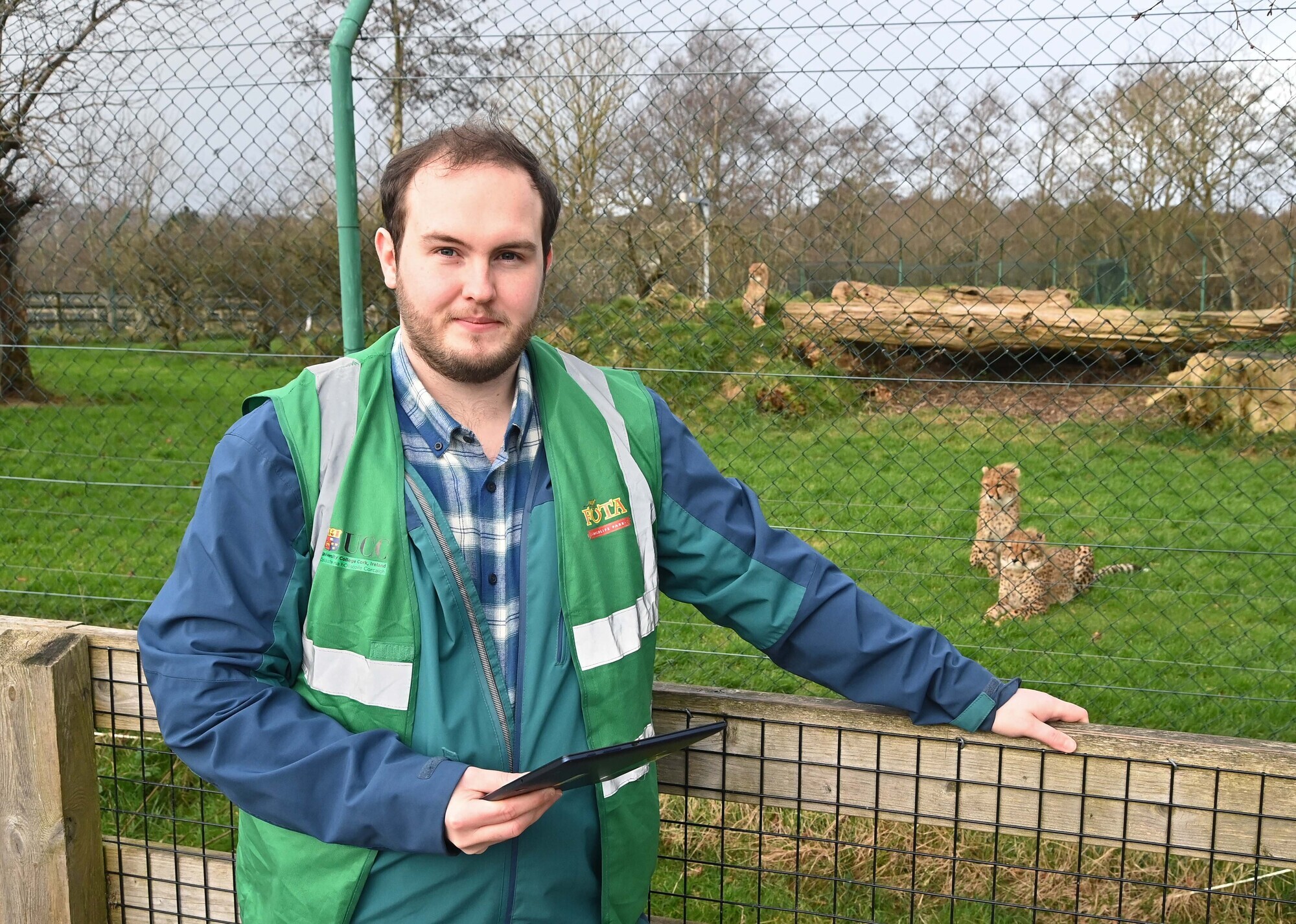
Daniel Moloney at Fota Wildlife Park with two northern cheetah cubs. Picture: Denis Minihane
How do you test a cheetah’s stress level by swabbing their saliva without getting your hand bitten off?
In a world first, Fota Wildlife Park in Co Cork has teamed up with a PhD candidate who’s helping write what’s they hope will be a definitive guide to effective conservation of animals.
Daniel Moloney, from UCC, is currently swabbing an endangered toad species for information which will provide conservationists with ways to enhance their population.
But the natterjack toads he’s already mouth-swabbed aren’t likely to bite his hand off — cheetahs, however, are an entirely different proposition.
At the request of the 28-year-old, keepers at Fota are trailing a new method by training the majestic cats to bite on two horizontal bars, for which they get a food award.
They can then get the saliva from the bars which can be analysed for the hormone Cortisol, elevated levels of which show the cats are stressed.
“It could be because they’ve moved to a new enclosure, a new member (cheetah) comes into the group, or they get stressed by a change of keeper,” Daniel said.
At present, the only way to extract saliva apart from a cheetah is under anaesthetic. But Daniel and Fota intend to apply for a license to extract it with swabs from their mouths when they’re conscious. The idea is to wean them off biting the bars and reward them instead for mouth swabbing.
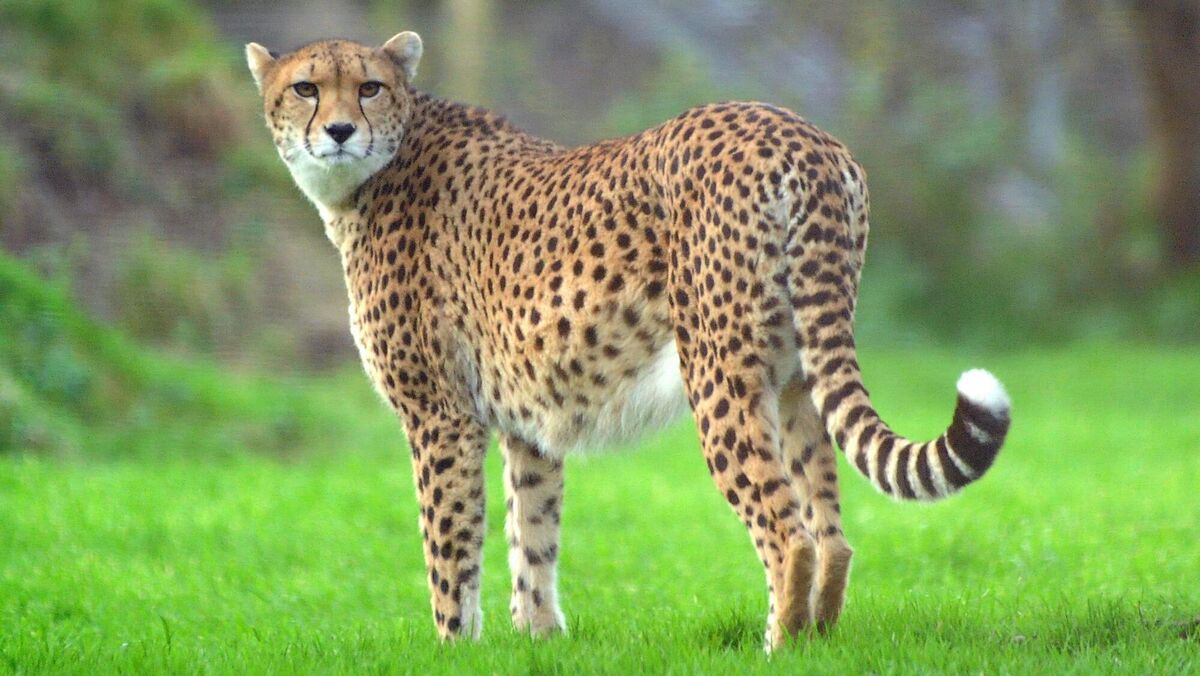
De-stressing animals leads to a healthier population.
The project is being funded by the Irish Research Council Enterprise Partnership Scheme in conjunction with Fota.
Daniel’s work forms part of a UCC research project with Fota and Dingle Aquarium to aid conservationists The project, recently published in Biological Conservation, is led by Daniel, who’s with UCC’s School of Biological, Earth and Environmental Sciences (BEES).
The team, which also includes Professor Ruth Ramsay, Professor Paul Holloway, and Dr Courtney Collins, went through a review of 100 research papers on various conservation projects worldwide and identified a range of techniques conservationists can employ both in captive and wild settings.
Included in these are examples such as head-starting projects, where juveniles of an endangered species are collected soon after they hatch/are born and are raised for a brief period of time in captivity.
This enables the animals time to grow and develop and aims to increase their likelihood of survival and reaching adulthood when they are returned to the wild.
The toolkit provides a breakdown of a wide array of conservation methods employed both in captivity and the wild. It examines the pitfalls and issues that can reduce the success of conservation projects and provide a guide to aid others in avoiding those pitfalls.

CONNECT WITH US TODAY



Be the first to know the latest news and updates