Coastal communities in Cork, Waterford and Limerick at risk from rising sea levels, TD warns
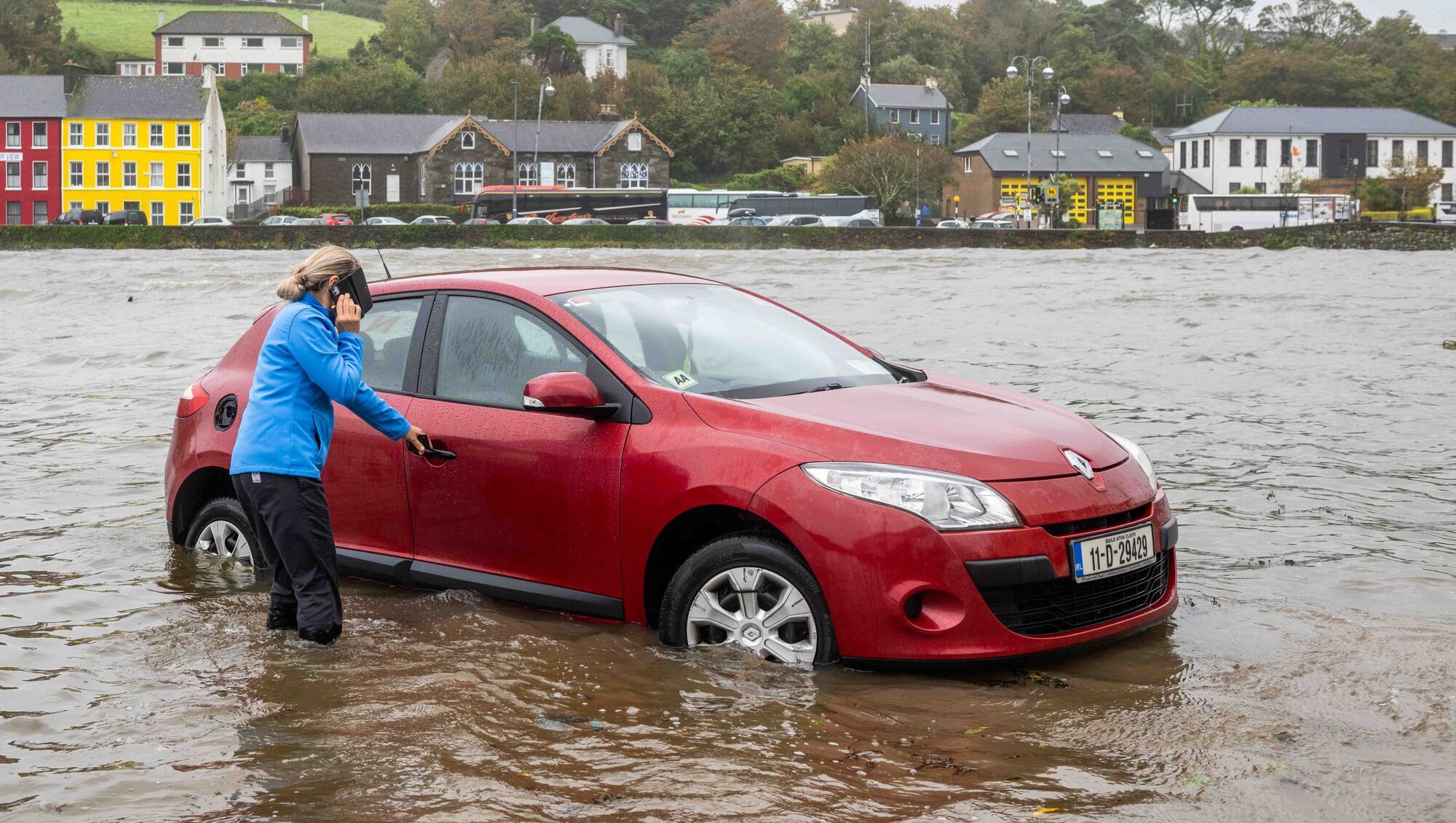
Flooding in Bantry, Co Cork, during Storm Agnes last week. Picture: Andy Gibson
Some of Ireland's most vulnerable coastal communities such as in Cork, Waterford, and Limerick are like "the proverbial frog in the pot" when it comes to sea levels rising, a TD has said.
After the Galway village of Kinvara was suddenly flooded over the weekend following a high tide, some environmental scientists and campaigners have questioned whether sea levels rising was culpable.
The cause of the surge has yet to be explained but Cork East TD David Stanton — who has repeatedly warned the Dáil that Ireland is sleepwalking into a rising sea levels catastrophe without comprehensive planning — said Kinvara was a harbinger of things to come.
If sea levels rise in the coming decades as expected due to global warming and the climate crisis, islands such as Ireland and the UK will be some of the most vulnerable.
It could lead to cities like Limerick coming under assault from rising waters, as well as coastal communities such as Ballycotton in East Cork and Ardmore in Waterford becoming overwhelmed, Mr Stanton said, citing modelling from the world's leading scientists on sea level rise.
"Sea levels are rising slowly and incrementally here. But the rate of rise is speeding up because the rate of melting in the Antarctic and elsewhere is increasing.
"Whether or not what happened in Kinvara is directly attributed to sea level rise or simply a surge from the sea, we cannot say yet. However, what we can say is that it may not have been as bad if not for sea levels rising adding to it.
"That is the impact of global warming, the likes of Storm Agnes increasing in intensity and violence, and sea level rise is compounding the damage that is done. Even a couple of centimetres makes a massive difference."
The Office of Public Works has been working to prepare for projected scenarios due to climate change, its minister in charge said in June.
Patrick O'Donovan said the National Catchment-based Flood Risk Assessment and Management (CFRAM) Programme undertook detailed assessments of flooding and its impacts for 300 communities potentially at risk from flooding.
These communities are home to about two-thirds of the population, and 80% of properties potentially at risk in Ireland from rivers and seas, he said.
The assessments include a sea level rise of up to 1m by the year 2100, he added.
"The evidence provided by the CFRAM Programme supports the Government’s €1.3bn planned investment to complete 151 flood relief schemes through the National Development Plan as part of Project 2040," Mr O'Donovan said.
CLIMATE & SUSTAINABILITY HUB