Rare benchmark stone removed from Cork street to be included in improvement scheme
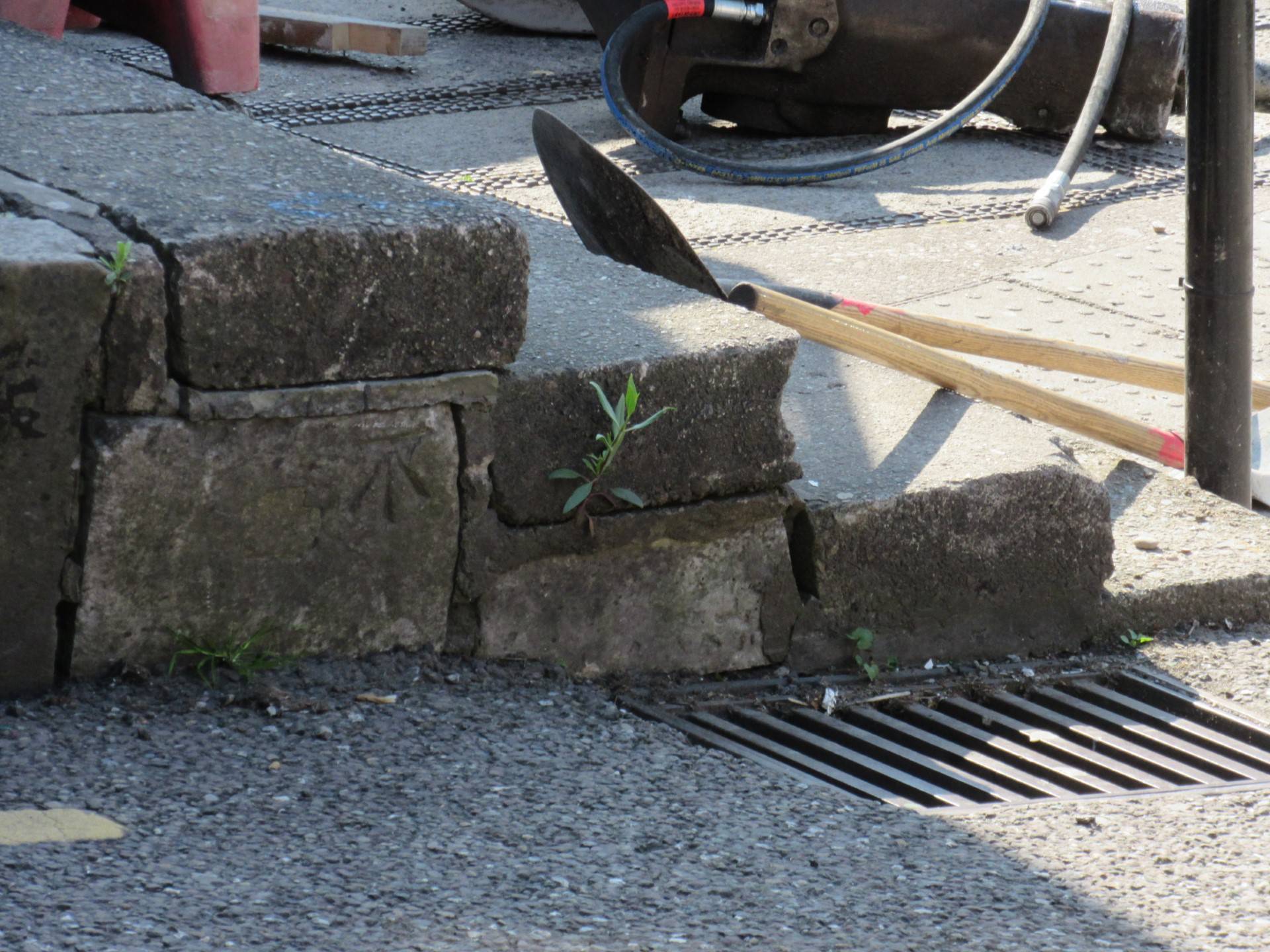
The benchmark stone at the base of St Patrick's Hill. Pictures: Tony McGrath @SignsTheReading/Twitter
A rare example of a historic benchmark stone which has been removed from one of Ireland’s steepest streets during a multi-million public transport project will be incorporated into the new streetscape.
Cork City Council engineers moved to reassure the public that the heritage feature, which played a key role in the first detailed mapping of the State in the 1800s, is in safe storage after concerns were raised following its removal by contractors engaged in the MacCurtain St public transport improvement scheme.
The engineers also confirmed that old cobbles, which have been uncovered at locations in the works area, will be incorporated into the final scheme. Incoming Lord Mayor, Cllr Kieran McCarthy, a historian who leads walking tours of the city, welcomed the news and praised the “heritage guardians” who raised concerns.
“It’s great to see the public engaged in the heritage of the city,” he said. “Heritage does matter and there is a huge interest in it. One could argue that a benchmark stone is a small thing, but if they are all removed, one small piece at a time, piece by piece, then over the years, you begin to lose the history and character of an area.
“I am delighted that these items will be incorporated into the new streetscape.”
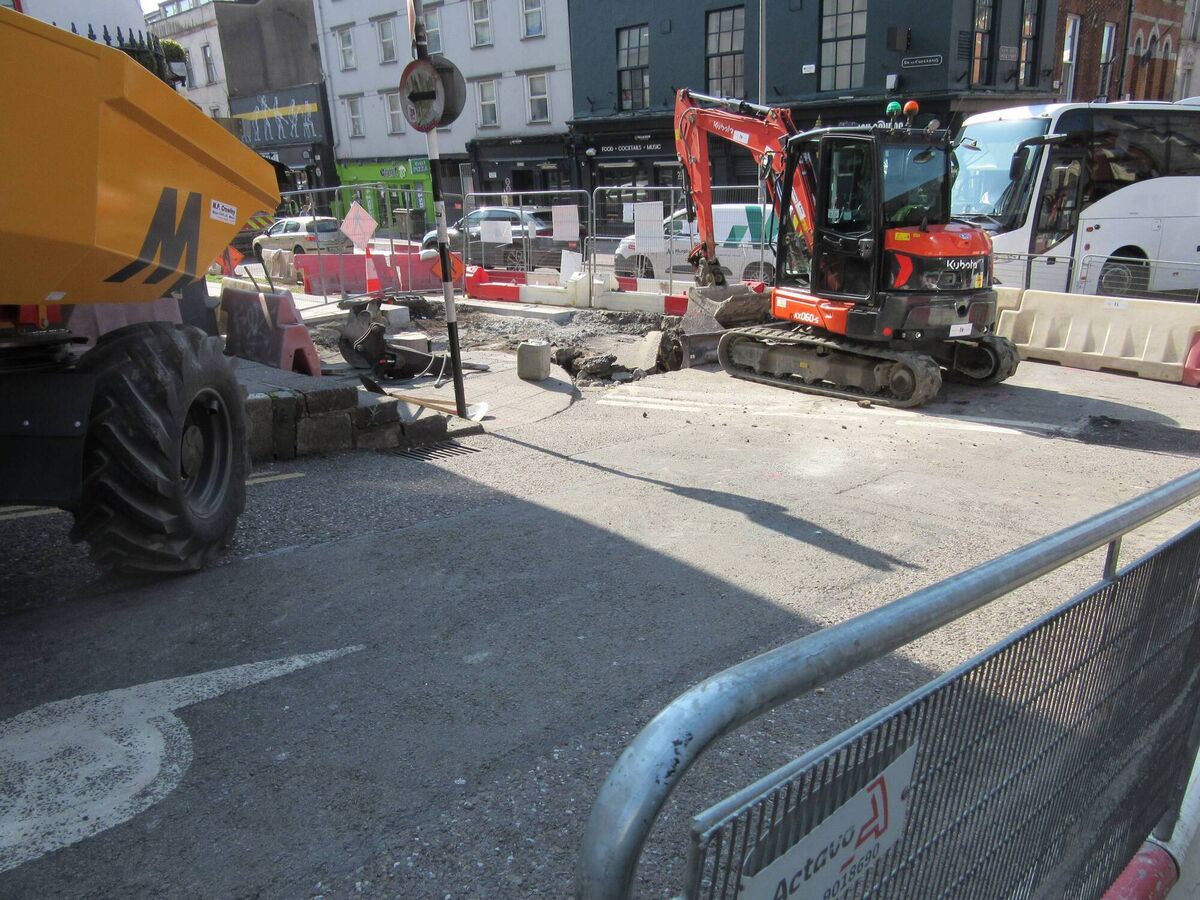
Work is ongoing on the MacCurtain St public transport project to improve bus and bike lane infrastructure—with works from Coburg St and Bridge St in the west to Penrose Quay in the east—while MacCurtain St gets a facelift and reverts to two-way traffic.
But eagled-eyed heritage crusaders spotted the removal from the base of St Patrick’s Hill of a paving stone engraved with a benchmark, and raised concerns on social media.
Benchmarks were either carved into, or screwed onto walls or buildings all over Ireland when work began on the first Ordnance Survey mappings of the country in the 1830s. It was the world’s first large–scale mapping exercise of an entire country.
One of the carved marks featured an arrow beneath a horizontal line which were cut into stones by ordnance staff at heights which had been measured precisely above sea level. The surveyors used the horizontal groove to form a ‘bench’ for a levelling rod, which allowed them to calculate distances between each of the benchmarks and their height relative to each other.
In a statement, Cork City Council said the limestone kerbing on St Patrick’s Hill has been excavated and removed to store. "While it is not possible to retain the benchmark in its current location it is to be incorporated into the new public realm enhancements in the vicinity,” a spokesperson said.
“Cobbles previously buried under the existing footpaths and roadways have similarly been incorporated into the project, for example at Ashley Hotel, Green’s Restaurant, and several other areas along the street, resulting in an overall increase in the use of cobbles throughout the area.”
Existing limestone kerbing and cobbles throughout the scheme area will also be incorporated into the design as near to their original position as far as is reasonably practicable, the council said.
CONNECT WITH US TODAY



Be the first to know the latest news and updates