Ukrainian students to represent Cork in competition with book on language of their country
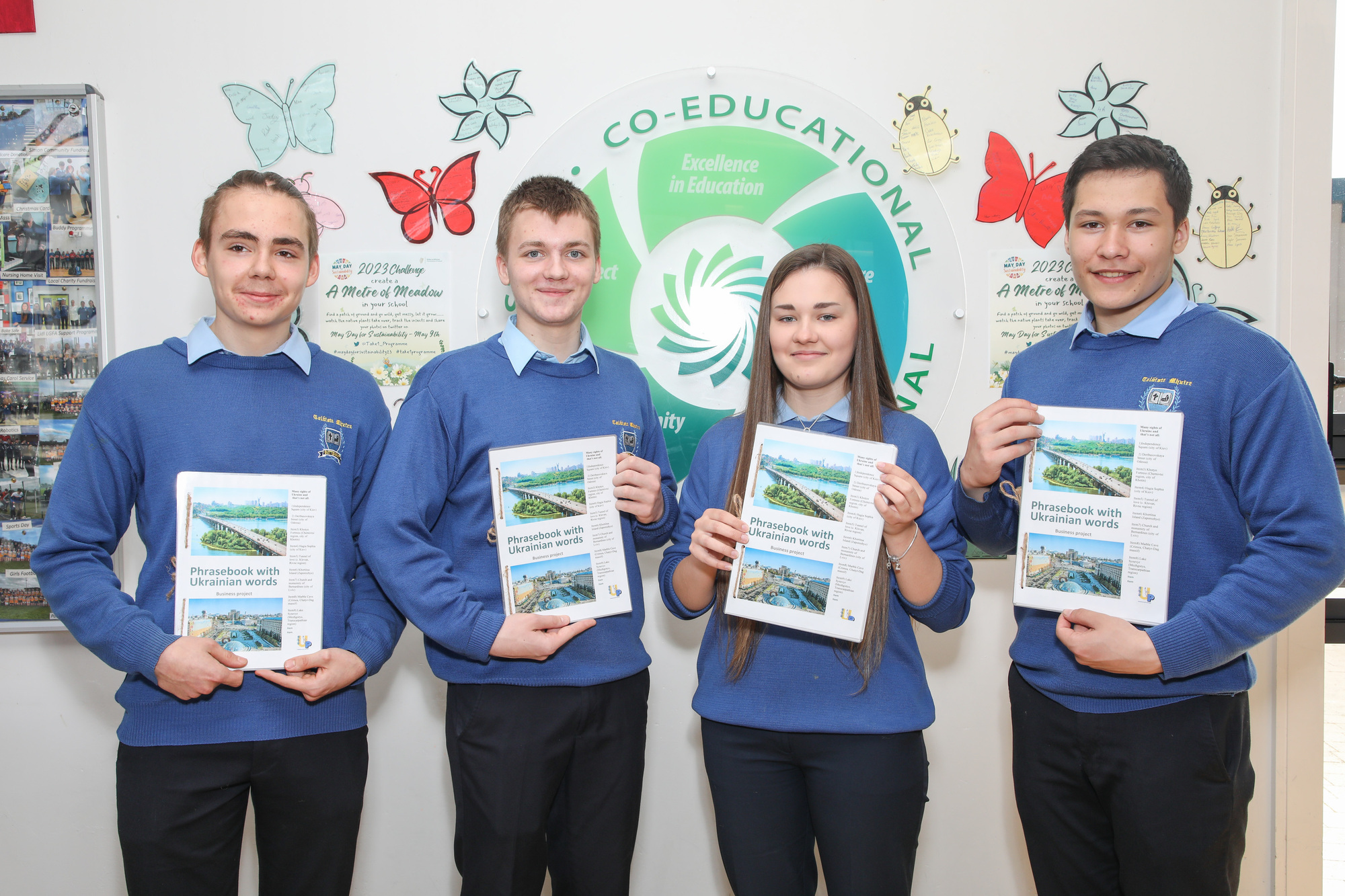
From left: Kostiantyn Mazur, Kostiantyn Polomanna, Alina Avramenko and Mykhailo Yakovenko. Picture: David Creedon
The prospect of striking up a conversation when starting school in a new country where you are unfamiliar with the language is daunting.
It’s a situation more than 15,000 Ukrainian students have faced as they enrolled in Irish schools across the country. It's also an initial hurdle faced by many schools, who want their new students to feel welcome despite any communication gaps.
Based on their experiences of starting school here, four Ukrainian students in North Cork set out to create a book that would not only help people learn their language but that would also give them a deeper understanding of Ukraine and its culture.
Transition year students Alina Avramenko, Mykhailo Yakovenko, Kostiantyn Mazur, and Kostiantyn Polomanna of Coláiste Pobail Naomh Mhuire in Buttevant will now represent Cork in the national finals of the Foróige Network for Teaching Entrepreneurship (NFTE) next week.
Their creation, the , is an accessible language guide full of essential phrases, as well as phonetic spellings to help Irish people pronounce Ukrainian words correctly.
It also includes more complex conversations necessary for navigating situations such as ordering food, asking for directions, and buying tickets.
As well as acting as a language guide, the book includes a wealth of information about Ukraine, its history, culture, and cuisine, like recipes for traditional Ukrainian dishes such as borscht.
The Foróige NFTE programme sees students study all aspects of starting and successfully running a business, by coming up with an idea, developing their product or service and designing a business plan.
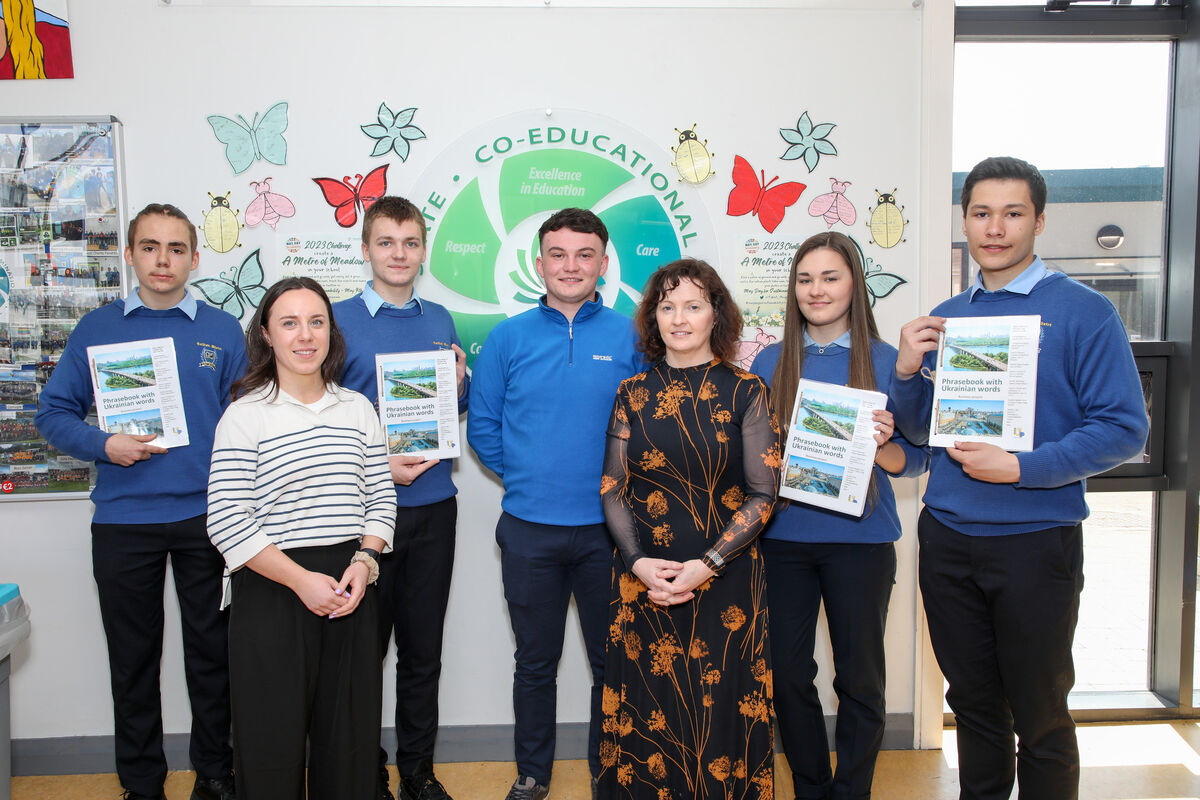
The four students were inspired by their own experiences of joining a new school in a new country, according to their business teacher Conor Curtin.
“When they started here, they would have loved if they had a book to give to teachers so they could make conversation with them," he said.
Coláiste Pobail has had 16 students join them from Ukraine. These students now use the phrasebook to help strike up conversations with their classmates and teachers.
The project has helped build up the four students’ confidence as they presented their ideas to judges in English throughout the NFTE competition, Mr Curtin added.
"They thought it really helped their communication skills, pitching in front of judges.”
Principal of Coláiste Pobail Donal O’Sullivan said initial language barriers were one of the main challenges schools faced when enrolling Ukrainian students.
“One of our main issues, as would have been the case with any Irish school receiving Ukrainian students, was communication.”
The phrasebook has “worked wonders for their own confidence and for the other Ukrainian students in the school”.
“We’re delighted for them, it’s a brilliant opportunity for them to go up to Croke Park in the finals, and we’ve really seen their confidence growing over the past number of weeks since they have qualified for this.”


CONNECT WITH US TODAY



Be the first to know the latest news and updates