UL student drowned in Kerry kayaking trip which 'was not properly risk-assessed'
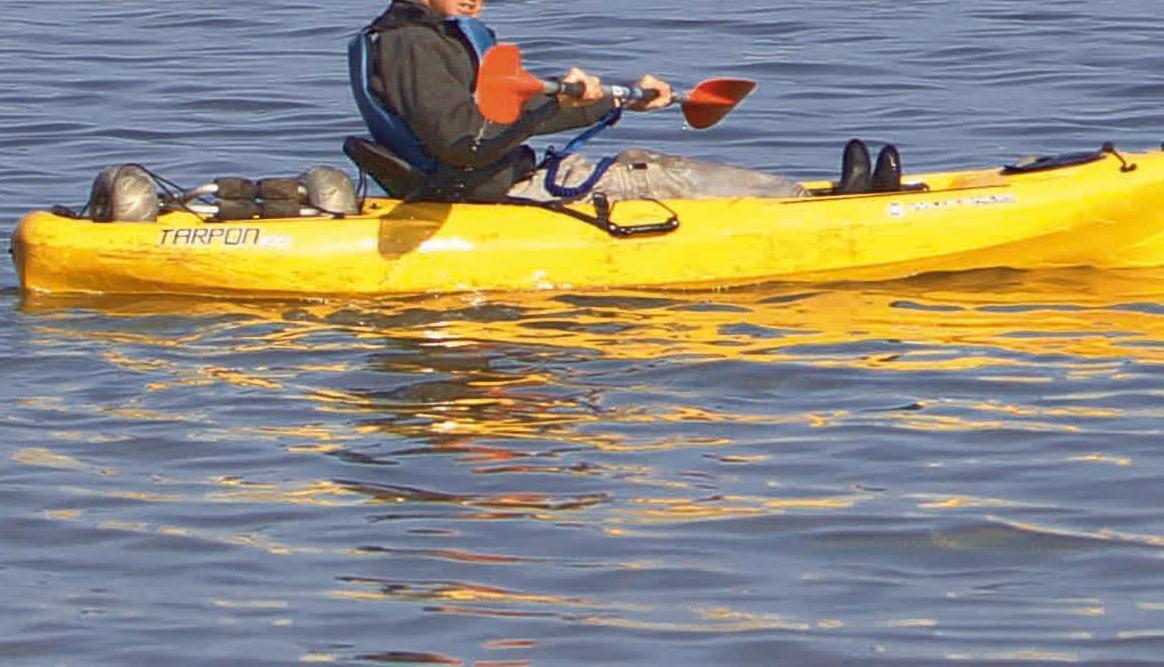
The 202-page report said the group’s leaders had assessed the river conditions and were satisfied it was safe for the group to kayak on as they planned to exit the water before the more difficult final section. File photo
A kayaking trip by a group of students from University of Limerick on a river in Co. Kerry three years ago during which a young woman drowned, was not suitable for all participants, an investigation has found.
A report by the Marine Casualty Investigation Board into the fatal incident involving a group of 27 members of the University of Limerick Kayak Club, said the trip was not properly assessed for risk given the prevailing conditions on the Upper Caragh River and the skills and experience of those taking part in a high-risk activity.
Aisling O’Connor (21) from Ballyshannon, Co Donegal, drowned after becoming unconscious and stopping breathing when she was trapped under a tree branch in the river near Glencar, Co Kerry, during the trip on November 2, 2019.
Ms O’Connor, a biochemistry student at UL, was resuscitated and transferred by helicopter to University Hospital Kerry but died two days later from her injuries. Another kayaker, a male student, who became unconscious, required medical resuscitation and hospitalisation in what the MCIB described as “a near fatality”.
The MCIB report said the River Caragh was graded as a “difficult to very difficult” river for kayaking, with hazards including overhanging trees, rocks on some rapids and the potential for wire fencing to run across the river identified on a popular website used by kayakers.
Weather conditions on the day were inclement with strong gusty winds and a yellow weather alert in force which had resulted in the River Caragh being swollen and its difficulty level increased.
The report said the persons in charge of identifying and assessing the risks were themselves insufficiently trained and experienced to make those calculations given the river conditions and the nature of the group.
It claimed there was a lack of adherence to the club’s safety statement and trips policy and procedure which had resulted in a lack of accredited training and associated poor decision-making.
“Had there been Canoeing Ireland qualified instructors available (or persons with recognisable equivalent training and experience) they would have identified that the group was too large and its make-up too inexperienced and would not have approved a trip that involved a group of beginners in those conditions,” the report stated.
It also observed that the lack of any supervision or audit of the safety of UL students engaged in high-risk activities by the university’s students’ union had contributed to gaps in the kayak club’s safety environment.
In addition, the report said the absence of any overarching “spheres of responsibility” between the students’ union and the university had led to an environment at club level where there was a serious disregard for the kayak club’s safety statement and policy and procedure on trips as well as Canoeing Ireland’s recommended standards.
The 202-page report said the group’s leaders had assessed the river conditions and were satisfied it was safe for the group to kayak on as they planned to exit the water before the more difficult final section.
It claimed the absence of a comprehensive risk assessment was a main factor for a series of capsize incidents during the trip as well as an underestimation of the grade of the river following heavy rainfall and swollen river courses.
The report said no assessment was carried out following these earlier difficulties which could have resulted in the remainder of the trip being abandoned. Different decisions might have been taken with more and better qualified instructors, the report claimed.
UL informed the MCIB that it had no role in club management or safety and is unconnected with the students’ union and associated clubs. Both UL and its students’ union maintained they were entirely independent of each other with the students’ union saying that no recommendations should be addressed to the university.
However, the MCIB said that position was not entirely consistent as UL had acknowledged it had a role in working with the students’ union to address any recommendations.
The MCIB said it had not been provided with any evidence of changes in safety practices or learnings, although it had been informed that the kayak club had engaged external safety consultants. However, it expressed concern that there was no reference to any engagement being planned with Canoeing Ireland.
The report said the inconsistent position of the students’ union with regard to its role in club safety and its aversion to any input from UL might “not lead to the optimum improvement in safety that is required.
“There is an insufficient safety regime on a third-level education campus if clubs carrying out kayaking, which is a high-risk sport, are left to their own devices without any safety auditing from a clearly identified and empowered 'on-campus entity'. This absence was a contributory factor in this incident."
The MCIB issued a series of safety recommendations addressed to the club, students’ union and UL including a review by UL’s Kayak club of its procedures for assessments of planned trips.
It also recommended that the club should suspend any further activities until its safety regime was audited to a standard acceptable to Canoeing Ireland. The MCIB acknowledged that the various parties had already taken steps to improve safety since the start of its investigation.
CONNECT WITH US TODAY



Be the first to know the latest news and updates