Transport and homes driving emissions in Cork city, first-of-its-kind probe shows
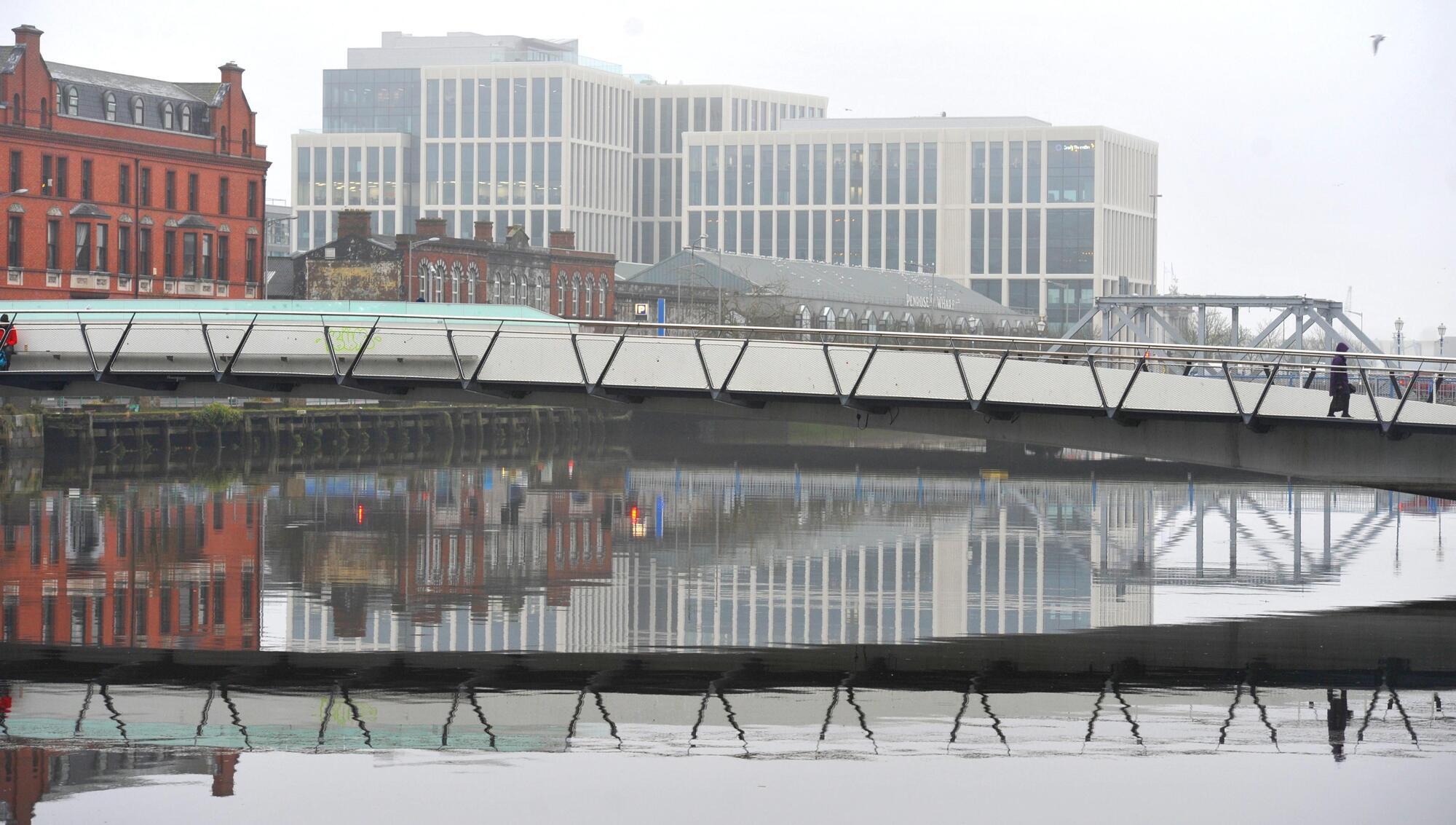
The Mary Elmes Bridge over the River Lee, Cork City. Power and energy infrastructure in the city constitute 36% of local emissions.
Local transport and homes are the major drivers of emissions in Cork, a first-of-its-kind probe into the city's carbon trail has found.
Research carried out as part of Cork's inclusion in the World Economic Forum's (WEF) Net Zero Carbon Cities initiative, spearheaded by professional services firm Accenture, found that:
- local transport contributes 31% of Cork city emissions.
- built environment accounts for 27% of the city’s emissions, with this percentage split across domestic and commercial building energy use (3:1).
- power and energy infrastructure in the city constitute 36% of local emissions.
The research was carried out by University College Cork for the initiative. Cork is the first Irish city to be included.
Accenture brought 18 organisations such as UCC, AIB, Cork City Council, ESB, Gas Networks Ireland, and wholesaler Musgrave together for the initiative, which aims to accelerate progress towards net zero emissions in cities around the world.
"Cities represent the biggest challenge and the biggest opportunity to tackle climate change, as we know that cities consume 78% of the world’s primary energy and generate more than 70% of global carbon emissions," Accenture Ireland's sustainability lead Niamh O'Gorman said.
Ms O'Gorman said she was "blown away" by the enthusiasm for the initiative in Cork.
"This initiative is timely with Cork having also been selected among the pioneer participants in the European Commission’s Climate-Neutral & Smart Cities Mission, to navigate and accelerate the local journey to transition ahead of current targets," she added.
Cork and Dublin were among 100 cities chosen by the European Commission in April to participate in its cities project aimed at climate neutrality by the end of the decade.
The two Irish cities were chosen out of 377 across the continent as "experimentation and innovation hubs to put all European cities in a position to become climate-neutral by 2050" as part of the so-called Cities Mission.
Following the findings of the UCC emissions study, the 18 organisations, private and public, have begun to identify ways to reduce the burden in Cork, as well as identifying opportunities for progress, Ms O'Gorman said.
Strategy lead for Accenture in Ireland and a lead on Accenture’s WEF work, Karen O'Regan, said the urgency of the climate crisis demands immediate action in order to turn ambition into progress.
Local and national leaders came together with a "real appetite" for action, she added.
"Cork has a wonderful opportunity now to lead in the transition to net zero, generating a positive impact for the people, communities and businesses in the city," she said.
According to the WEF, cities "are the frontline in tackling climate change".
Cities house more than half of the people in the world and account for more than two-thirds of global emissions, yet they cover only 3% of the planet’s land surface, it said.
By 2050, over two-thirds of the world population are set to live in cities, and changes need to happen now to reduce emissions and deliver resilient and equitable urban ecosystems, according to the WEF.
CLIMATE & SUSTAINABILITY HUB
CONNECT WITH US TODAY



Be the first to know the latest news and updates