Paramedic student working on Covid frontlines overcomes dyslexia to graduate from UCC
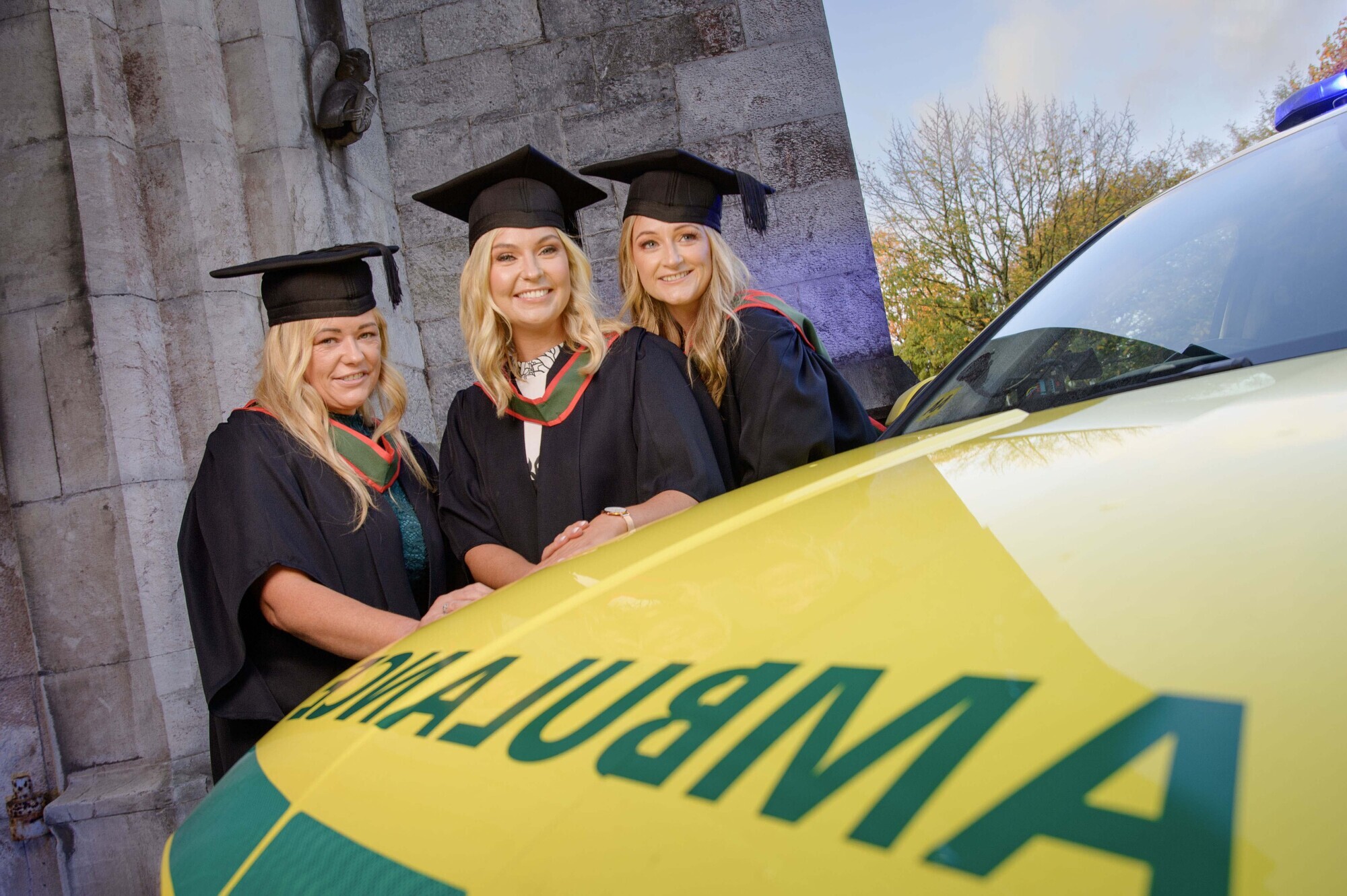
All 22 of the graduates now go on to work as paramedics within the health service having secured permanent contracts with the National Ambulance Service
Paramedic student working on Covid frontlines overcomes dyslexia to graduate from UCC

(Left to right) Helena Kiely, Gráinne Kelly and Karen McNulty at their graduation from UCC’s Paramedic Studies BSc, run in collaboration with the National Ambulance Service. Picture: Daragh Mc Sweeney/Provision

A Cork woman who spent the Covid-19 pandemic working on the frontlines while studying to become a paramedic has spoken about how she learned of her severe dyslexia in her 30s.

Helena Kiely, from Minane Bridge, is one of 22 graduates conferred at University College Cork (UCC) on Friday, the first graduates from the new three-year degree course run in conjunction with the National Ambulance Service (NAS).


Throughout their studies at UCC, this group of students were on the frontline of the Covid-19 pandemic, donning PPE gear and caring for patients.

“I was really taken under the wing by paramedics and advanced paramedics in Cork city ambulance base,” Helena said.

“They are such a wonderful community and team there that they inspired me as a student. You are looking up to these really knowledgeable and skilled paramedics.

“The side of the job they are teaching you and mentoring you firsthand on a call, there’s so much value in that, and so much value in gaining that experience. You are part of a team.” 

Working as a care assistant for most of her career, Helena always had an interest in emergency care.

“I suppose it was finding the right time really,” she said.

She began a paramedic training course in Tallaght with NAS in 2018. While she loved her studies, she found herself struggling when it came to exams.

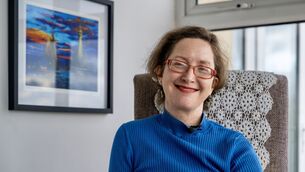
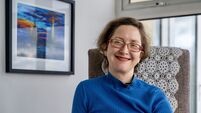
Helena Kiely: "I’d have a very positive view of being dyslexic. Nothing is unachievable in life, and once you have the tools and the knowledge to reach your full potential, it's just about finding the issue that you are struggling with." Photo: Kieran Minihane

“I just wasn’t progressing on certain exams. It was one of the tutors in the NAS college who said ‘Helena, what is going on with you? There’s something else here. You have what it takes and the knowledge, but you are just not able to portray it in exams’.

“He suggested that I had some sort of learning disability. I was sent off the course because of the lack of progression but they urged me to re-apply. I went away and got assessed and turns out I was severely dyslexic. With that diagnosis, I tell people I was never so happy to be diagnosed with a learning disability because I knew then it wasn’t from my lack of intellect.

“I knew then there was a reason I wasn’t seeing certain descriptive words in exams or reading questions wrong. I just tipped away in school. I was never a scholar by any means or getting As but I got over the bar."

“I suppose I didn’t really have any drive during my school years, whereas now I absolutely love my job, I love researching. Work for me is not work because I love it, it doesn’t seem like a chore. I am forever grateful for the tutors in the NAS who recognized my dyslexia the first day. They are very much unsung heroes, they are so academic, so highly skilled.” 

Taking on board the learning recommendations she was given by Dyslexia Ireland, she re-applied for the course, joining UCC in 2019.

Helena Kiely: "I absolutely love my job, I love researching. Work for me is not work because I love it, it doesn’t seem like a chore." Photo: Kieran Minihane

“It just goes to show everything happens for a reason, I’m now a part of the first ever degree class. I’d have a very positive view of being dyslexic. Nothing is unachievable in life, and once you have the tools and the knowledge to reach your full potential, it's just about finding the issue that you are struggling with.

“For me I adapted. For learning my medications, I recorded them on audio so I’d hear them back, I made flashcards so the concept of reading was less daunting.

It’s about getting rid of the stigma of dyslexia. It doesn’t mean you aren’t intelligent you just see things in a different way. Everything is achievable, but a positive mental attitude towards any challenge is essential.

Initially, working on the frontlines during the pandemic was unnerving, she said. 

“Everyone was wondering what was going to happen. The fear of the unknown, I suppose, but at the same time we were prepared so well, working with Covid was all we knew. 

"We were really, really well trained in the NAS about infection prevention and control, different procedures and about maintaining our own safety as well as the patients, and decontamination was a big thing as well.

"All of that was about learning and adapting about practice, we had to adapt in a way that kept everybody safe.” 

Her degree is “very much shared”, and she celebrated her conferring with her mum Adelheid and her three boys, Robert, Peter and Tommy.

“If it wasn’t for the support of my sons, my sons' father, and my family and friends I wouldn’t have been able to achieve what I achieved. I’d be joking with my boys ‘this is our degree, it’s not just mammy’s degree’.” 

Helena Kiely (second from right) with her children Robert (16), Tommy !11) and Peter (12) at the graduation. "I’d be joking with my boys ‘this is our degree, it’s not just mammy’s degree’.” Picture: Daragh Mc Sweeney/Provision

All 22 of the graduates from Friday now go on to work as paramedics within the health service having secured permanent contracts with the National Ambulance Service. UCC plans to launch a CAO entry pathway for Paramedic BSc to begin in September 2024.

The Covid-19 pandemic has changed how emergency and urgent care is accessed, according to director of the NAS Robert Morton.

“As the wider health service continues to realise the potential of paramedicine, we need sustained recruitment to our National Ambulance Service to deliver on those expectations, provide excellent care to our patients and offer graduates exciting career opportunities. Paramedicine is a highly rewarding profession and I wish our new graduates all the very best.”

x

More in this section

Lunchtime News

Newsletter

Keep up with stories of the day with our lunchtime news wrap and important breaking news alerts.

Cookie Policy Privacy Policy Brand Safety FAQ Help Contact Us Terms and Conditions

© Examiner Echo Group Limited