Traffic-calming measures and footpath connectivity 'a must' for future Cork housing developments
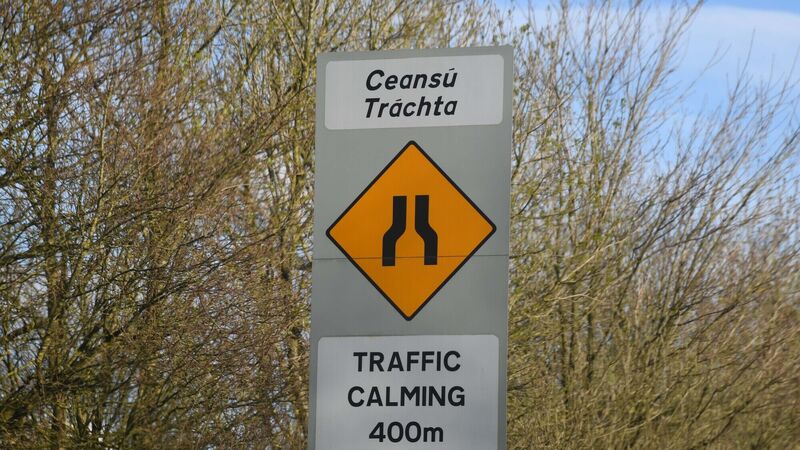
There was unanimous cross-party support among Cork councillors for traffic-calming measures and footpath connectivity to be enshrined in future in the county council's planning policy. File picture: Denis Minihane
Developers in Co Cork may have to incorporate traffic-calming measures in housing estates they build in future and ensure they have proper cycling and walking connectivity to town centres.
County councillors are insisting these measures be incorporated as conditions attached to granted planning permissions, as it is becoming too costly for the local authority to retrofit traffic calming and create footpath connectivity to town centres.
Fianna Fáil councillor Sean O’Donovan received unanimous cross-party support when he called for the measures to be enshrined in future in the county council's planning policy.
He said many estates are to get speed limits reduced to 30km/hr, but this was not workable in a lot of them as they were not designed in a fashion that slows down vehicles.
Independent councillor Paul Hayes pointed out it costs about €3,000 for the council to construct a speed ramp and therefore retrofitting them in many estates is costing the local authority a fortune. He maintained it was better to get developers to design low-speed roads and this should be enshrined in planning policy.
Fine Gael councillor Kevin Murphy maintained they should go even further and insist developers create roads, public lighting and footpaths before they are even allowed to build one house.
Fine Gael councillor John Paul O’Shea said some developers were putting in chicanes to slow traffic in estates, but it needed to be across the board on the basis that it is likely in the future that all estates will have 30km/h limits introduced.
”There should a consistency to reduce speeding in estates. Introducing a 30km/h limit will only have a negligible impact if traffic-calming work isn’t in place as well,“ Fianna Fáil councillor Seamus McGrath said.
“Chicanes are common in estates throughout Europe. There’s a raft of planning applications in at the moment and this should be dealt with now,” Fine Gael councillor Anthony Barry added.
Fianna Fáil councillor William O’Leary said they were regularly told at municipal district council meetings that funding was not available to retrofit traffic calming in estates and this would be a solution to the issue going forward.
Fine Gael councillor Michael Hegarty urged the council’s planning policy unit “to take this on board” and make traffic-calming mandatory for all new estates, along with safe, designated walking and cycling corridors.
“If we’re serious about a modal shift to more walking and cycling we need this put in place,” independent councillor Gillian Coughlan said.
James Fogarty, the council’s deputy chief executive, said if estates were built quite a bit away from a town centre it might not be economically viable for the developer to provide lengthy footpath connectivity.
He also suggested speed ramps were not always the best solution as there have been cases in estates that cars flying over them keep residents awake at night.
However, Mr Fogarty said he understood what councillors were calling for and would “impress upon” the planning policy unit that there should be some mechanisms to address the issues raised.
The council’s director of planning, Michael Lynch, said in a report given to councillors that the new County Development Plan contains a range of objectives to facilitate and promote sustainable transport, including active travel.


CONNECT WITH US TODAY



Be the first to know the latest news and updates