Feat of Endurance: Mensun Bound's search for Shackleton's lost Antarctic ship
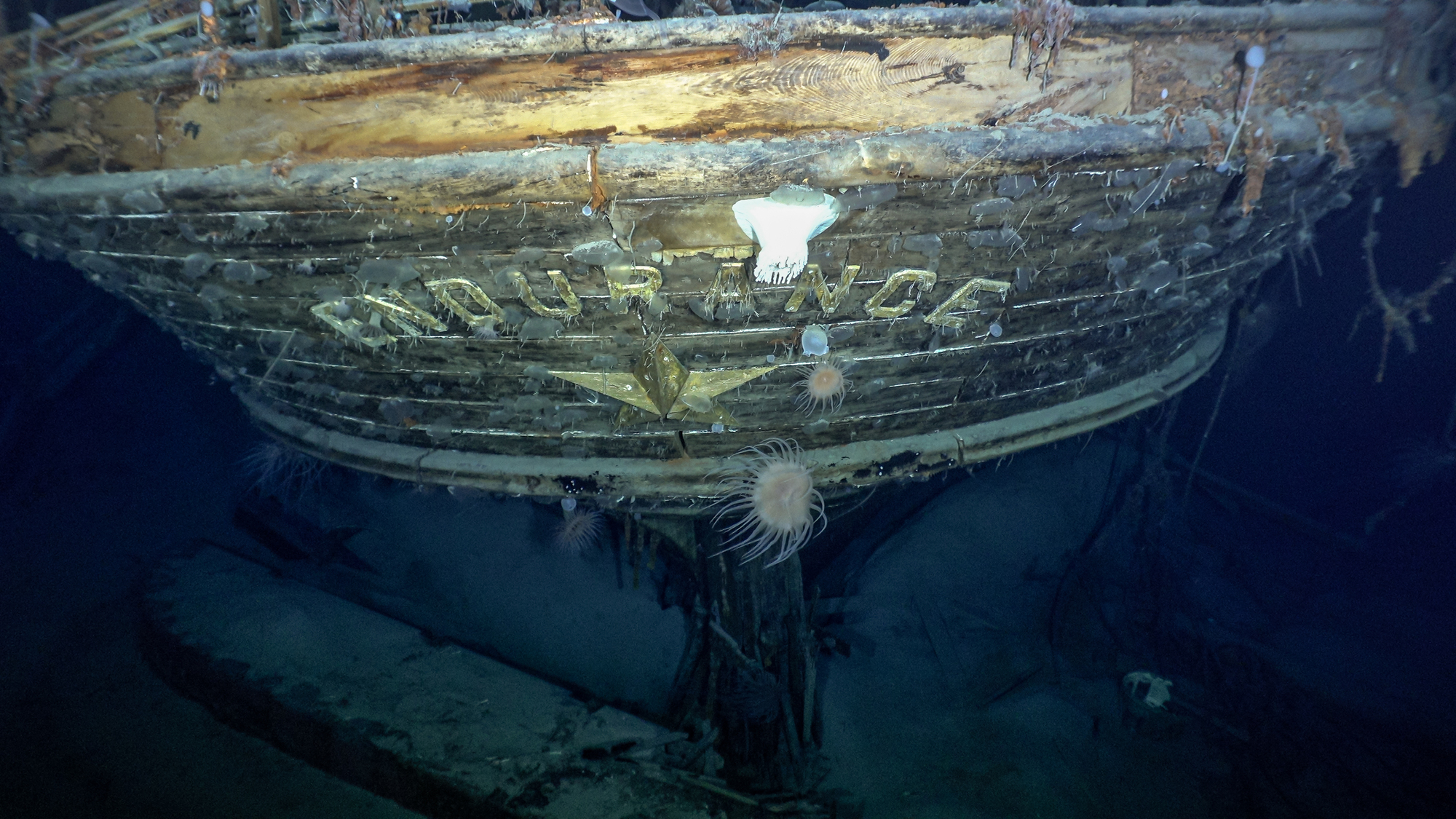
The stern of the wreck of Endurance found at a depth of 3,008 metres in the Weddell Sea, approximately four miles south of the position originally recorded by Captain Worsley. Picture: Falklands Maritime Heritage Trust
Marine archaeologist Mensun Bound has witnessed great works of art lying on the seabed, chests overflowing with treasure, and “skulls gaping up at me through the sediment”.
He remembers finding a gold coin from the wreck of the Tudor warship Mary Rose, and slabs of gold mixed with Ming porcelain from a shipwreck off the east African coast.
“These are moments of pure, undiluted astonishment that make your synapses crackle with surprise and wonder; moments that send you tumbling back over the decades and centuries; precious moments when you feel you have made some kind of mind-touch with people from other eras and civilizations,” he writes in his new book .
“But nothing, I tell you, nothing compares with finding the Endurance....”
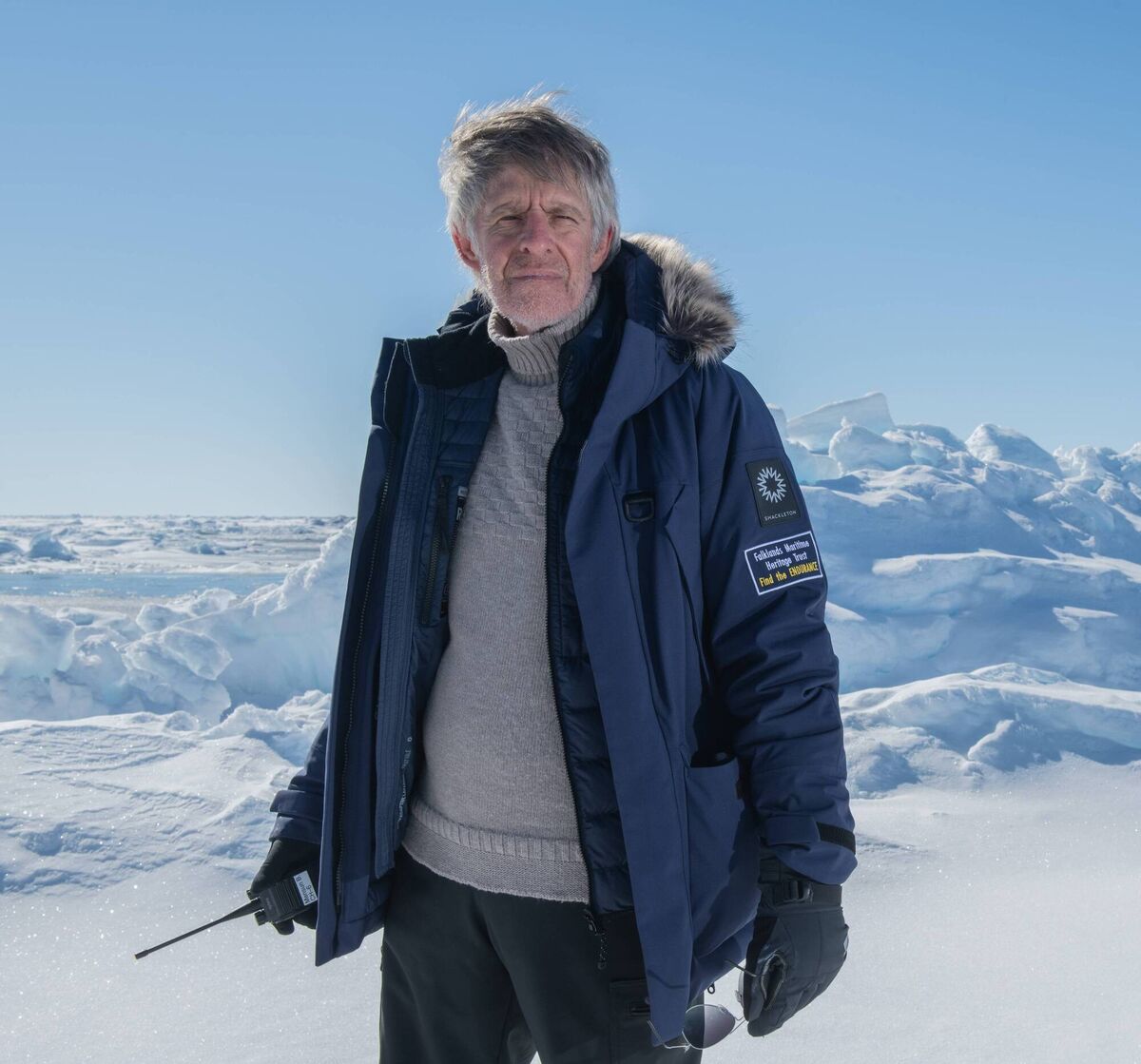
Bound, who is due to speak at the Shackleton Autumn School in Athy, Co Kildare, on October 29, says he can still recall that “hairs-rising-on-the-back-of-your-neck feeling” when he observed the video of Ernest Shackleton’s most famous ship, filmed at a depth of 3,008 metres in Antarctica’s Weddell Sea.
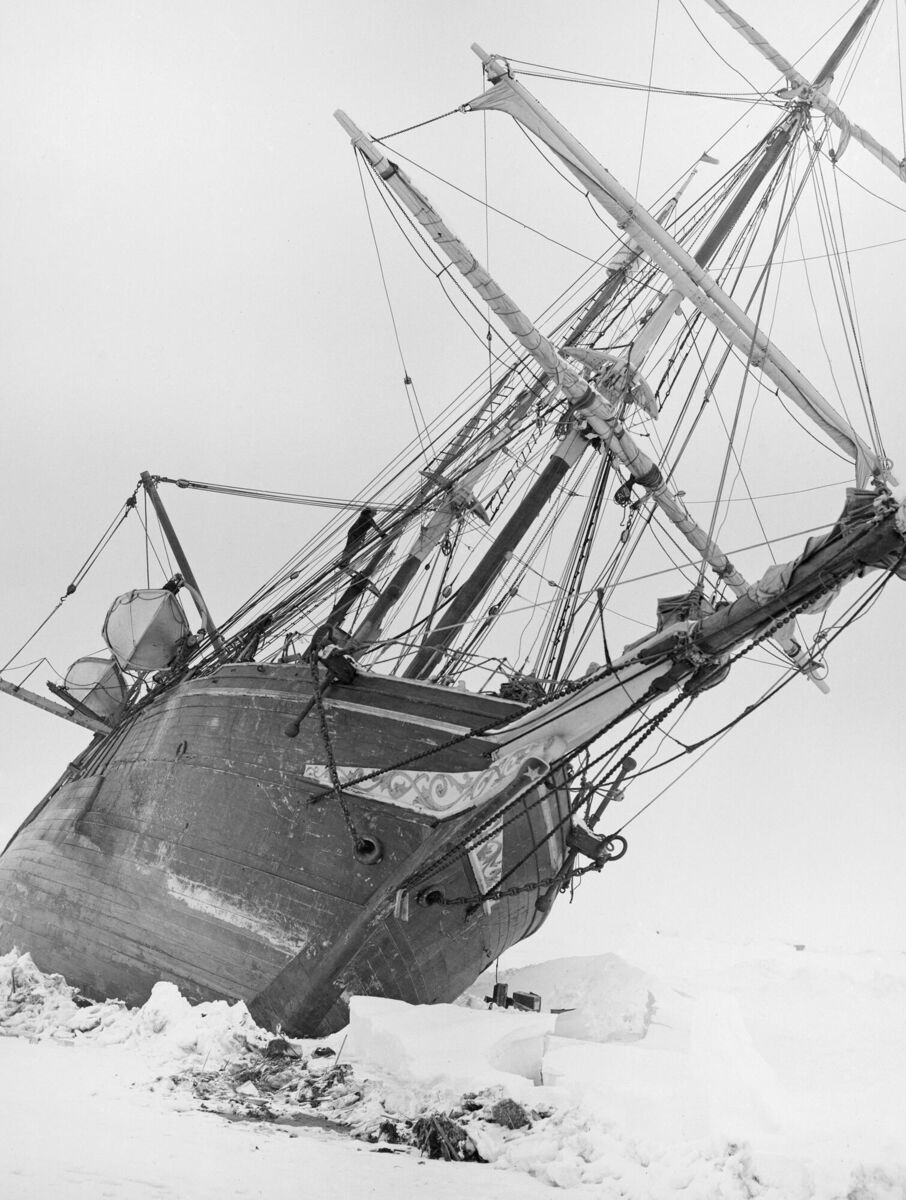
“My first view was of the stern of the ship, and then there was the rudder which had given them so many problems, lying in the mud innocently, but we could clearly see the damage it had sustained,” he told The .
“Then there was the ship’s name arching over the stern, and the camera rose higher to capture the ship’s wheel, and higher again to film the portholes of Shackleton’s cabin....it was quite surreal,” he said, recalling those magical moments on March 5.
Just a fortnight before, he and an international team on board the South African icebreaking polar supply and research ship SA Agulhas II had fallen into a collective depression over the Russian invasion of Ukraine.
“We may have been thousands of miles away and off the charts, but we weren’t immune to world news. And then, all of a sudden there was this very positive thing, where the clouds seemed to peel back and the sun came out for a brief time, and Dan Snow, our historian on board, was speaking to millions of people around the world...”
A fifth generation Falkland islander who grew up, as he says, “bringing peat in for fires on a horse and cart”, Bound has discovered many of the world’s best-known shipwrecks.
Many artefacts he recovered are on exhibition in over a dozen museums around the world. The Discovery Channel, which nicknamed him the 'Indiana Jones of the Deep', commissioned a four-part series on his work, entitled Lost Ships.
He began his career in underwater archaeology in Turkey with the Institute of Nautical Archaeology. He founded the first academic unit for maritime archaeology in England, and from 1992 to 2013 was the Triton Fellow in Maritime Archaeology at St Peter’s College, Oxford University.
Among his expeditions have been location of the Campese Bay wreck off Giglio in Italy, which filled vital knowledge gaps on the Etruscan trade around 600 BC; and recovery of intact porcelain from the Hoi An ship, which was wrecked in the South China Sea in the mid 15th century.
He has surveyed Lord Nelson’s ship, Agamemnon, he located the first world war German wreck of the Scharnhorst off the Falkland Islands; and he was involved in several expeditions to the battle cruiser Admiral Graf Spee, a symbol of German might, which was scuttled off Uruguay in 1939.
Coming from the Falklands, Bound had been a Shackleton enthusiast from a very young age. 'The Boss' had been to the Falklands several times. On at least one visit, Shackleton, Tom Crean, and the captain of the Endurance, Frank Worsley, had stayed at a boarding house run by Bound’s great-great-uncle, Vincent Biggs and left their signatures in its guest book.
However, when the idea of an expedition to search for the Endurance was mentioned over a coffee in London’s South Kensington just over a decade ago, Bound wasn’t too keen.
“It was August 2012, and I was meeting a friend in the original Caffe Nero, a coffee shop near my offices and, coincidentally, a place where I would often run into the Irish artist Francis Bacon as he was close by,” he says.
“That year was the centenary of the death of Antarctic explorer Sir Robert Falcon Scott, and I had been contacted by the Natural History Museum to see if I might be able to locate his ship, Terra Nova,”he recalls.
“I was waiting for the coffee and idly flicking through that day’s edition of The Times when I saw a report on page 7 which said that the Terra Nova had been found. I had really good co-ordinates for it and was fairly sure I would find it, so I was completely shattered when I read that,” he says.
“My friend said immediately ‘what about the Endurance?’, and though I tried to talk him out of it, as I thought the technology wasn’t ready, I think that is when the expedition was conceived,” he says.
Bound had described it as “the most unreachable shipwreck in the world” after it was trapped and then slowly sank in pack ice in November 1915.
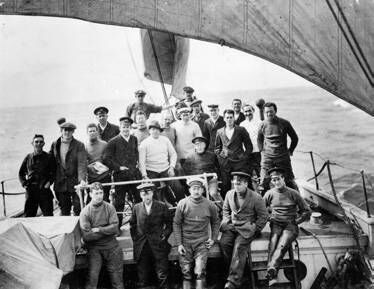
The ship’s loss left Shackleton and 27 crew on the Imperial Trans-Antarctic Expedition stranded until the daring 800 nautical mile rescue mission undertaken by the leader and crew including Kerryman Tom Crean and Corkman Tim McCarthy from Elephant Island to South Georgia in the lifeboat James Caird.
During many months of preparation, Bound pored over Shackleton’s writings and the diaries kept by his crew, but he also had one clue - the sextant position taken by Endurance captain Frank Worsley on November 21st, 1916, the day after the ship finally slid beneath the ice.
However, he and his colleagues were also venturing into uncharted territory.
The Admiralty Chart 4024 covering the Falklands, South Georgia and the Weddell Sea has no seabed contour lines for the area within the “armpit of the Antarctic peninsula” which they intended to explore, as it has not been surveyed. They were literally heading “off the map”.
As he documents in his new book, there were many setbacks before that golden moment in March of this year. The first expedition in 2019, which was funded by the Flotilla Foundation, involved enormous logistical effort and monies, but failed to locate the wreck.
The multi-year pack ice they experienced in the Weddell Sea was almost impenetrable, and at times SA Agulhas II got stuck. There were a number of technical hitches, and one of the biggest blows was loss of their main submersible vehicle. As they were leaving, they also encountered a monumental Antarctic storm.
The 2019 expedition was a “learning experience”, Bound says, as its main focus was on scientific research and the Endurance search was a secondary goal.
“We realised we had to focus on the Endurance, solely,” he said. The 2022 expedition, funded by the Falklands Maritime Heritage Trust, acquired a Sabertooth autonomous vehicle manufactured by SAAB in Sweden — the sort of equipment which Bound says would have been “in the realms of science fiction” when he first began surveying shipwrecks.
Even with the latest technology, his team of pilots, analysts and surveyors, led by Nico Vincent and his deputy JC Caillens, still had to work in very hazardous conditions, with temperatures dropping to -35º Centigrade and a risk of frostbite in their “shelter” or metal cabin on the ship’s rear deck. There was a false sighting on February 20, which had left the team crestfallen.
Bound was actually out walking on ice when the breakthrough occurred. François Macé, who had spent years in the French navy as a mine hunter, was “the master of sonar interpretation”, and it was only when he examined the acoustic data appearing on screens and uttered the words ‘C’est elle’that they knew the ship had been found.
“When we launched the project in 2018 at the Royal Geographical Society in London, I made a number of predictions — that the ship would be upright, that it would be sitting proud on the seabed and not buried, and that it would be in an excellent state of preservation as there are no wood consuming marine parasites in the Antarctic," Bound says.
“And that turned out to be the case. You could count the fastenings on the hull. I have spent my whole life looking at wrecks of all kinds, and this has to be one of the most extraordinary,” he says. Its location also proved the accuracy of Worsley’s sextant readings.
An agreement had already been made that nothing on the ship would be touched, and it would be the subject of a preservation order, Bound says. Again, he and his colleagues wanted to avoid the “free for all” that occurred after the wreck of the Titanic was found 400 nautical miles off Newfoundland in 1985.
For him, wrecks are the “perfect time capsule”, representing a “fixed moment in time”, but so much was already known about the Endurance.
“So it’s the inspirational story, the heritage value beyond words. Shackleton wasn’t necessarily an optimist, but he preached optimism, he wanted everyone to be positive, and he really was a great leader, keeping 27 people alive in the most hideous lethal environment known to man...”
is published by Macmillan on October 27.
Mensun Bound is speaking at the Shackleton Autumn School in Athy, Co Kildare, on Saturday, October 29. See the Shackleton Museum for further details.

CONNECT WITH US TODAY



Be the first to know the latest news and updates