Watch: New Blarney Castle garden hoping to inspire love of jellyfish
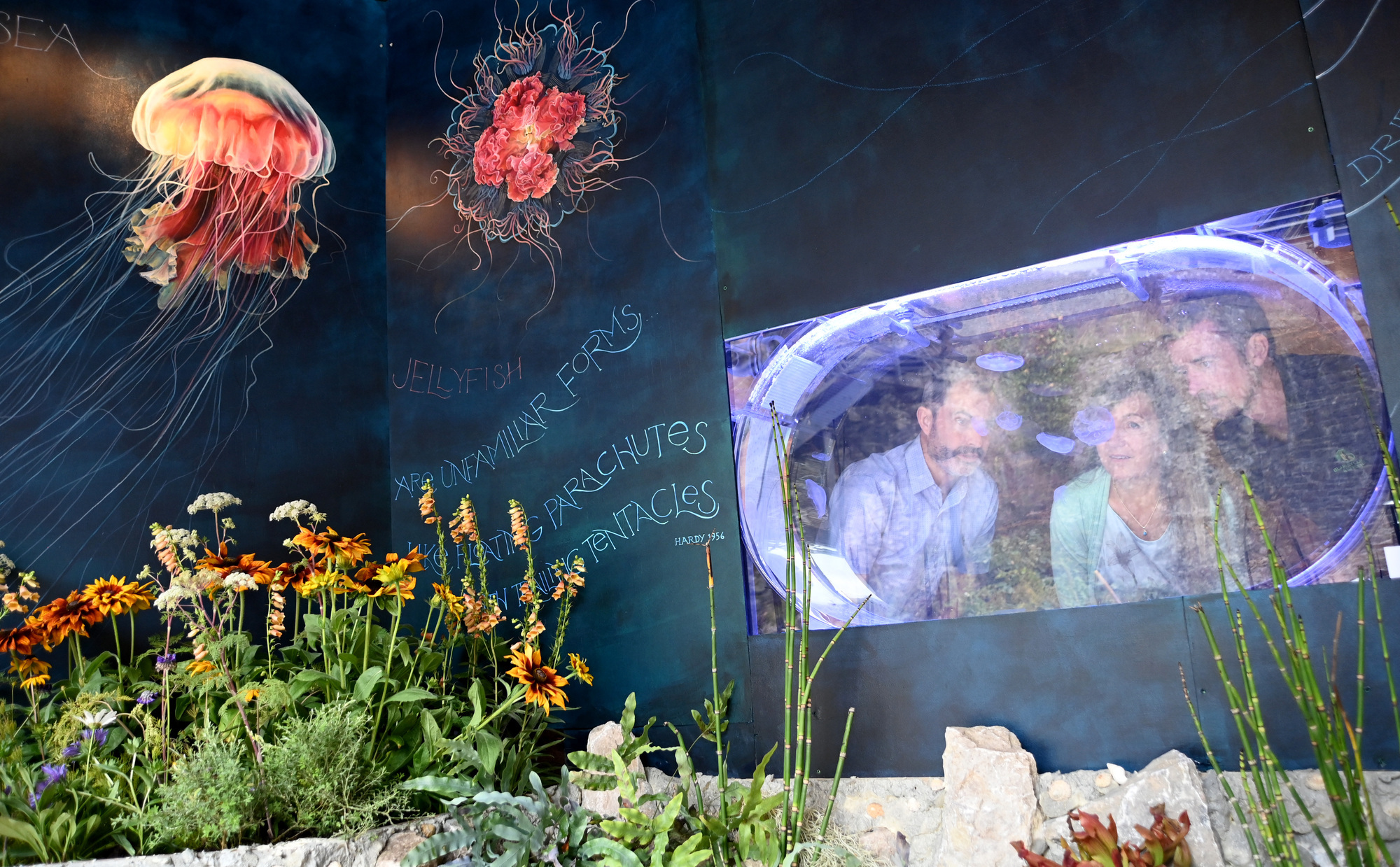
A pop-up jellyfish garden has been installed at the Court Exhibition Rooms at Blarney Castle, in an attempt to change the perceptions of jellyfish. Picture: Larry Cummins
It has inspired myths and legends for centuries — now world-famous Blarney Castle is set to inspire a love of jellyfish and the sea.
The jellyfish garden, a new concept garden that has been created in an old converted storehouse at the foot of the historic landmark in Cork, was officially opened last night.
It features a variety of specialised plants and bespoke artwork, all inspired by jellyfish and their role in the sea, set around a specialist aquarium that is home to a group of moon jellyfish.

Dr Tom Doyle, a marine biologist and lecturer in zoology at University College Cork, and one of Ireland’s leading jellyfish experts, who worked on the project with head gardener and designer with Blarney Castle and Gardens Adam Whitbourn and botanical and natural history artist Shevaun Doherty, said they hope the pop-up garden, which is in place until next Monday only, helps shatter some of the myths around jellyfish.
“Jellyfish are feared and misunderstood creatures,” he said.
“Yet we can immediately recognise one from their distinctive shape, tentacles, and transparency.
“The jellyfish garden aims to take jellyfish out of the sea and place them in a very different environment, a garden, where we can compare them with plants and flowers so that the viewer sees them in a different and positive light and understand them better.”
Dr Doyle’s research focuses on investigating the ecological role of jellyfish in our seas, the socio-economic impacts of jellyfish, and on first aid for treatment of jellyfish stings.

He also uses satellite and acoustic tags to track the movements of sharks and rays, and even jellyfish.
Ms Doherty has won many awards for her work, including gold and best in show at the 2022 Bloom Festival. She has also designed a set of Irish postage stamps featuring native Irish bees.
Mr Whitbourn designed and built the estate’s ‘poison garden’ in 2014 — one of the most visited spaces in the castle gardens — and also designed and built a pop-up garden for the Bloom Garden Festival in Dublin to showcase Blarney Castle. He said this is the first time in his near 15 years at Blarney Castle that he has worked with jellyfish.
“We are always up for something new, though,” he said.

The three worked on the garden project thanks to funding from Science Foundation Ireland’s Discover programme, which funds projects that promote and encourage public engagement with science, technology, education, and maths subjects.
They have installed a specialised aquarium, called a kreisel tank, from the German word for ‘merry-go-round’, that creates a circular and bubble-less flow of water which keeps the jellyfish suspended.
It was designed and manufactured by Schuran Seawater Equipment in Germany.
Around it they have chosen plants that are similar in shape or symmetry to jellyfish, or plants that look like seaweed or have shapes that look like the swimming bells of jellyfish. One plant, Spanish moss/tillandsia, actually looks like the tentacles of a jellyfish and when suspended in a basket.
The garden also features large artworks, including , which compares the stinging mechanism of nettles and jellyfish.
The artwork illustrates how nettles have tiny barbs, or hollow hairs, that break off upon contact with our skin and release a toxin into your skin. In contrast, jellyfish have millions of microscope nematocysts, stinging capsules, that explosively inject venom into skin upon contact.
The feature artwork, entitled , shows Leonardo Da Vinci’s within a half compass jellyfish and half flower circle shape, positioned about the aquarium.

Mr Whitbourn said show gardens such as this aims to inspire and help people come up with ideas for their own garden.
Blarney Castle was built nearly 600 years ago by one of Ireland’s greatest chieftains, Cormac MacCarthy, and has attracted millions of visitors to kiss the famous Blarney Stone.
Its magnificent gardens span some 60 acres, with a network of paths leading visitors through various gardens, arboretums, and avenues.