'Absolute clarity' over Limerick's use of CCTV needed, says minister
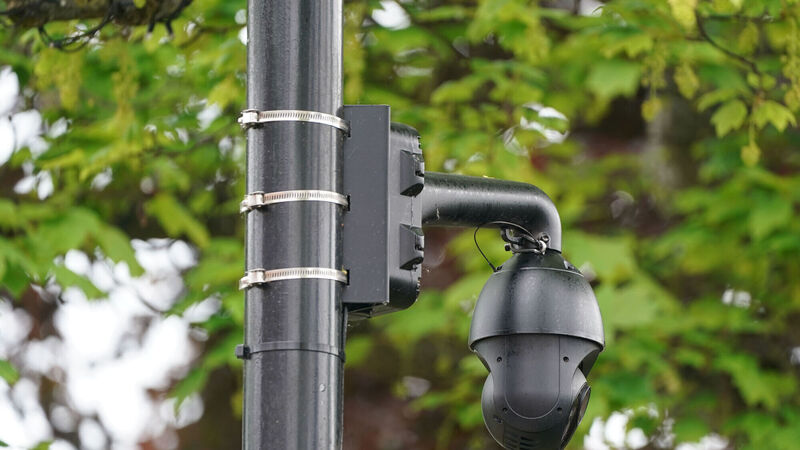
Picture: Joe Giddens/PA Wire.
A Fine Gael TD contacted Justice Minister Helen McEntee telling her that there should be “absolute clarity” that Limerick City and County Council be allowed to share CCTV footage with the gardaí.
Patrick O’Donovan, a junior minister at the Office of Public Works, wrote to his Fine Gael colleague Ms McEntee about the decision by the Data Protection Commission to fine the Limerick council €110,000 and order it to turn off more than 350 CCTV cameras which it had installed illegally.
Mr O’Donovan had vociferously objected to the decision at the time it was published in the same month, stating that “only those who have something to be afraid of should be afraid of the use of CCTV”.
The decision by the commission resulted from an investigation lasting three years.
It found that the Limerick council had breached GDPR in 50 instances by installing hundreds of cameras with no lawful basis over the previous 15 years, something investigating officer Tony Delaney described as “quite shocking”.
In correspondence with Ms McEntee, Mr O’Donovan said that he would “obviously like to see the CCTV programme widened and enhanced, but to be done in a manner where we have absolute clarity that the council is free and within their rights to hand over any and all footage to investigating personnel”.
“This is, after all, the reason and rationale for which I and the people I represent want these cameras and the substantial investment they represent,” he said, while requesting he be kept informed of “any amendments or changes to the statutory basis in which the CCTV program is based”.
In response later that week, Ms McEntee said that CCTV was a “useful deterrent” for crime, and “an important investigative tool for An Garda Siochána”.
She said that the new Garda Síochána (Digital Recording) Bill, due for publication this year, “will provide a new legal basis for the administration of community CCTV schemes by local authorities and An Garda Síochána”.