Cork in 2101: Vertical gardens, flying eco taxis, and a vibrant weather-protected city centre
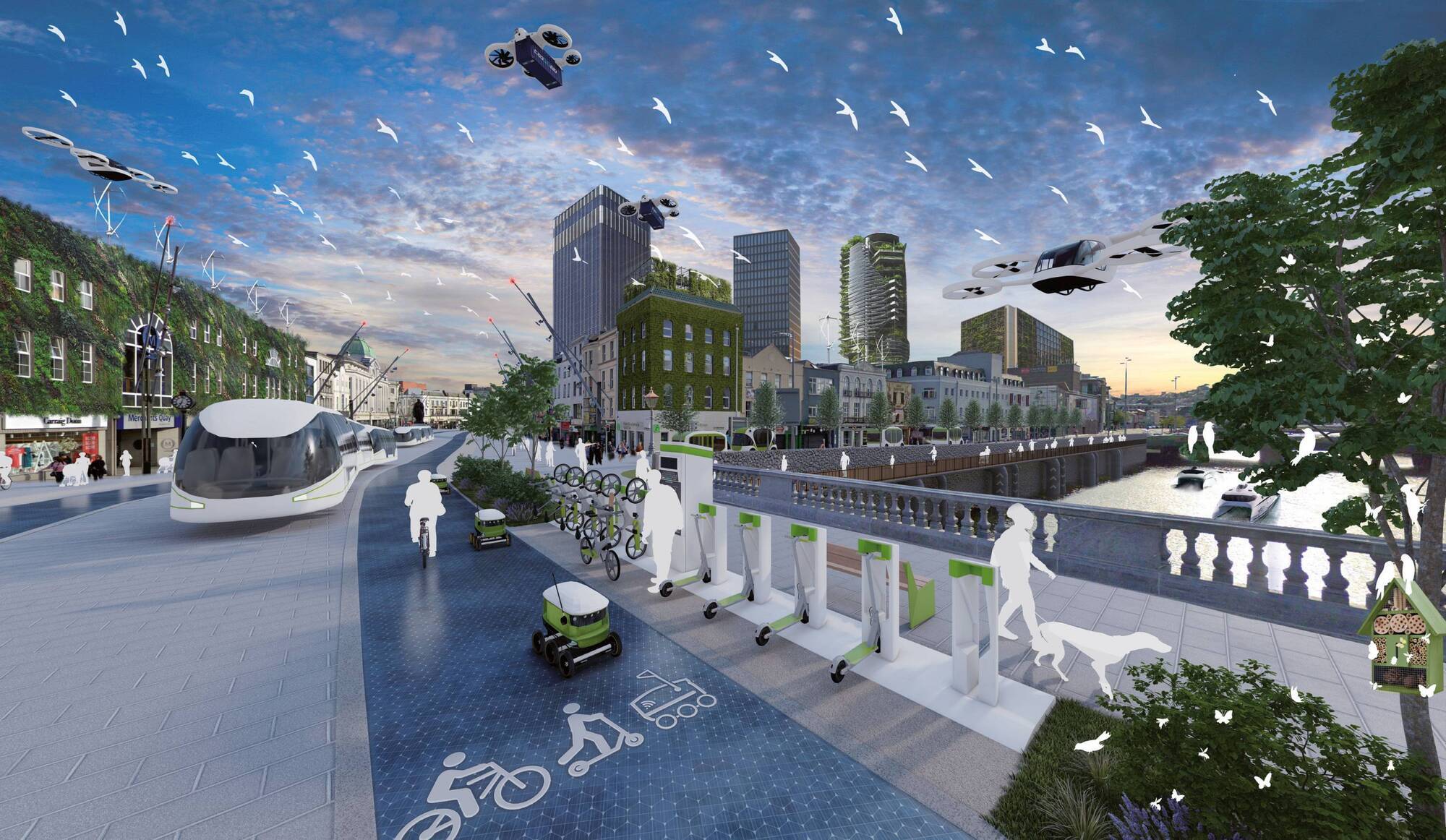
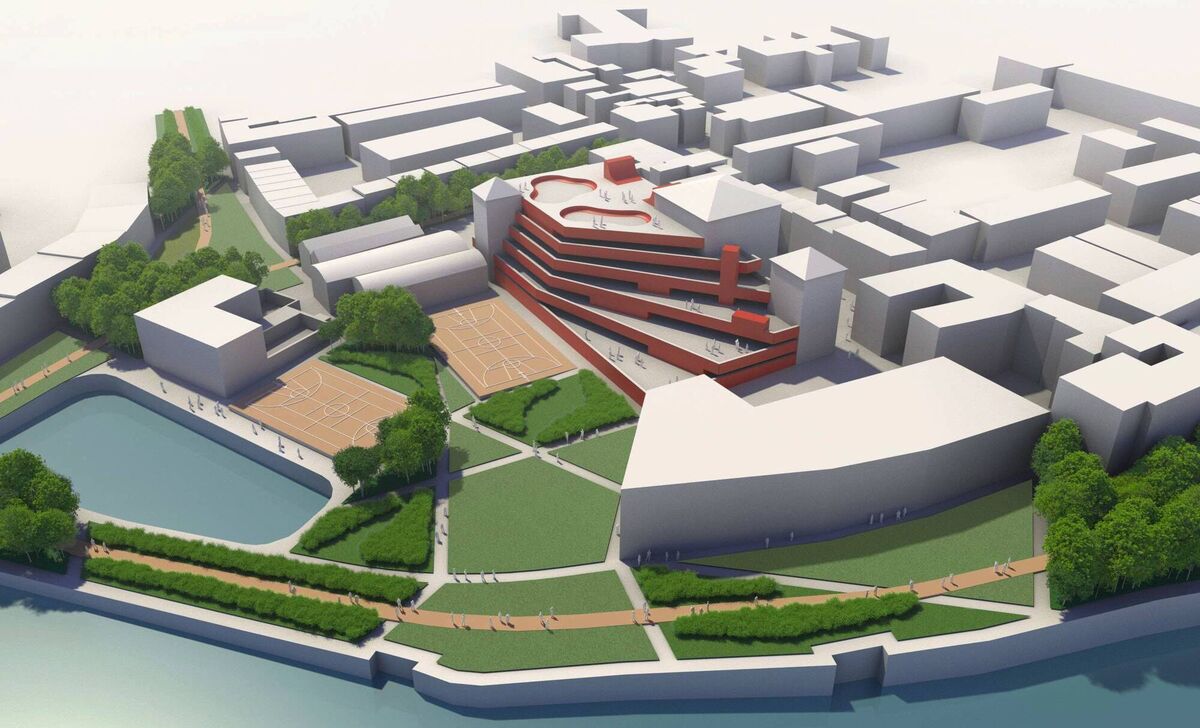
Engineers Ireland launched a competition to see that Cork might look like in 2101. Picture design: Garvin Morrison, Sweco
Vertical gardens, flying eco taxis and a vibrant weather-protected city centre with net-zero carbon energy generation are some of the visions for Cork City in 80 years' time.
Engineers' Ireland Design Competition challenged engineers to design a vision for Cork City in 2101.
Winners Arup Engineering designed a city with such an efficient public transport system that cars will be redundant, allowing carparks to be turned into indoor skate and cycle parks, exhibition spaces, cafés and local shops.
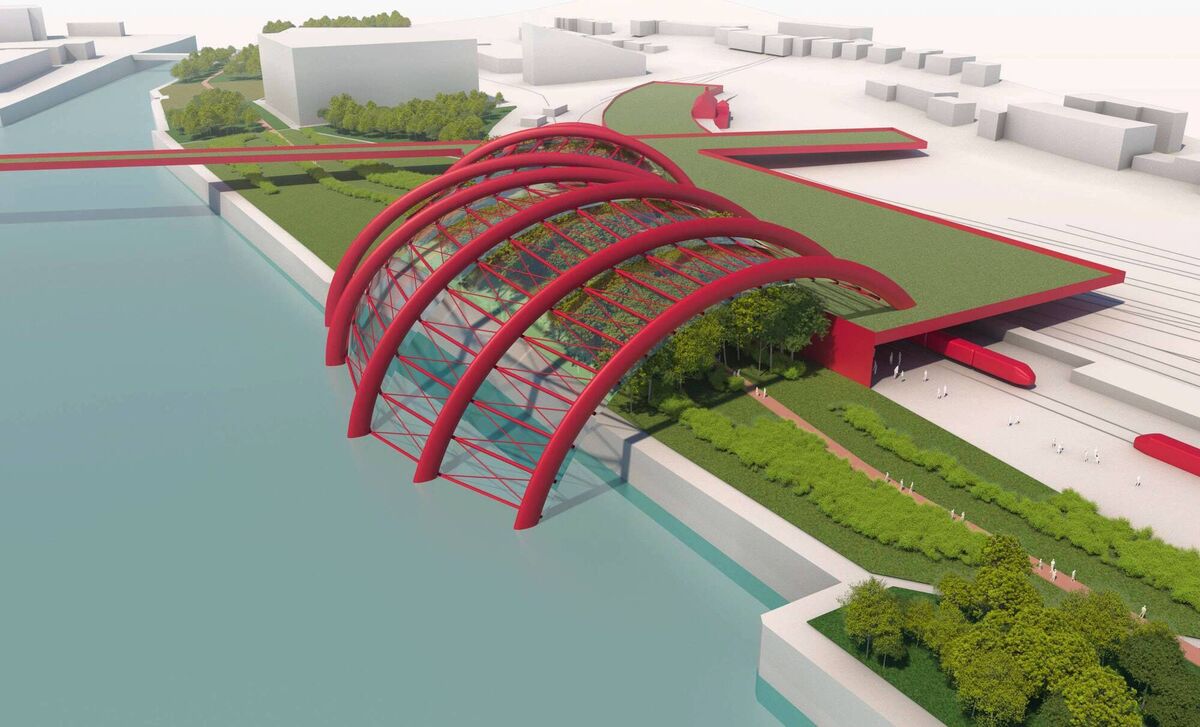
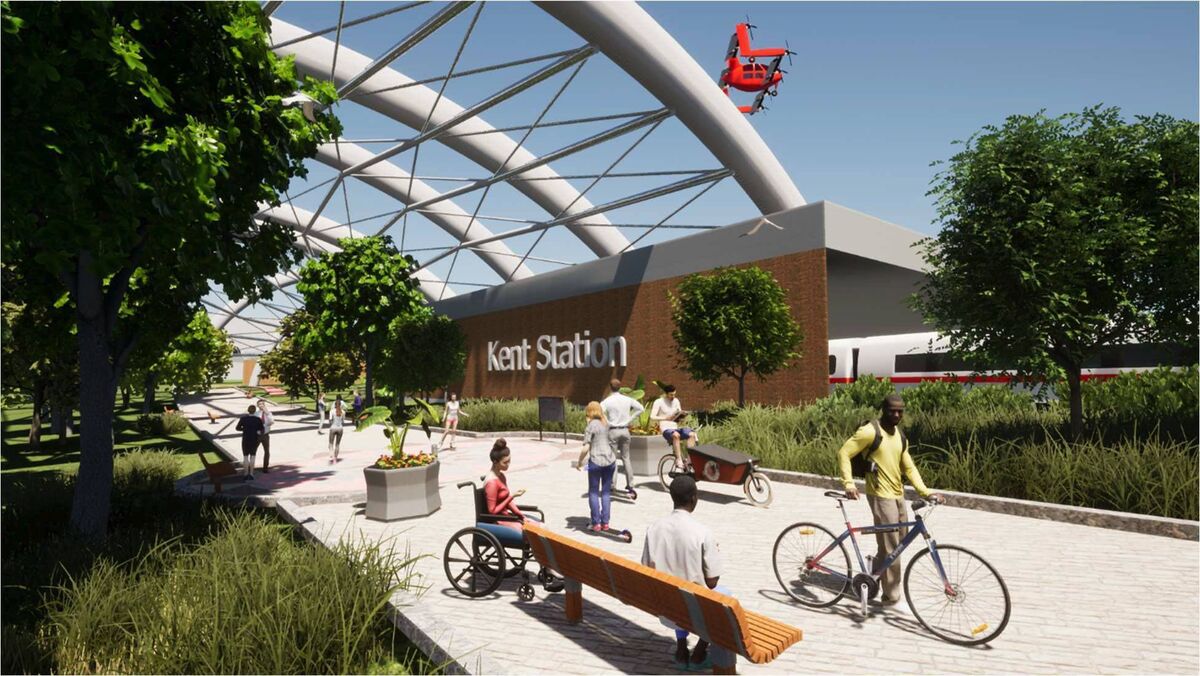
Kent station would become a beacon of a shiny new modernity, encased in a giant glass biome connecting both the inside and outside and the three levels of the station - from the roof market to the railway to the water. Kent station would be a hub for high-speed rail, railway, water-based harbour transport, trackless trams, bicycle infrastructure and access for vertical take-off and landing (VTOL) flying vehicles.
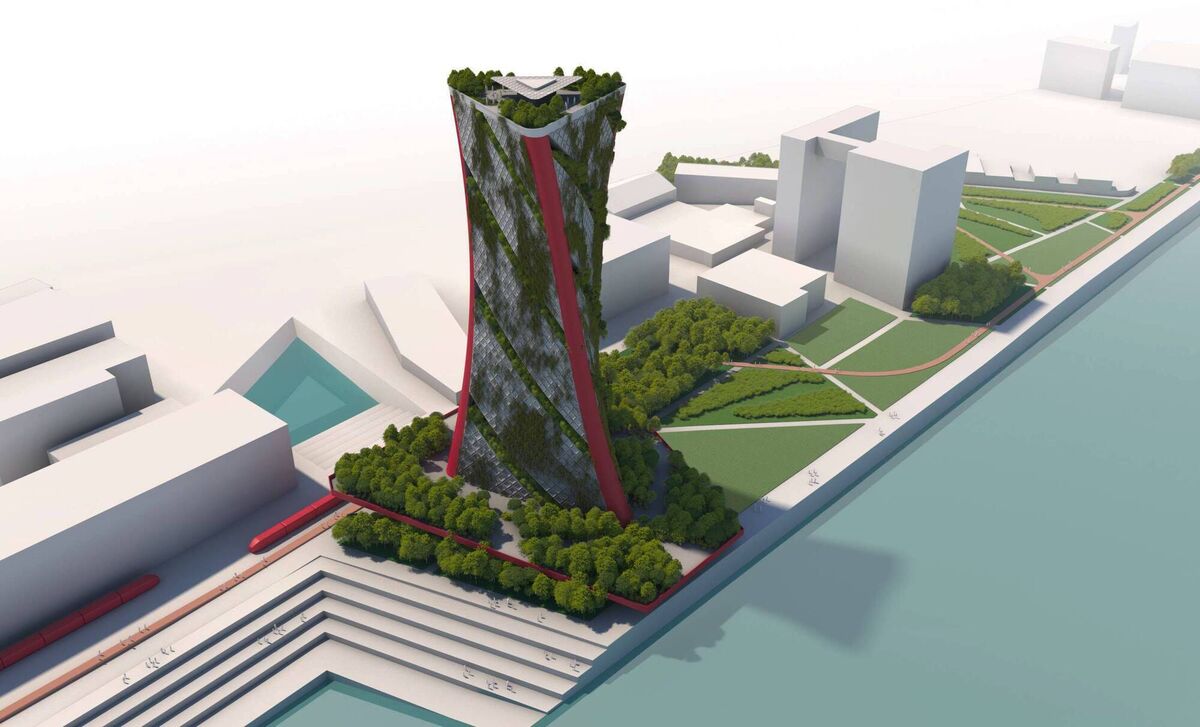
A passive 25-storey tower in the docklands, enveloped in green foliage would provide homes for the city’s residents – which are expected to double by 2101 -with permeable gardens by the river concealing flood water storage.
Lack of cars will create space for community recreation and for nature while hydrogen and biomethane will be available through the existing gas grid that will be upgraded to accommodate hydrogen blends for a zero carbon future.
Second prize winners Mott MacDonald Engineers, envisioned, among things, a re-imagined High Street, protecting the city centre and providing controlled conditions so that streets could be used year-round.
Parts of the city centre would be covered by translucent solar panel membrane cushions that generate electricity as well as protecting the city's buildings from extreme weather events, the canopy is movable and retractable dependent on conditions. While the removal of private vehicles would free up space for markets, open-air musical and cultural festivals and play areas.
Safety drones would keep areas safe and carry enhanced AEDs (automatic external defibrillators) and buildings would be be linked by cable cars and running tracks.
Vertical farms would produce fresh produce for the local area while cultivated (cultured) meat laboratory and processing plants would eliminate the need to farm animals for food.
The Student Category winner, Liam Enda Murphy from UCC, designed a hydrogen-fueled ferry to link the east and west of Cork Harbour, stopping at docks like Little Island, Cork City and Haulbowline.
Chair of Engineers Ireland Cork, Valerie Fenton, expressed her delight with the variety and quality of entrants, noting “our expert judging panel were confident that the creativity and innovation showcased how Engineers will be pivotal in developing the solutions to the challenges that will face our City, County, and Society, into the future.”
The Competition winners were announced as Sweco Ireland in 3rd place, Mott McDonald Engineering in 2nd place, with Arup Engineering taking the 1st place prize and winner’s cheque of €5,000. Sustainability was a strong theme across all the entries.

CONNECT WITH US TODAY



Be the first to know the latest news and updates