Motorists could pay €10 to drive into Cork city in congestion charge model
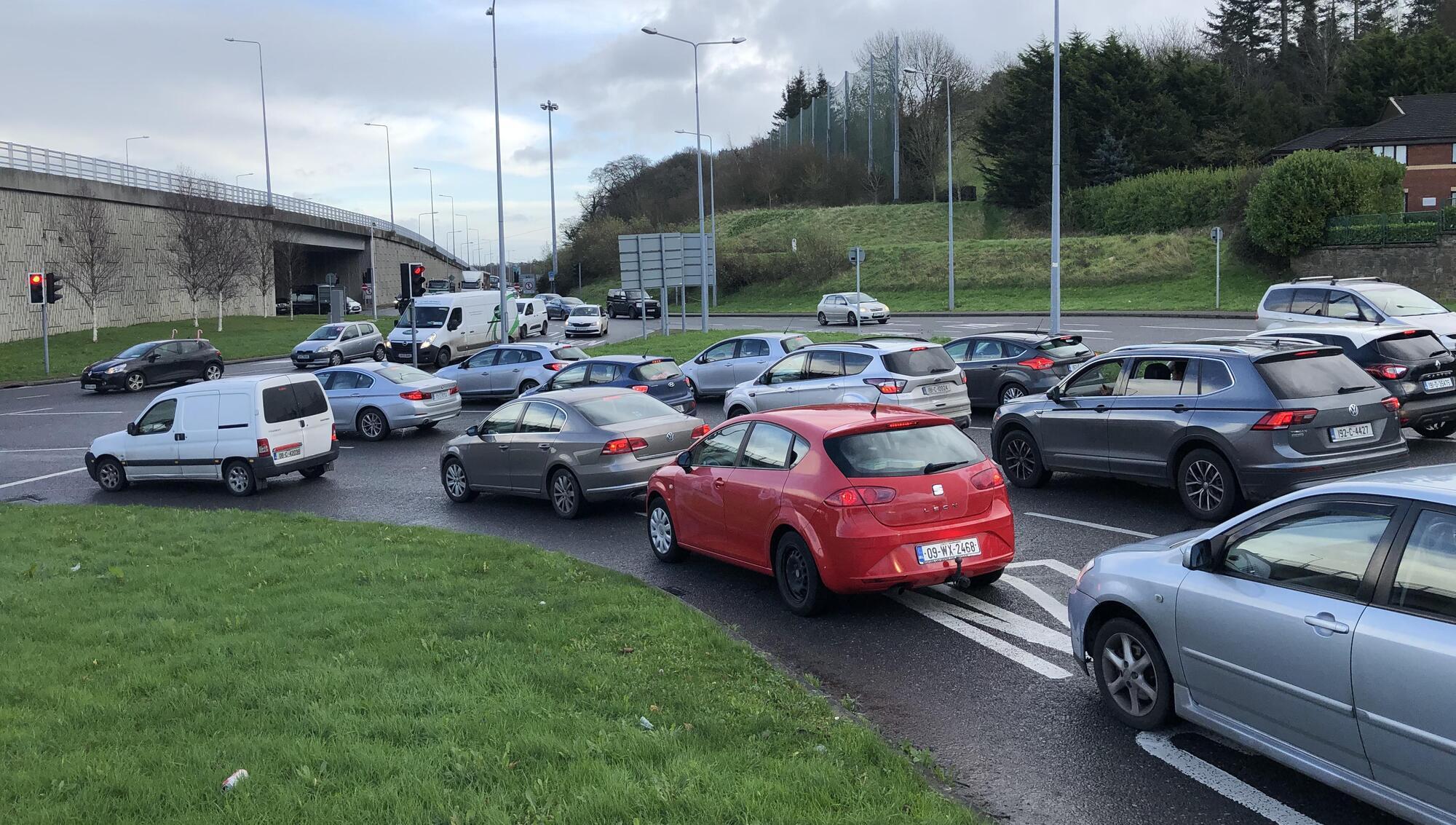
In a report for the Department of Transport into sustainable and healthier forms of travel in Cork, Dublin, Waterford, Limerick, and Galway, the consultants outlined possible outcomes of congestion charges.
Congestion charges of €10 a day for cars to enter Cork city centre are among a range of measures considered in a new sustainable travel report commissioned by the Department of Transport.
In its 'Five Cities Demand Management' report into sustainable and healthier forms of travel in Cork, Dublin, Waterford, Limerick, and Galway, consultants Systra outlined possible outcomes of congestion charges.
Modelling suggested a charge of €10 in peak times and €5 in off-peak times "would have a significantly positive effect on congestion in Dublin with reductions in car travel time within the city core of nearly a third".
However, Systra found in its modelling for Cork that while a charge would see reductions in congestion in the city centre core area of up to a quarter, it would have little impact in the wider city area.
The charge would "result in significant reductions in pollutants affecting air quality within the city core of both Dublin and Cork, with reductions of 7% to 12% in NOx and 9% to 13% in PM", Systra said.
However, it warned that doing so would likely bring the unhealthy pollutants elsewhere as cars and trucks avoided the city centre, and actually result in a net gain in respect of emissions.
NOx is a highly-pollutant emission that is produced by cars, buses, trucks, and other vehicles, and is the main driver of health issues such as breathing problems, reduced lung function, eye irritation, and even tooth corrosion.
PM, or particulate matter, is the combination of solid and liquid particles suspended in the air, such as dust, pollen, soot, smoke, and liquid droplets.
Systra said: "It is expected that the reduction in car trips and improvements to air quality would result in significantly positive impacts on the urban environment within the city core.
"In the case of Cork, the model results show that traffic redistributing elsewhere presents a risk of higher concentrations of vehicle emissions affecting air quality outside the city core."
Any congestion charge plan would need major policy changes to complement it, the report said, such as encouraging walking, cycling, and the use of public transport.
Such a plan would be years in the making, Systra suggested.
A government spokesperson said that while the study explored the possible introduction of congestion charges and low emissions zones, “there are a variety of alternative measures that can be pursued with greater effect”.
The three priority measures that have been recommended for implementation across the five cities are to develop and embed the concept of “15-minute neighbourhoods”, or the idea that citizens would have most things required to enjoy life within a 15-minute walk or bike journey of their homes.
Delivery of the National Planning Framework, or the Ireland 2040 plan for a ramp-up of capital infrastructure, and public parking controls will also be key, the spokesperson said.
The Department of Transport will work closely with local authorities to identity and implement measures in the coming years, it said.