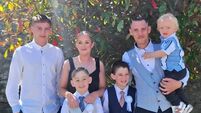
One-year-old Cork boy hospitalised after rash turns out to be rare Covid-related syndrome
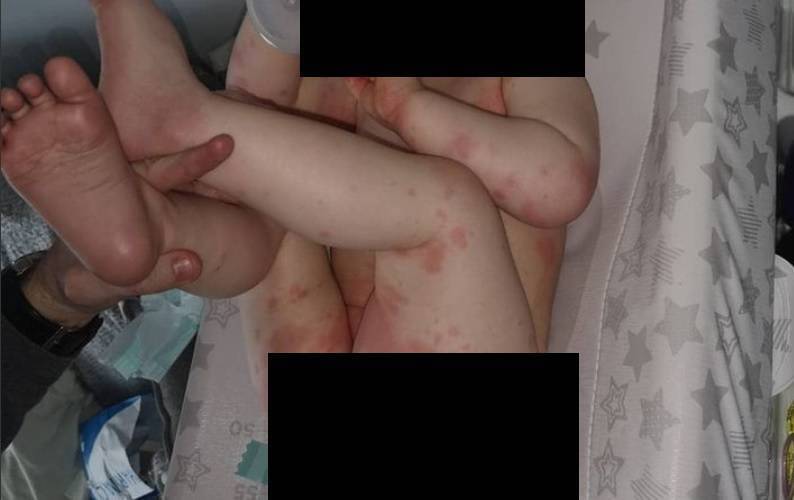
What started as a small rash soon spread all across Jayce Aherne's body. Picture: Emma Aherne/Instagram
A Cork mother is sharing her family's experience with a Covid-related condition which saw her one-year-old son admitted to hospital.
Emma Aherne took to social media to share what her family went through in the hopes that it will alert other parents what to keep an eye out for.
Little Jayce contracted Covid-19 and tested positive on November 10.
He had a temperature but Emma said he was in good form otherwise, able to eat and drink, nothing appeared to be out of the ordinary.
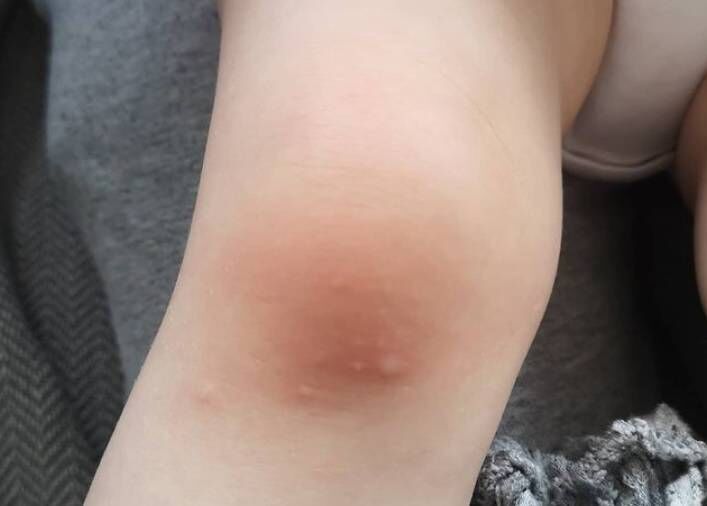
Four days later, a rash appeared on his knees. It was reasonably small but Emma's gut told her something was not right with her son.
She got on to South Doc immediately but was told that it was considered normal and assured there was nothing to worry about.
However, Emma wasn't convinced. She contacted them another three times during that day and night.
She included pictures in her correspondence to show the progression of the rash. The doctors' service were told that Jayce's temperature was getting hard to control.
The doctor prescribed them antihistamine which they were not able to pick up until the following morning.
It was a sleepless and stressful night for Emma and her husband as they took turns holding their ill son on their laps as any movement was causing the child pain and discomfort.
At 9am, someone dropped the antihistamine to the house but Jayce threw up the medication immediately.
"That's when I knew he'd be going to the hospital as I was afraid he had a syndrome I had read about six months previous called Multi Systems Inflammatory Syndrome" Emma said.
"I had read about the signs - rash and high temperature being two of them - and had read it was happening more and more to children after a Covid-19 diagnosis."
They got Jayce to A&E as soon as possible where Emma's fears were confirmed - her son had Paediatric Inflammatory Multisystem Syndrome (PIMS).
Jayce spent the next five days in Cork University Hospital and has since returned home where he is doing much better.
For the next while, he will have to continue taking medication and will need to go for heart checks as well to make sure all is well.
Emma has shared her story to ensure that parents will not waste valuable time if their child shows similar symptoms.
"I want mothers to know that if their gut is telling them there's something not right then to go with it and I want parents to be aware of PIMS in case, god forbid, something like this happens to them," Emma said.
Emma said her son Jayce has been "our little warrior" while he has been sick and he even took his first steps on his last day in hospital.
The European Centre for Disease Prevention and Control (ECDC) said there is a possible temporal association between PIMS and Covid-19.
Not all children have the same symptoms but some include:
- Fever that lasts 24 hours or longer
- Vomiting
- Diarrhea
- Pain in the stomach
- Skin rash
- Feeling unusually tired
- Fast heartbeat
- Rapid breathing
- Red eyes
- Redness or swelling of the lips and tongue
- Redness or swelling of the hands or feet
- Headache, dizziness or lightheadedness
- Enlarged lymph nodes
The emergency warning signs to be aware of according to the Mayo Clinic include:
- Severe stomach pain
- Difficulty breathing
- Pale, gray or blue-colored skin, lips or nail beds — depending on skin tone
- New confusion
- Inability to wake up or stay awake
The syndrome causes some organs and tissues — such as the heart, lungs, blood vessels, kidneys, digestive system, brain, skin or eyes — to become severely inflamed.
The syndrome is rare and most children who have been diagnosed eventually get better with medical care. However, a small number of children rapidly get worse to the point where their lives are at risk.

CONNECT WITH US TODAY



Be the first to know the latest news and updates