Limerick residents claim lack of student housing causing antisocial behaviour
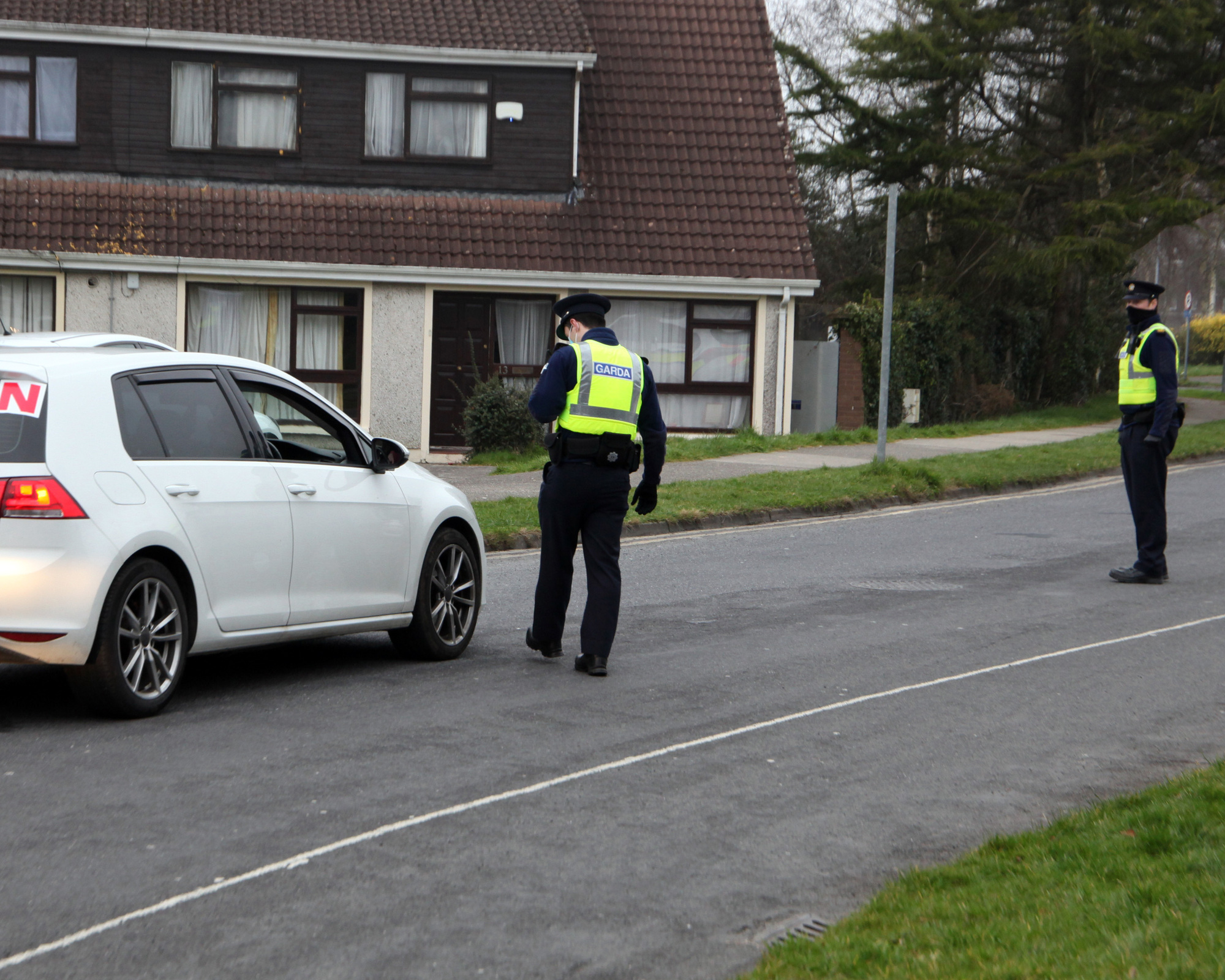
Gardaí operate a checkpoint in College Court, Limerick, in March. File picture: Brendan Gleeson
A residents' group has sharply criticised the University of Limerick (UL), claiming the failure to provide accommodation to its growing student population has contributed to a housing crisis and antisocial behaviour in off-campus housing estates.
The claims come on the back of growing discontent among UL students due to the lack of spaces, with some paying up to €400 a week to stay in hotels due to the lack of student accommodation.
UL currently has 2,850 on-campus beds, which were fully booked in advance of the new college year. It has a student population of about 17,000.
The residents' group represents people who live in areas close to UL, where student housing is provided, including at College Court, Elm Park, Hazlewood, Milford Grange and Oaklawns. It said it was its view that “years of poor planning by university management has led to many issues including the rent crisis and commuter woes for their incoming students and the antisocial and sometimes criminal behaviour of a minority of UL students living in Houses of Multiple Occupancy”.
Concerns about alleged drug use, anti-social behaviour, and criminal damage to student accommodation came to the fore during the Covid-19 lockdown last March, when gardaí responded to a massive street party in the College Court area.
The residents group stated: “The university has approximately 2,500 on-campus accommodation units for its 17,000 plus students. It relies almost completely on the nearby residential areas to provide, in many cases, poorly-managed ‘houses of multiple occupancy’ to house their student intake. The result is these residential houses are not available to families and others seeking accommodation as a long-term home.”
It argued that "antisocial behaviour" is a regular issue in these areas, despite patrols by community gardaí and clean-ups by the local council. UL also employs private security guards to patrol its campus.
In response to the group’s statement, a UL spokesman acknowledged that the University “is aware that there are some students who have been unable to secure accommodation in the locality, with demand at its highest in recent memory”.
“UL provides the largest percentage of on-campus accommodation per student population in Ireland (2,840, which represents 17% of current UL Student population). The next nearest is UCD which supplies on-campus accommodation for around 14% of its student population,” they said.
The UL spokesman said the Plassey Campus Centre (PCC), which is a UL company, provides an off-campus section on its website where local homeowners and landlords unconnected to UL can advertise vacant rooms.
The University also organised “a leaflet drop of over 6,000 flyers into households in the residential areas close to UL, to help students who have yet to find accommodation is ongoing”.
The spokesman added “discount rates for students have been secured with local hotels and rooms have been provisionally held where possible for UL students”.
“UL staff members have also used their networks of neighbours, friends, and family to encourage those who may have a spare room to consider letting to students. These efforts have been very effective and there are properties or rooms available to rent on the PCC managed off-campus accommodation list.”
They added: “UL continues to work together with government, our partners in Limerick and the wider sector nationally to develop more long-term plans for student accommodation in Limerick.”
Last spring, UL funded garda patrols in local off-campus housing estates following alleged breaches of public health guidelines and the public order act.
It confirmed in September it had resumed funding garda patrols after “recognising the need to keep the community safe”.
CONNECT WITH US TODAY



Be the first to know the latest news and updates