New Limerick cancer research centre to take ‘different approach’ to cancer care
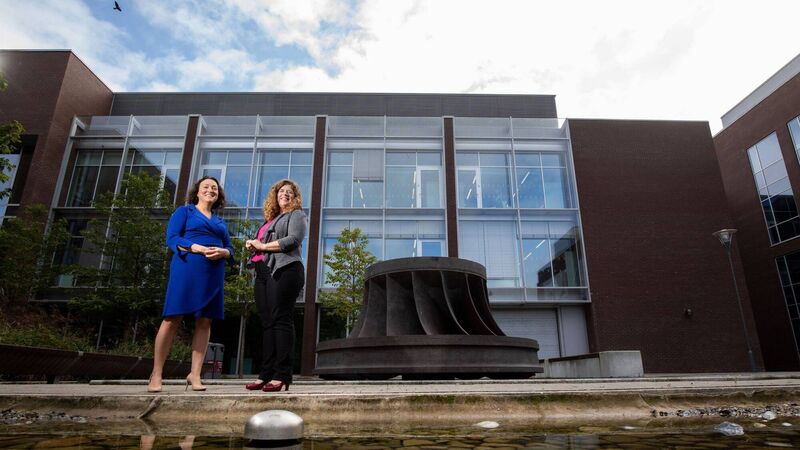
A research centre at University of Limerick is using personalised digital medicine to transform cancer care and improve outcomes for patients. Picture: Alan Place
A new cancer research centre at the University of Limerick (UL) is to take “an entirely different approach” to the treatment of the disease by using personalised digital medicine to improve cancer care and outcomes.
The Limerick Digital Cancer Research Centre (LDCRC), a collaboration between UL and University Hospital Limerick (UHL) will bring experts across the fields of software, engineering, maths and health, and lean on the industry knowledge of several multinationals, including Dell Technologies and Becton Dickenson, to develop technologies which could provide earlier and more accurate cancer diagnosis and help in the discovery of new drugs.
This could include innovative mobile medical apps, artificial intelligence and machine learning to large scale mining of genomics and molecular data.

Professor Aedin Culhane, a Limerick native with over 20 years’ experience in cancer bioinformatics in Ireland, the UK and the USA, will spearhead the new centre as Chair of Cancer Genomics.
A leader in cancer bioinformatics, Prof Culhane has spent over 15 years in Harvard University and at one of the top US cancer hospitals, Dana-Farber Cancer Institute.
Her team develops methods to perform analysis of fine resolution molecular profiles of individual cells in tumours. Single cell profiling of cancer tissue biopsies provide vast amounts of data, requiring complex math and advanced statistics but these higher definition digital tumour maps give a greater opportunity to interrogate a patient’s cancer.
“Cancer is a complex disease, and these tools allow us to perform detailed dissection of the molecules in cancer cells, so we can understand how our healthy cells, immune cells and cancer cells are interacting and tailor cancer treatments,” she explained.
Prof Culhane said now is an “incredibly exciting time” in cancer research.
“We are making new insights every day, especially in immune oncology.”
The centre features a ‘Limerick Living Lab’, an initiative established in partnership with the HSE’s Digital Transformation Unit, Dell Technologies and Akoya Biosciences, which uses high powered microscopy and state of the art artificial intelligence to digitally profile biopsies taken from a patient’s cancerous tissues.
Professor Paul Murray, who heads the lab says the technology can learn to predict how an individual will respond to a specific type of drug.
In addition, it will save health services the unnecessary expense associated with the use of ineffective therapies, he said.
Professor Paul Burke, Chief Academic Officer for UL Hospitals Group and Vice-Dean Health Sciences at UL, said the centre has already received “significant investment” and has ambitions to create “a world-class critical mass of multidisciplinary research scientists.”
“In the coming years, we hope that the centre will be housed in purpose-built accommodation, with state of the art facilities on both UL and UHL sites.”
It is estimated that one in two Irish adults will receive a cancer diagnosis in their lifetime.
CONNECT WITH US TODAY



Be the first to know the latest news and updates