Cork city's controversial 'robot trees' targeted by protestors
Cork City Council’s director of operations, David Joyce, said the littering and postering will be dealt with as part of the regular round of routine maintenance of public infrastructure.
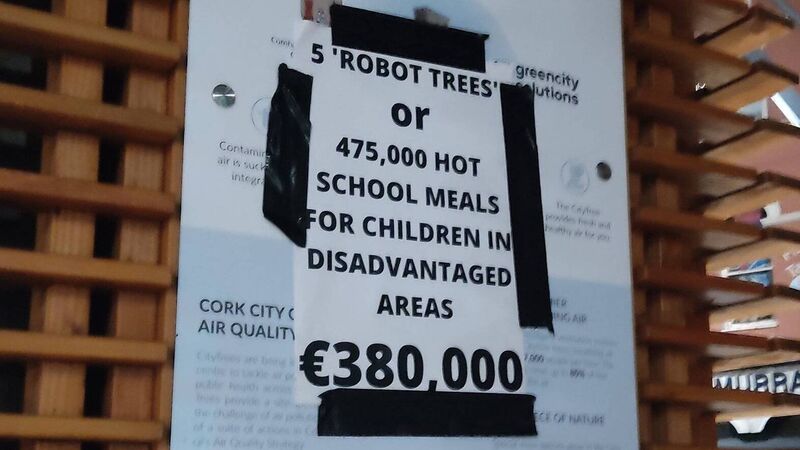
They’ve been pelted with greasy fast-food and plastered with posters highlighting how many school meals could have been bought by the money spent on them.
But these ‘attacks’ on some of Cork’s controversial new CityTree devices which were unveiled just last week have had no effect whatsoever on their operation, city officials have insisted.
The littering and postering will be dealt with as part of the regular round of routine maintenance of public infrastructure, the council’s director of operations, David Joyce said.
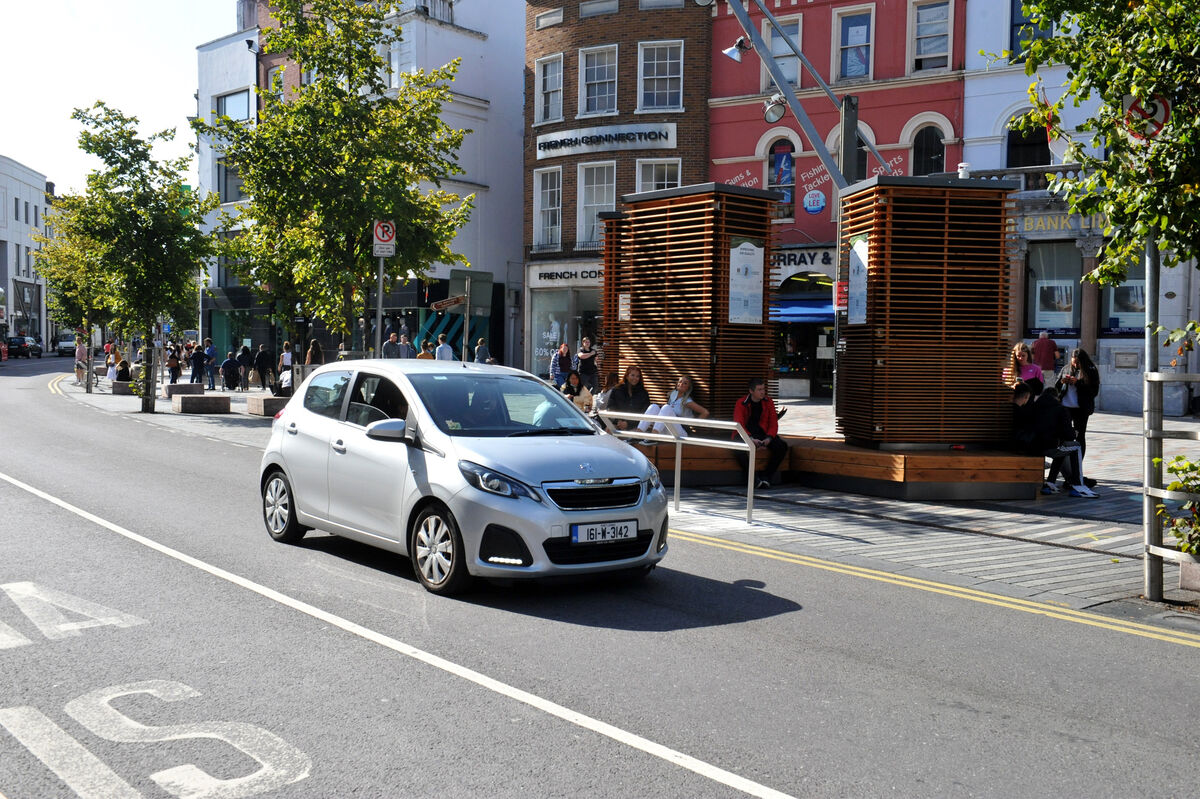
The five CityTree devices, which were unveiled last week - three on St Patrick’s St and two on the Grand Parade - have cost taxpayers some €350,000. Annual maintenance costs are expected to reach an estimated €2,000.
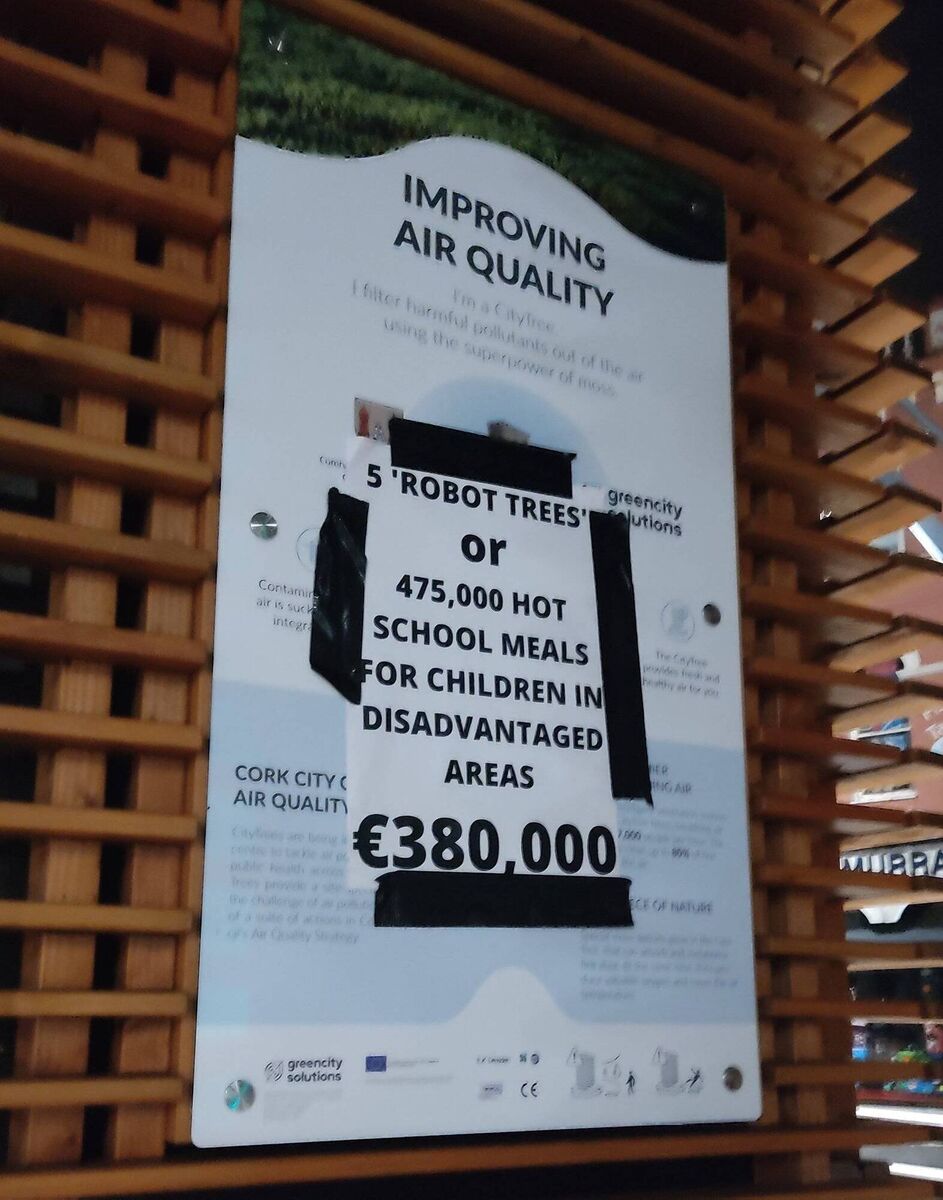
The devices, which double as street furniture, are covered in a mixture of moss cultures that filter harmful pollutants out of the air. Each CityTree can filter the air usage equivalent of up to 7,000 people per hour, the council has said.
The moss wall on one of the devices was pelted with fast-food over the weekend, and yesterday, it emerged that posters, suggesting that the money spent on the machines could have paid for 475,000 school meals for children in disadvantaged areas, were taped to some of them. The posters were removed within a few hours.
Mr Joyce also dismissed claims on social media that the devices are out of order, and have been “recalibrated” twice since their installation just last week.
Cork’s €350,000 robo-trees are already out of order. City Council worker told me it’s the second time this week they’ve had to be “re-calibrated”. #RoboTrees pic.twitter.com/d2cywxzxRD
— Donal O’Keeffe (@Donal_OKeeffe) August 17, 2021
The claims surfaced after council workers were spotted opening a service hatch on one of the devices and running a hose into it.
Mr Joyce said no faults have been reported, the devices are not failing and have not been recalibrated, and that what people had seen was simply two council workers topping up the device’s water tank.
It has now emerged that each device has an 800ltr water tank to keep the moss in its walls moist. Mr Joyce said rainfall alone cannot be relied upon to keep the moss walls moist.
He said the sensors in the machines monitor the moss and apply water when necessary. “Obviously more water will be required in the dry summer than during the wet winter,” he said.
The cost of the CityTrees was covered as part of a €4m funding allocation from the National Transport Authority (NTA) to the city council.
It was one of 26 projects in the city, funded by the NTA, ranging from €840,000 for footpath improvement works to €250,000 for automated rising bollards to support pedestrianisation schemes, and €200,000 for winter-proofing and public realm upgrades at various street dining locations.
But the CityTrees sparked huge controversy with critics labelling them robot trees, and environmental scientists describing them as gimmicks that will do little to tackle air pollution.
Most critics said the money should have been spent instead on planting real trees.
City Hall says they plan to plant 1,200 trees this year, and 1,500 next year and that the CityTrees are just one part of their overall response to air quality in the city.
The performance of the machines will be monitored over the next 12 months.


CONNECT WITH US TODAY



Be the first to know the latest news and updates