Save Cork City group urges High Court to overturn permission for flood relief works
An Bord Pleanála inspector made a fundamental error of fact in identifying the full Lower Lee Flood Relief Scheme as 'in abeyance', court hears
Save Cork City group urges High Court to overturn permission for flood relief works

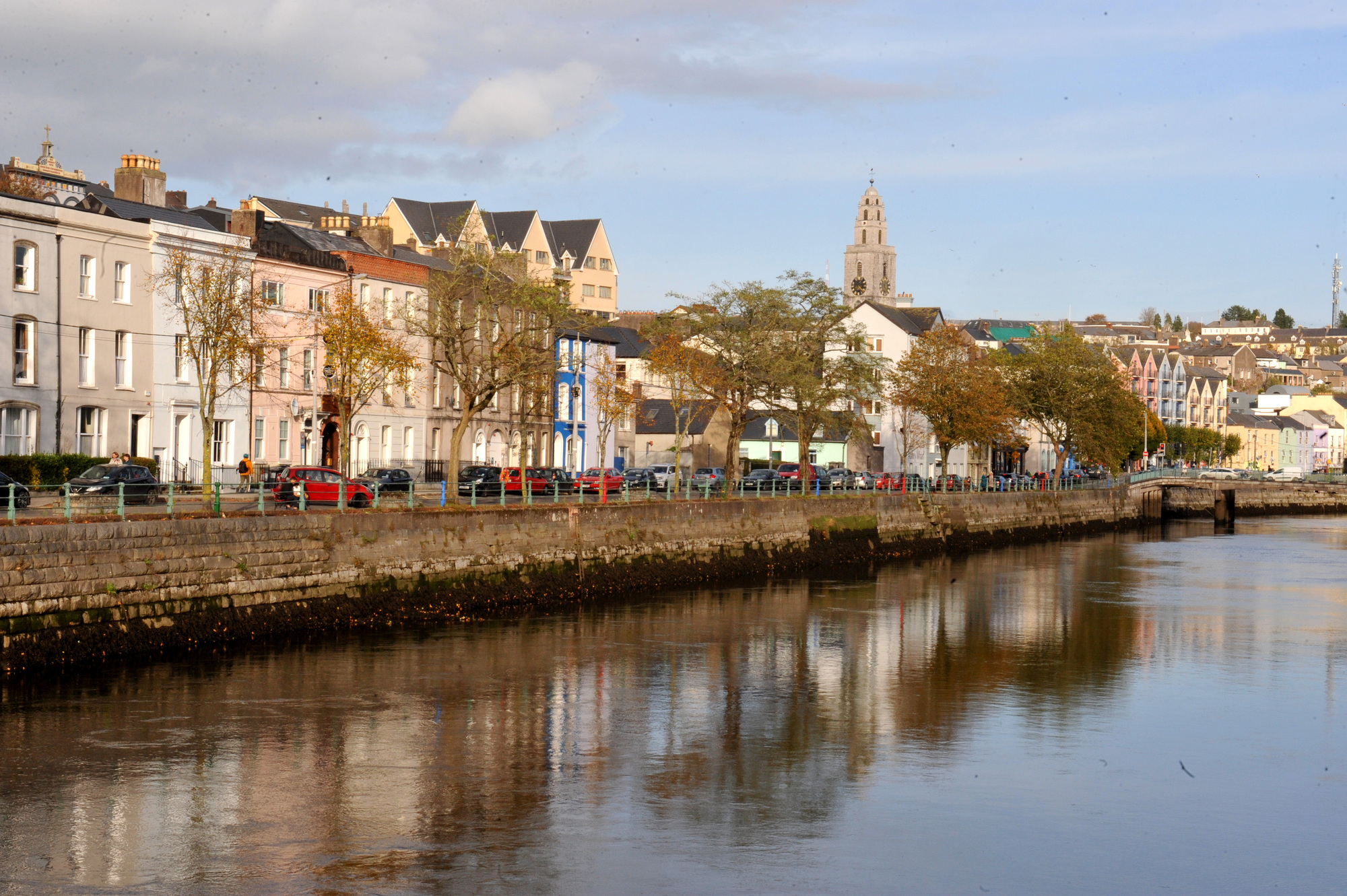
Reflections in the still waters of the north channel of the River Lee at the North Mall, Cork City. File picture:  Larry Cummins

A Cork City community association wants the High Court to overturn An Bord Pleanála’s permission for certain flood relief works in the city.

The proceedings by Save Cork City Community Association CLG (SCCCA) opened today before Mr Justice Richard Humphreys.

The group is challenging the planning board’s permission, granted on June 17, 2020, to Cork City Council for remedial works to the existing quay walls in Cork City, plus construction of public realm improvement works and flood defence works between Parliament Bridge and Parnell Bridge along Morrison’s Quay and Fr Matthew Quay, and a short section along Union Quay close to Trinity footbridge at Morrison’s Island.

The group’s core claim is the disputed permission involves impermissible “project splitting”, within the meaning of the Environmental Impact Assessment (EIA) Directive, of the Lower Lee Flood Relief Scheme (LLFRS), the overall flood relief scheme for the city.

Its concern is that part of a project for the purposes of the directive may now be given consent without the project as a whole being made subject to an EIA.

The case is against the planning board, the housing, local government, and heritage minister, and the State.

Opening the case today, James Devlin, for SCCCA, said the respondents argue the disputed works are a “standalone” project, functioning first and foremost as a public realm scheme, but the “clear” evidence is they are based on works carried out as part of the overall LLFRS.

The group contends the overall scheme is subject to an EIA procedure, which has not completed, and permission for the disputed works cannot be granted until that procedure is complete.

It claims the planning board was obliged, but failed, to consider the proposed works as part of the overall LLFRS and this was particularly the case where the proposed works include flood relief measures at the same height as, and to be fully integrated, with the LLRFS.

The board’s inspector made a fundamental error of fact in identifying the full LLRFS as “in abeyance”, it claims.

The SCCCA also contends the State respondents have failed to transpose, adequately or at all, Article 9a of the EIA Directive in respect of conflicts of interest for the purpose of the proposed works.

It is claimed the council, prior to public consultation, failed to state or make available for public consultation the fact it had already determined that EIA and appropriate assessment had been screened out.

The directive requires, when a competent authority is also an applicant for planning permission, there must be avoidance of a conflict of interest but the State has not provided for that in the planning regime, it claims.

Allowing the council to screen out the necessity for an EIA constitutes a conflict of interest and the board had no power to revisit the council decision, either by carrying out an EIA itself or directing the council to do so, it is claimed.

The hearing continues.

More in this section

Lunchtime News

Newsletter

Keep up with stories of the day with our lunchtime news wrap and important breaking news alerts.

Cookie Policy Privacy Policy Brand Safety FAQ Help Contact Us Terms and Conditions

© Examiner Echo Group Limited