Bangladeshi family face deportation from Cork and fear for their lives if forced to leave
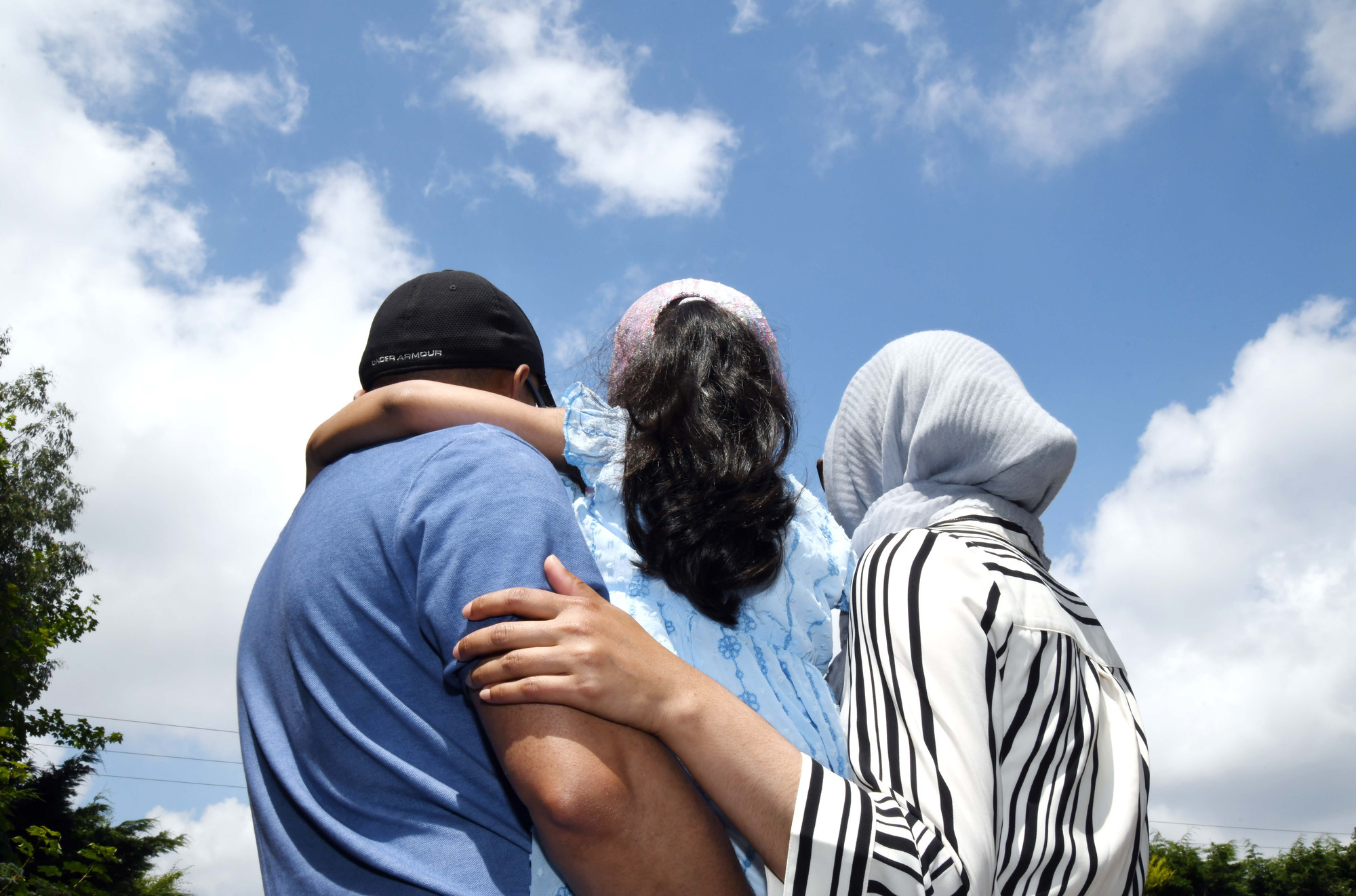
Little legs swinging below her tulle princess dress as she sits on a bench in Cork, four-year-old Amayra stares at the ground as her parents explain tearfully that her life is in danger.
Death threats have allegedly been made by her relatives against the family in a Bangladeshi community where extrajudicial killings are terrifyingly common and ‘honour’ killings still exist.
Their ‘crime’ is that Amyra’s mother, Samina married for love, in a community where love marriages are forbidden.
She also married a man, Mustak, from a lower caste, another thing forbidden in their conservative, Muslim hometown.
The couple met when they were studying in London in 2010. But after Samina’s relatives discovered that they had married, they allegedly threatened to kill Mustak. The couple fled.
They played a terrifying game of cat and mouse, darting from one apartment to another across London on the run from Samina’s family until their UK visa expired.
Then they applied for asylum in Ireland. That was almost six years ago and their application for protection or leave to remain was recently rejected.
Mustak believes that their case was not properly understood because the wrong document was submitted for consideration which failed to give any appropriate context for their case.
And because their type of case is not well documented they have been denied leave to remain, Mustak believes.
Amayra, who has been looking forward to starting school in Turners Cross, Cork, in September is now trapped in a legal noose and has been ordered to return to Bangladesh.
Born in Ireland, Amayra has never been to Bangladesh, her parents’ place of birth. She does not speak the language and her parents believe that her life is in grave danger if she returns.
“Ireland is her home. She was born here, she knows no other place but Ireland.
“She is very vulnerable in Bangladesh. And because of the death threats we get from our relatives, we could not live for a day without fear there,” Mustak said.
They fear the reach Samina's family has in terms of politics and the police force, and are aware of threat of kidnap that their daughter could face.
“It’s not an option for us to go back. We have severe death threats.”
Samina said: “I just want a safe place for my daughter to grow up.”
Samina, 34, said that she was supposed to be married off to her cousin so that the family could keep her inheritance.
She believes that they still want that money and will stop at nothing to get it.
False allegations against Mustak, also 34, have already been made, with cases filed in Bangladesh that he kidnapped Samina and married her against her will.
Mustak believes that he will have to face these trumped-up charges if he is forced to return.
“It will be very easy for corrupt law enforcement to catch me and kill me and say I’m a criminal,” he said.
“And at the end, even my daughter will be killed as well because they have to marry Samina to her cousin to keep the inheritance to the family.
“So if we step into Bangladesh she will be taken away from me and our daughter’s life will be in danger. We will be separated. Many times they have threatened that they will kill us when they catch us because it is the only way they can keep the inheritance.”
The thought of their murders is a constant fear for Samina. She has not been back to Bangladesh in 12 years and has not spoken to her family in 10 years, remaining in hiding from them all.
The family said that a deep fear is constantly pressing down on them all. They feel trapped and have nowhere to turn.
Although they keep trying to give their daughter hope, their promises are sounding increasingly shallow.
“For the first one or two years we had lots of hope,” Mustak said.
“We were keeping an eye on the post every single day, thinking ‘maybe this time it will be good news’.
“When we got the deportation order Samina was so so shocked, she started crying and I couldn’t even give her hope anymore. It’s heartbreaking.
“Seeking asylum is not applying for a visa or something, seeking asylum means you are asking someone to give you protection because you’re in fear of being killed by other people.”
Highly educated and already involved with the community through numerous charities and voluntary work, no one could argue that the family would be a burden on the State if they were allowed to remain.
Disturbing headlines about extrajudicial killings and 'honour' killings in similar communities are too familiar. We may wring our hands in the West at this nauseating brutality, but when someone comes knocking on our door, begging for help, do we turn them back to the hands of those who may wish to hurt them?
Although the Department of Justice said that it is unable to comment on individual international protection cases, a spokesperson said that all applications are carefully considered before a deportation order is made.
A spokesperson said: “This includes a full consideration of their private and family rights in accordance with the European Convention on Human Rights as well as consideration of their work situation, among other issues.
“Under the International Protection Act 2015 each application is assessed individually on its merits. All applicants for international protection are carefully interviewed and their cases are individually assessed by experienced caseworkers. The circumstances of each individual case is assessed having regard to both the subjective elements (the applicant's own account or personal history) and objective elements (up-to-date information on the applicant's country or place of origin).
“Supporting documentation submitted by applicants is also taken into account. Information on an applicant's country of origin is obtained from a variety of legitimate sources such as the United Nations High Commissioner for Refugees (UNHCR), Amnesty International and other NGOs, the European Asylum Support Office, the US State Department and the Canadian Immigration and Refugee Board.
“Ireland follows the guidance of the UNHCR and the European Asylum Support Office in relation to claims for international protection.
“Where an applicant receives a negative recommendation in respect of refugee status or both refugee status and subsidiary protection, it is always open to the applicant to appeal the recommendation to the International Protection Appeals Tribunal, in line with section 41 of the International Protection Act 2015.”

CONNECT WITH US TODAY



Be the first to know the latest news and updates