Family seeks permanent home for Corkman's sculpture 15 years in the making
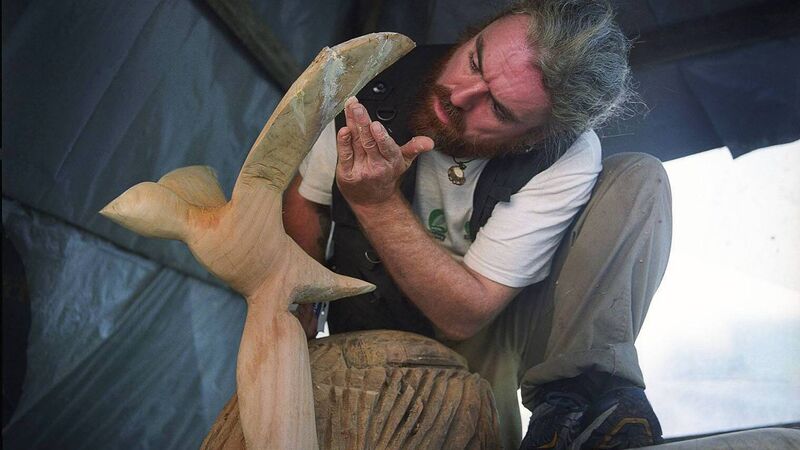
Sculptor Herbert Kearney pictured in 2007. Picture: Marco Bakker
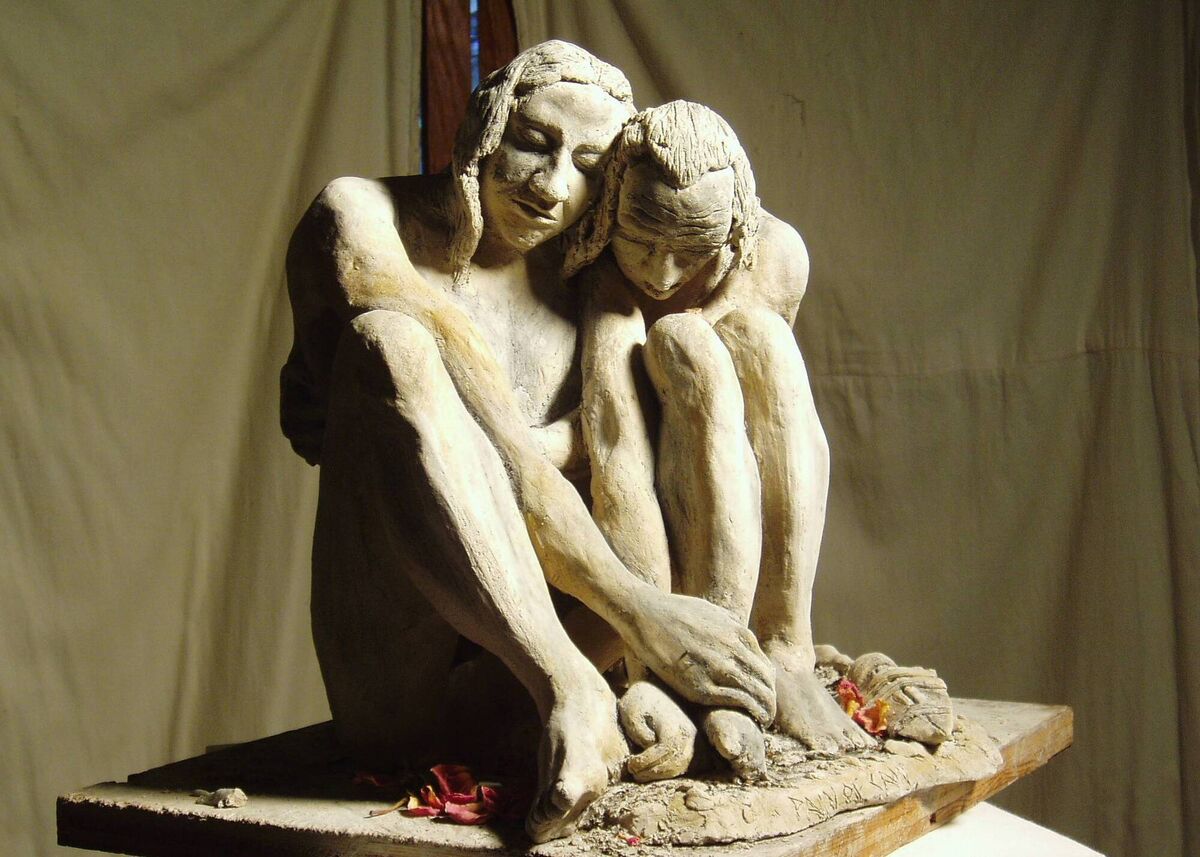
In a backyard in Douglas, an eight-foot-tall sculpture retells a tragic Irish myth of brother against brother.
Fifteen years in the making, “The Death of Ferdia” is the final work of native son Herbert Kearney, a prolific sculptor, painter, and poet, who spent three footloose decades traveling the world after graduating from art school in Cork.
Kearney, who died in his longtime home of New Orleans, Louisiana in April, worked on “The Death of Ferdia” during visits home to Cork.
He was searching for a permanent public display for his sculpture, which sits behind his father’s house on Church Road, when the pandemic struck.
Kearney died at age 58, due to a heart attack. A month after he was laid to rest in Cork, his father, Matthew Kearney, Sr passed on June 21 at age 85.
Now, finding a home for “The Death of Ferdia” has fallen to his brother, Matthew Kearney, Jr, who recalls “a strong character who lived at least two or three lives in his 58 years.”
"His pursuit of art took him around the world, and he delved into many depths of experience," said Matthew Kearney
He served in the Army reserves as a young man, rode 30-foot swells on fishing boats in the Pacific, and studied Tibetan Buddhism with masters in California.”
Prolific yet underappreciated by gallerists and curators, Kearney left behind troves of artwork, including sculpture, paintings, drawings, and manuscripts stored away in both Ireland and New Orleans.
His life in art began as a teenager in Cork, when he won a national art competition and was offered a scholarship to the Crawford College of Art & Design. After graduating, he left for New York City in 1987.
Kearney became part of a bohemian scene centered at the famous Chelsea Hotel, and a close associate of Vali Myers, an Australian-born dancer, artist, and muse to the Beat Generation. Their relationship took him to Italy and Australia for extended stays.
“Herbie fit right in,” recalls Bobby Yarra, an attorney in California, who met Kearney at The Chelsea.
“We became very good friends and no one was more fun to be with. He was a wild dude, and had a contagious love for life.”
While immensely talented, Kearney rarely focused on commercial success. Jobs in carpentry, driving horse carriages in New York and San Francisco, and as a fisherman on the Atlantic and Pacific coasts earned much of his income, and provided inspiration. Boats, and sometimes whales, figure in his artwork.
“Have you ever seen a whale?” Kearney once asked an interviewer.
“I’ve seen a whale, a big whale, off Alaska. Seeing it you realize we aren’t alone here in the universe, big monster fins are skimming under the surface. That big eye looking back at you, it’s the biggest soul in the world. They’re beautiful creatures.”
He took up the old whaler’s pastime of bone carving. Using cow bones and working with a pocket knife, he staged noted gallery exhibits, but the ancient Celtic art once landed him into the custody of the Immigration and Naturalization Service when he flew into New York.
“He came back from Europe with sharp bone carvings in his luggage, and he was this madcap Irishman, which they didn’t like, so they locked him up for ten days despite all his papers being in order,” recalls Tasha Robbins, Kearney’s longtime life partner.
“He never got his bones back.”
Kearney and Robbins lived in her storefront art studio off Mission Street in San Francisco until 2003, when rising rents prompted their move to New Orleans.
In 2005, they fled Hurricane Katrina but Kearney returned weeks later to rebuild his life. Some of his storm-damaged art was part of a post-Katrina exhibit at New Orleans’ Contemporary Arts Center.
For Kearney, the city was his last stand against gentrification.
“New Orleans is the last outpost against the mondo condo world for a lot of outsider artists,” he told .
“A lot of people died here and a lot of people left and started new lives. It was the dead I couldn’t get out of my mind and made me come back.”
Over the years he lived in several studios in New Orleans, huge industrial spaces that he turned into private art installations, filled with large paintings, big sculpture, and walls scrawled with spontaneous poetry, Celtic runes, and his “sacred geometries.”
Kearney started work on “The Death of Ferdia” during a visit to Cork in 2002, when he found a fallen centuries-old oak on his uncle’s farm.
He installed a four-ton section of its twin trunk in his father’s backyard and sculpted during visits for the next 15 years.
Kearney was living with friends in New Orleans, within sight of the Mississippi River, when he died.
A week later, Mayor LaToya Cantrell offered condolences following the deaths of Kearney and three other well known New Orleans artists and performers, all lost in the final month of the city’s pandemic quarantine.
“The outpouring has been incredible, from Ireland and America, men and women, from friends of forty and fifty years, not just regret but pure love,” said brother Matthew Kearney, who hopes to find a permanent public space for “The Death of Ferdia.”


CONNECT WITH US TODAY



Be the first to know the latest news and updates