Call for probe into role of rhododendron in Killarney National Park fire
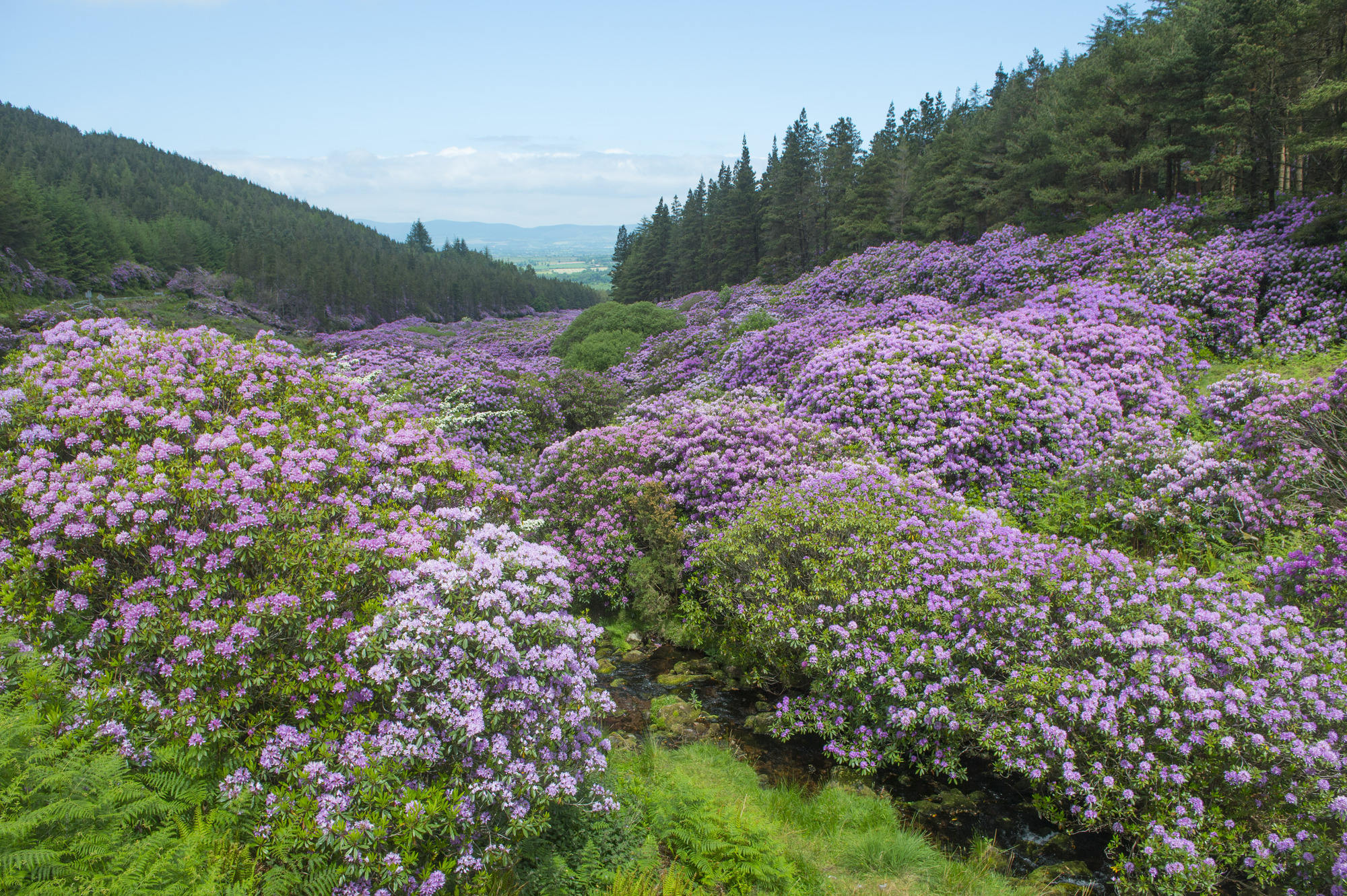
It comes after a previous call for a national plan to combat the so-called "smiling assassin" which, say many conservationists, in fact a "death warrant" to the patches of the countryside it invades
Call for probe into role of rhododendron in Killarney National Park fire

While it may appear beautiful and picturesque, the rhododendron is in fact a "death warrant" to the patches of the countryside it invades, according to many conservationists.  Picture: Dan Linehan

Environmentalists are calling for an independent investigation into the role that dead rhododendron played in helping fuel last month's Killarney National Park fire. 

Both the Killarney Nature Conservation Group (KNCG) and Friends of the Irish Environment (FIE) say they believe the fire was fuelled by "an accumulation of" standing and cut dead rhododendron. 

The claim appears in preliminary comments on an environmental study entitled ‘Contribution of Dead Rhododendrons to Woodland Damage in the Fire at Killarney National Park'.

The call for an investigation is backed by The Woodlands League, which has been repeatedly calling for more resources to be put into extending and maintaining the country's native woodlands. 

KNCG point out that before 2005, cut rhododendron was destroyed in controlled fires on level ground, away from overhanging branches and from other vegetation. 

After 2005, burning cut rhododendron was discontinued in the park, and rhododendron cut or killed in situ was left in and adjacent to the woods. 

KNCG says extensive geo-tagged photographs record the remains of dead rhododendron which was left standing after treatment with herbicides or in cut piles in and adjacent to the woodlands. 

The paper, which gives links to more than 500 photographs, many of them geotagged, illustrates that, in many locations, dense dead rhododendrons were ignited by fires and incinerated the woodland flora and fauna. 

KNCG also points out that a study of a 1984 Killarney National Park fire found that mature closed-canopy oakwoods were fire-resistant by virtue of the lack of suitable fuels in the ground vegetation and because of ‘a lack of vertical continuity of fuel’. 

Both of these conditions have been reversed through years of dense dead and dried rhododendrons left standing or in piles providing suitable fuels at the ground level and a vertical continuity for the fire, says KNCG. 

The call for an investigation comes after a previous call for a national plan to combat the so-called "smiling assassin" which it said is strangling the life out of flora and fauna in places like Killarney National Park. 

While it may appear beautiful and picturesque, the rhododendron is - say many conservationists - in fact a "death warrant" to the patches of the countryside it invades. 

Tony Lowes of FIE said: “There were two urgent issues. The first is that there needs to be an investigation independent of the National Parks and Wildlife Service into the role played by rhododendron. 

“The second issue is that there needs to be an immediate transfer of the year’s remaining rhododendron budget to remove all dead rhododendrons from the Killarney National Park woods.” 

KNCG's Mike O’Sullivan said: “The dead rhododendrons need to be cleared from out of the woods and surrounding area. If they played a role in the last fire, they’ll play one in the next one.” 

In March, heritage minister Malcolm Noonan announced €1.35m for local authority biodiversity projects on World Wildlife Day, with funds available for projects which tackle invasive species.

x

More in this section

Lunchtime News

Newsletter

Keep up with stories of the day with our lunchtime news wrap and important breaking news alerts.

Cookie Policy Privacy Policy Brand Safety FAQ Help Contact Us Terms and Conditions

© Examiner Echo Group Limited