Expert: Map shows location of Bessborough children's burial ground
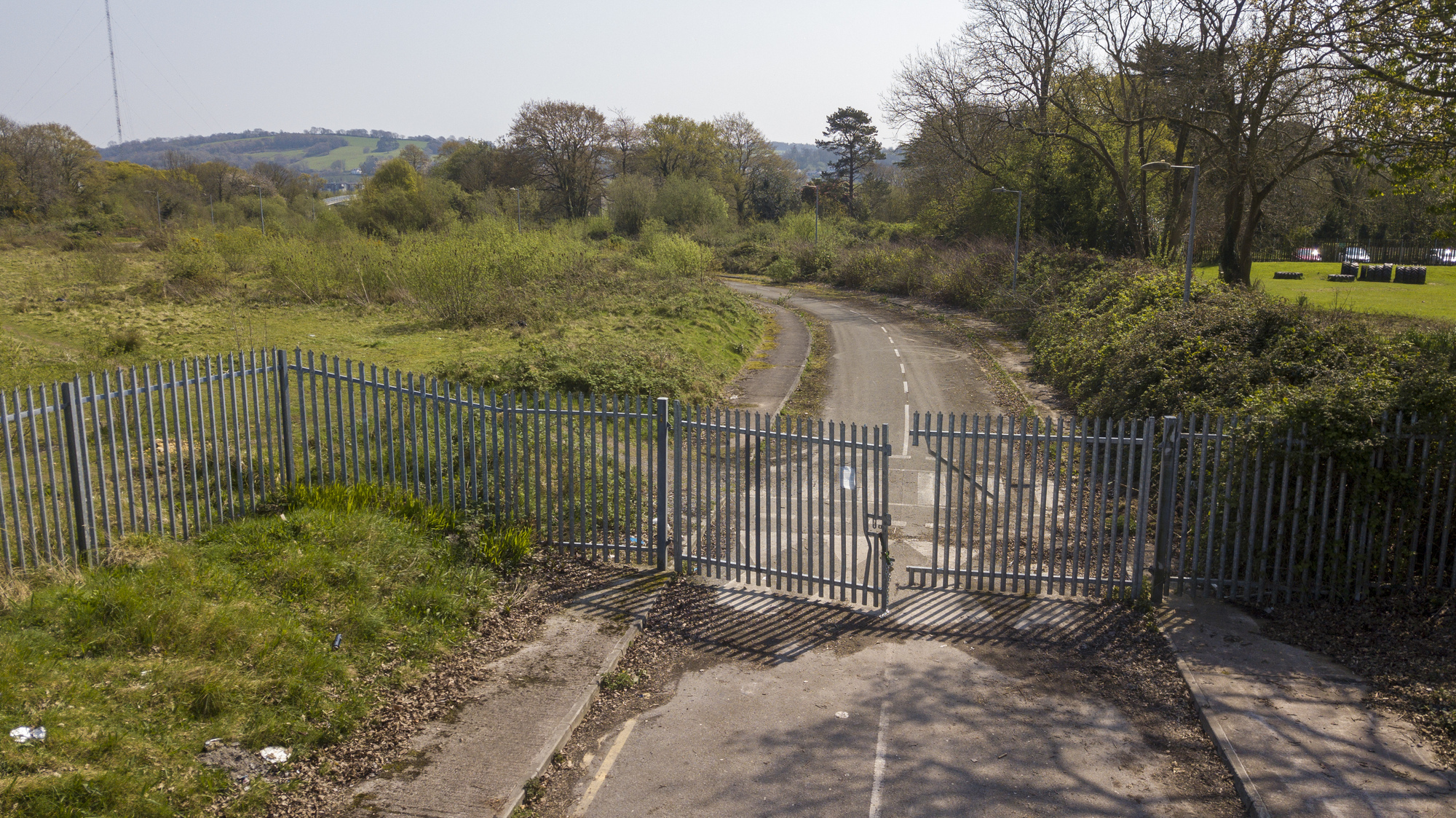
The entrance to the site where MVB Two Ltd has sought an application for planning permission at Ballinure, Blackrock, Cork on the lands of the former mother and baby home at Bessborough. Picture: Dan Linehan
A mapping expert with Ordnance Survey Ireland (OSi) believes a childrenās burial ground associated with a mother and baby home is located on land now earmarked for apartments.
John Clarkin, who has worked with OSi for more than 46 years, and who has been an expert witness on boundary matters for over 30 years, made his comment on the second day of An Bord PleanĆ”laās oral hearing into MWB Twoās strategic housing development (SHD) plan for 179-apartments in three blocks on a privately-owned 3.7-acre site on the former Bessborough estate in Cork.
The developers have separately appealed to the board a city council decision to refuse planning for a fourth block on the same site as part of the same overall housing scheme.
Witnesses for MWB Two told the hearing on Wednesday that the words āchildrensā burial groundā, which appear on a 1949/1950 OSi trace map of Bessborough, relate to an existing burial site near the estate folly, and not to the area of land over which they were written.
But Mr Clarkin, who was called as a witness for the Cork Survivors and Supports Alliance (CSSA), told senior planning inspector, Karen Kenny, that OSi maps have been recognised in court as the gold standard of mapping in Ireland.
He said he believes a childrenās burial ground is located in the field as indicated on the trace map, and that the words do not relate to the small adjoining graveyard which was associated with the burial of nuns from 1956.
He told the hearing that he believes the use of the specific words, āchildrensā burial groundā on the trace map, combined with the size of the font, and the placement of the letter C, was done deliberately by expert OSi mappers to indicate the location of a childrenās burial ground.
He said the OSi revisers who annotated the trace map ā a Mr Horgan, who spent four days on site-work at Bessborough in October 1949, and a Mr OāRourke who spent a day-and-a-half on the site in January 1950 ā were regarded as ālegendsā in their field, and worked to strict OSi guidelines which are set out in the agencyās so-called āred bookā.
āIn the instance of the childrenās burial ground and the blue circle around it, my opinion is that the wording of this and the placement of this was originally queried,ā he said.
āThe fact that it is ticked (a blue tick is visible on the map) shows the final reviser affirmed its correct name and location to the trace examiner, so that the position of the āchildrensā burial groundā will remain as outlined in the making of the manuscript.
āNot only is āburial groundā recorded, it is recorded as a āchildrensā burial groundā.āĀ
He said the inclusion of the new name on a map would have been signed off by the nuns who ran Bessborough, and he added: āThe remainder of the map is highly accurate and professionally made.
āLeaving aside the āchildrensā burial groundā, there is not one other detail in the trace drawing that appears to be incorrect.
āIt is highly improbable, given the fact that the maps were published and were publicly available and used for numerous statutory purposes, including the setting of the net annual values, that the inclusion of a childrenās burial ground in error would not be corrected by the Congregation or any other person.āĀ
However, barrister for the developers, David Holland, said vital documents linked to the map preparation process in this case, and which could help interpret the annotation marks on the trace maps, cannot be provided by the OSi.
He also pointed to the Commission of Investigation into Mother and Baby Homesā examination of a high-resolution aerial photograph of Bessborough, which the developers say was taken by the Irish Air Corps in 1951, and which showed no signs of ground disturbance in the area that would suggest burials had taken place.
But Mr Clarkin said a building in the photograph does not appear on the map, and date data was missing from the image.Ā He questioned the date it was taken ā a question the planning inspector said was valid.
CSSAās pro-bono representative, barrister David Dodd, said the group is not opposed to residential development on the site but it does not want development in the area marked as āchildrensā burial groundā.
He spoke of the historic nature of the decision facing the board, from a human rights and planning perspective, and he said it will be talked about for years to come.
āWe donāt build apartment blocks on burial grounds, and not on childrenās burial grounds, and hopefully not on childrenās burial grounds in mother and baby homes,ā he said.
āThe consequences of this decision are direct, irreversible, and profound.
āPeople will talk about what the board did and what you say in your report for years to come.
āWill the board allow developers to build apartments on the burial ground? Or will they reject that application and let developers go back to the drawing board.āĀ
He also quoted key sections of the fifth interim report from the Commission of Investigation into Mother and Baby Homes which said the Commission āthought it unlikelyā that all 923 children who died while in the care of Bessborough were buried in the small burial ground near the folly.
āThe vast majority of children who died in Bessborough are not buried there; it seems that only one child is buried there,ā it reported.
Mr Dodd said the developers are now asking the board to set aside those finds from the commission, which spent five years investigating such matters.
During questioning from the inspector on the archaeological test trenches which were dug on the site in December 2019, and on the monitoring of that work, she was told the trenches were dug to a maximum depth of 50cm, that the soil removal was visually monitored and soil samples were hand-sieved, but no evidence of burials, or of human remains, was found.
Forensic archaeologist Aidan Harte, who has outlined how a forensic examination of the site could be conducted, said he would draw no conclusions from that archaeological work, on its own.
The hearing continues.