'It’s not looking good': Teen with autism is denied place in a special school for second year in row
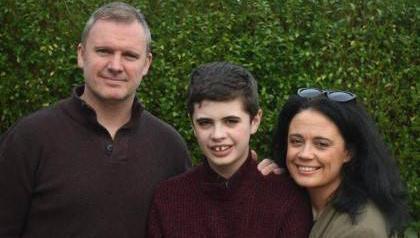
Darragh Murphy's parents, Gary and Alison, say they are frustrated by the process through which parents appeal a school's decision not to enrol their child.
A teenager with autism who remained in his mainstream primary school this year after not receiving a place in a special school has again not received an offer of a place.
Darragh Murphy, 14, from Ballinlough, Cork City, does not have a school placement for this September, despite his parents spending the last year wrapped up in the appeals process.
He turns 15 next February. Even if he receives a special school placement for this September, he will still have to leave when he turns 18.
“All the time, every day, you are thinking about it,” his father Gary said. “You see your son’s peers knowing where they are going in the coming September and your child doesn’t.”
The family has been engaging with the National Council for Special Education (NCSE) since 2017, he added:
Darragh went to his local mainstream primary school with a full-time special needs assistant (SNA). Diagnosed with autism when he was young, his last psychological report also identified a mild intellectual disability.
As such, a special school is where he would get the most appropriate education. When he was left without a place last March due to oversubscription, his family started to take steps to go to the High Court.
However, a “last-ditch” plan was offered to them by the NCSE, and the family didn’t want to go to court. Darragh stayed for another year in his primary school.
Gary said: “At that stage, we were happy to go with that plan, and we were happy to have Darragh in a school that he loved, despite the fact that all the kids he would have been friends with moved on.”
Under Section 29 of the Education Act, parents have the right to appeal a school’s decision to refuse to enrol their child. The family initiated the process in March 2020. After going through it, they wish to highlight what they see as a fundamental unfairness with the process.
“This is the part that I find so hard is that parents are being put through Section 29s,” his mother Alison said. "Technically, the school where you want to send your child to, you have to find fault in their enrolment policy. I can’t explain the stress that caused us.

“I feel like it’s a tick-the-box exercise for a lot of people. But for me and Gary, it’s not, because it is our child.
"You are fighting, and you are dealt with in a different way. You are put in a situation where there are at least three people affiliated with the Department of Education, and the school.
At several times in the process, Gary and Alison found errors in documents lodged by the school. “We didn’t get the determination until June, and then we had to get the corrections. This all happened while we still had no school place for our child.”
“We hadn’t a glimmer what we had to do. Now we’re in a situation again where we have been refused from the school again, and we have to go through another Section 29.
“That stress is being put on us again, and all this is taking time from our son. This is a child who needs to know where they are going, needs to feel safe and not feel anxious but he can’t transition properly.”
She added: “Darragh will be 15 in February if he has to stay back in his school again, which cannot happen because he is too old.”
He will also have to leave a special school at the age of 18, whereas he would get a full six years in a special class in a mainstream school.
“There seems to be these stipulations around age in special schools and I actually don’t understand why,” Alison said.
Gary said: “The State doesn’t seem to have the wherewithal to provide for our son.
"Our case is with the Department of Education, and we cannot get progress from the NCSE, our politicians. We’ve meaningfully engaged with the NCSE since 2017.”
A spokeswoman for the Department of Education said that it and the NCSE are aware of difficulties regarding the availability of suitable school placements in Cork. “The NCSE is working with schools, patron bodies, parents, and others to ensure there are sufficient special education placements available to meet local need.”

CONNECT WITH US TODAY



Be the first to know the latest news and updates