Some priests in Kerry have to seek State wage supports due to impact on income of Covid-19
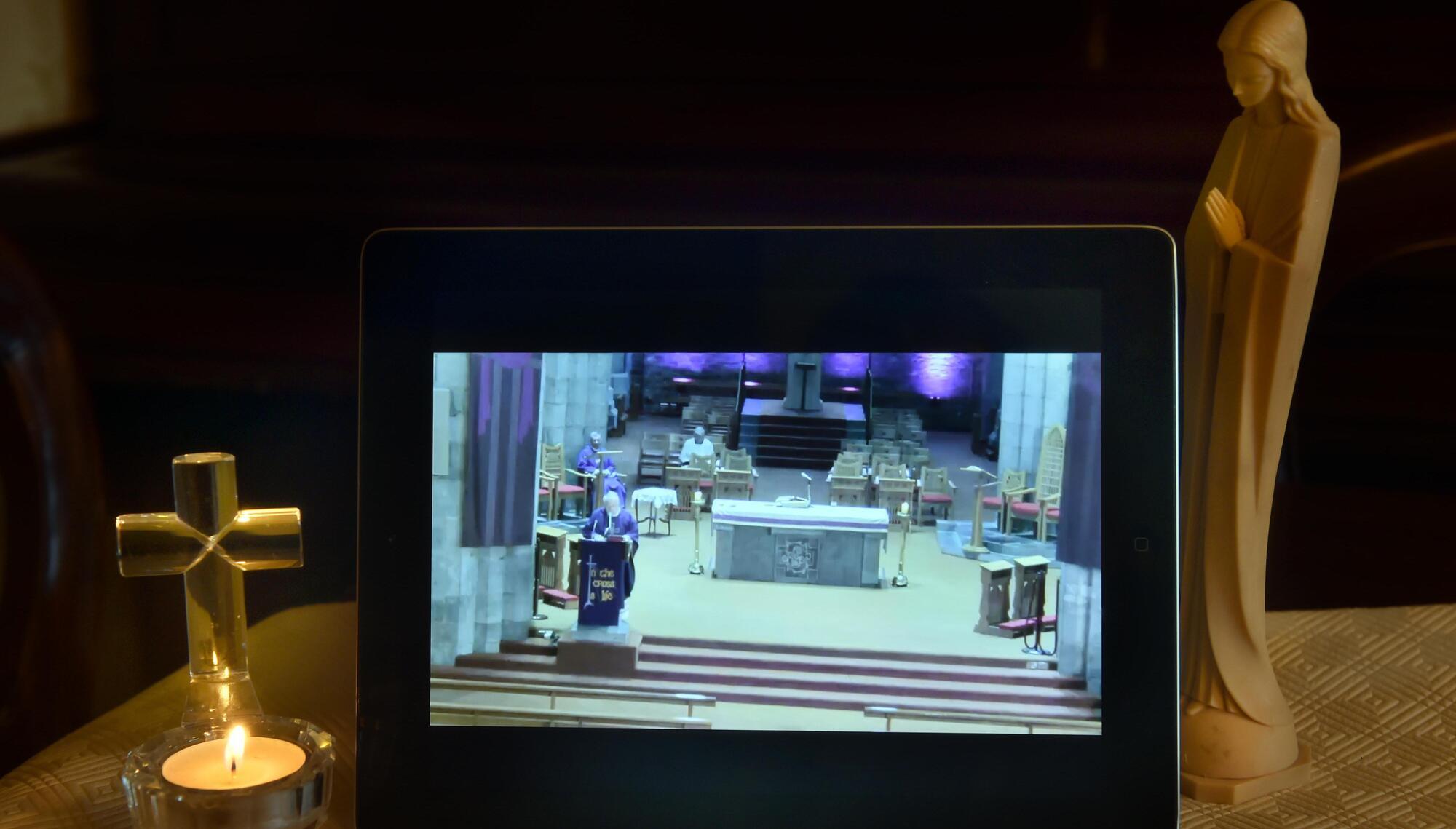
Retired Bishop of Kerry Bill Murphy celebrating Mass online from St Mary's Cathedral, Killarney with Fr Niall Howard and sacristan Tadhg Fleming. The Diocese has embraced innovation to sustain its connection with Catholics but many parishes have suffered badly economically. Picture: Don MacMonagle / File
Income in parishes across the Catholic Diocese of Kerry have suffered a severe drop, with many reporting falls of up to 50%.
The impact of Covid-19 is being felt in parishes from Adrigole to Waterville, with all income streams, from bingo to baptisms, badly hit.
It has led to some parishes availing of the Government's Covid income supports, with lay staff availing of the pandemic unemployment payment (PUP) and a number of priests being supporting on the employment wage subsidy scheme (EWSS).
Stipends from weddings have all but vanished due to the pandemic, and church income has sharply fallen in parishes which rely on the tourism trade.
Most of the 53 parishes in the Kerry Diocese — which includes parts of West and North Cork — can sustain the shortfall of the past year, but it is a particular challenge for those that are repaying refurbishment loans, the Diocese said.
"Naturally, there has been a fall in parish incomes. Parishes throughout the Diocese of Kerry have experienced a drop in the income of 35% to 50%.
“In our diocese, where tourism is such a vital part of the economy, the fall in usual visitor attendances has also affected the parish incomes."
Parishioners have been "very generous", the diocese said, with a move to online donations and the weekly envelope collections plugging gaps for many parishes.
A number of strategies have been put in place by lay committees, including in at least one church, where the Christmas crib was retained for the whole of January.
Most of the 53 parishes now have online Masses with webcams on Facebook, along with Zoom meetings and webinars.
However, footfall and physical Mass attendance has fallen dramatically, in observance of Covid restrictions.
From March last year, there were no Masses at all for 25 Sundays and, outside of the lockdowns, congregation numbers were restricted.
Most one-off fundraising events such as sales of work or silver circle draws did not take place.
One parish that has bucked the trend is that of Moyvane near Listowel in North Kerry. Parish priest Fr Kevin McNamara who celebrated Mass throughout the pandemic from a side door to parishioners parked outside in their cars, said his church's income is down by only around 20%.
People brought envelopes to the front door box and Moyvane had income “every week”, Fr McNamara said.
Fr Tim Hazelwood, parish priest for Killeagh near Youghal, Co Cork, described the funding during Covid problem as being “across the board, and worst of all in the cities”.
“The cities, the attendance would have been very low anyway.
“Kerry would have been in a bad position anyway as the number of priests is very low, and a number of parishes have no priest at all.
“It’s especially worrying for those parishes that are paying back a loan, they are in fierce trouble,” Fr Hazelwood said. “Because they’re servicing a loan and also having to pay the various maintenance costs like insurance.”
He said some parishes “would have savings, and they’re in pure survival mode”.
“That’s fine, but if this continues into next year, then there would be serious questions that need to be answered.”
He said some parishes would have negotiated debt forgiveness deals, but added what Covid has really served to do is “accelerate a reckoning we need to have with ourselves”.
“The reality is that a lot of people won’t come back to the church after a year of no masses, you get out of the habit,” he said. “So we need to ask: ‘what does the church look like when this finally ends?’.
“That will involve a refocus on each church’s outgoings, and whether they need to be using all of their buildings, that kind of thing,” Fr Hazelwood said. “Covid is forcing us to look at how we’ll be in the future.
“The old style of church that we’re still holding on to, this has shown that we need to look at new models. I don’t know what that may be, I don’t have the answers, but it will come down to new ideas - leadership in the church, women taking leadership roles for example.”
Read More


CONNECT WITH US TODAY



Be the first to know the latest news and updates