13 of 35 areas that have raw sewage flowing into environment are in Munster, report finds
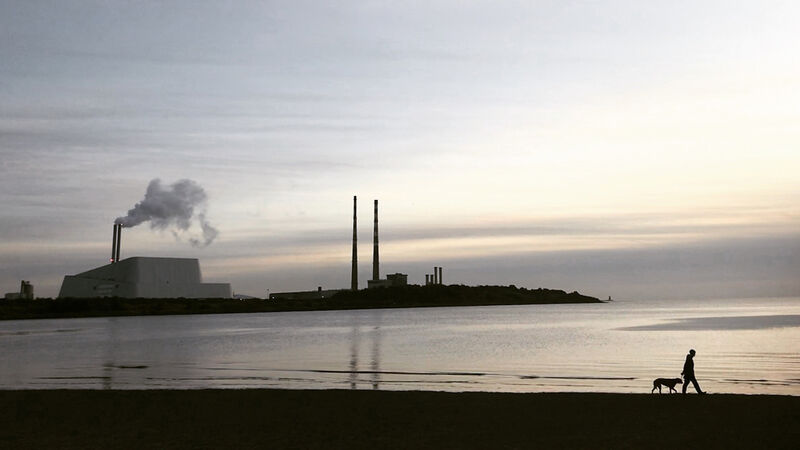
The EPA said âcontinuing issuesâ in Dublin - which is served by Ringsend treatment plant - are of concern. Picture: RollingNews.ie
Raw sewage posing an âunacceptable riskâ is flowing into the environment from 35 towns and villages every day, according to a new report from the Environmental Protection Agency (EPA).
The EPAâs Urban Waste Water Treatment in 2019 report highlights that delays in upgrading treatment systems around the country are prolonging risks to the environment and public health.
Of the 35 areas that have raw sewage flowing into the environment, 33 are unlikely to receive treatment until after 2021. 13Â of the areas were in Munster at the end of 2019.
Six are in Cork with only one - Cobh - expected to be treated next year.
The EPA reported said that Ballycotton, Castletownbere, Castletownshend, Inchigeelagh and Whitegate - Aghada will be treated in 2022.
Five places in Clare are continuing to release untreated waste water in the environment with none of them scheduled for treatment next year.
Ballyvaughan, Clarecastle, Kilrush and Liscannor will be treated in 2022 and Kilkee is set for treatment in 2023.
Two more areas are in Limerick, with Foynes and Glin having a 2024 date for treatment.
The report has found that there are 113 areas where priority action is needed to protect public health and the environment.
The report found that in Cork, there were seven areas which failed to meet EU treatment standards while there was three in Clare and one in Waterford.
The report said that Ireland is failing to treat waste water properly a lack of adequate treatment infrastructure.
Citing examples, it said five towns and cities, including Cork, do not have the more stringent level of treatment needed to remove nutrients from waste water discharged into sensitive areas.
It also stated that there are no treatment plants serving Arklow, Cobh and Moville.
âThese three towns continuously discharge untreated sewage into the environment,â it said.
It also found that 19 large towns and cities, including Dublin and Cork, have failed to meet EU standards to prevent pollution.
The agency said that âcontinuing issuesâ in Dublin - which is served by Ringsend treatment plant - are of concern âbecause it produces almost half (44%) of Irelandâs wastewaterâ. Â
âThe Ringsend plant repeatedly fails the treatment standards because it does not have the capacity to effectively treat all the sewage it receives. Irish Water is upgrading the plant and advises it will be completed by 2025â.
The EPA said that âsome improvements in performance were evident in the past year, with the removal of the raw sewage discharges from one town and improvements in treatment at nine towns and villages where waste water was the main issueâ.
Despite the improvements, the agency has been critical of Irish Water.
âIrish Water has repeatedly revised its plans and extended the timeframe to provide treatment for towns and villages including those that are discharging raw sewage,â the EPA said.
Dr Tom Ryan, Director of the EPAâs Office of Environmental Enforcement said that the raw sewage discharges âpose an unacceptable risk to the environment and public healthâ.
The EPA said that Irish Water âis failing to treat waste water to national and European Union standardsâ.
Commenting on the report, Dr Ryan said: âTwo years ago, Irish Water advised it would provide necessary treatment infrastructure by the end of 2021 for 30 of the 35 areas discharging raw sewage. Â
âIt has now revised this down to just two areas, resulting in significant delays in bringing projects to completion.
âThe growing uncertainty in Irish Waterâs planning and delivery of these critical projects is undermining confidence in its capacity to reduce the risks to public health and the environment in a timely manner.
âPlans are only effective if implemented, and the inherent uncertainty of these plans is a serious cause of concern for the EPA. Irish Water must remedy the underlying causes for the delays in delivering this critical infrastructure to ensure that raw sewage discharges are eliminated.âÂ
Andy Fanning, Programme Manager of the EPAâs Office of Environmental Enforcement, added: âThese works must be a priority for Irish Water and will be closely monitored by the EPA.
âThere is, however, no clear plan to improve treatment at 23 areas where waste water is a significant threat to waters at risk of pollution. Â
 âIrish Water must clearly identify when and how it will resolve the issues at these 23 areas and plan improvement works as early as possible.â
Irish Water said that it ânotesâ the EPA report adding that âas outlined in the report significant progress has been made to date by Irish Water with the delivery of critical wastewater projects around the country in addition to a portfolio of key projects at construction and planning phases.âÂ
However, speaking on RTĂ radioâs Morning Ireland, Mr Gleeson acknowledged that Irish Water is behind schedule with many of its plans, but claimed that a lot of progress had been made since the establishment of the utility in 2014.
He also admitted that the EPA's claim in the report that Irish Water is failing to treat wastewater to national and European Union standards, was correct.Â
Mr Gleeson said 130 areas have been taken from the priority list since 2014 and while there were plans for the remaining 113, many of the delays stemmed from issues around the statutory process, planning and land acquisition.
Work will begin on a plant in Wicklow next year, he explained. Planning for this project originally began in 1993 and was âstuckâ in legal challenges for 15 years. This indicated there was a 10-year process to get plants up and running, he said.
While everyone wanted wastewater treatment in their village or town, âno one wants it beside their house or business.âÂ
Irish Water is now in the process of spending âŹ500million upgrading the Ringsend plant in Dublin and it will be upgraded to cope with a population of 2.4 million by 2024, he added.
Irish Water is doing âas much as it can, as fast as it canâ in Ringsend, he said, because it was very aware of the challenges, but it was complex to keep a plant running while upgrading it at the same time.