Continuing legal aid row 'a matter of concern to me and judges generally', says Chief Justice
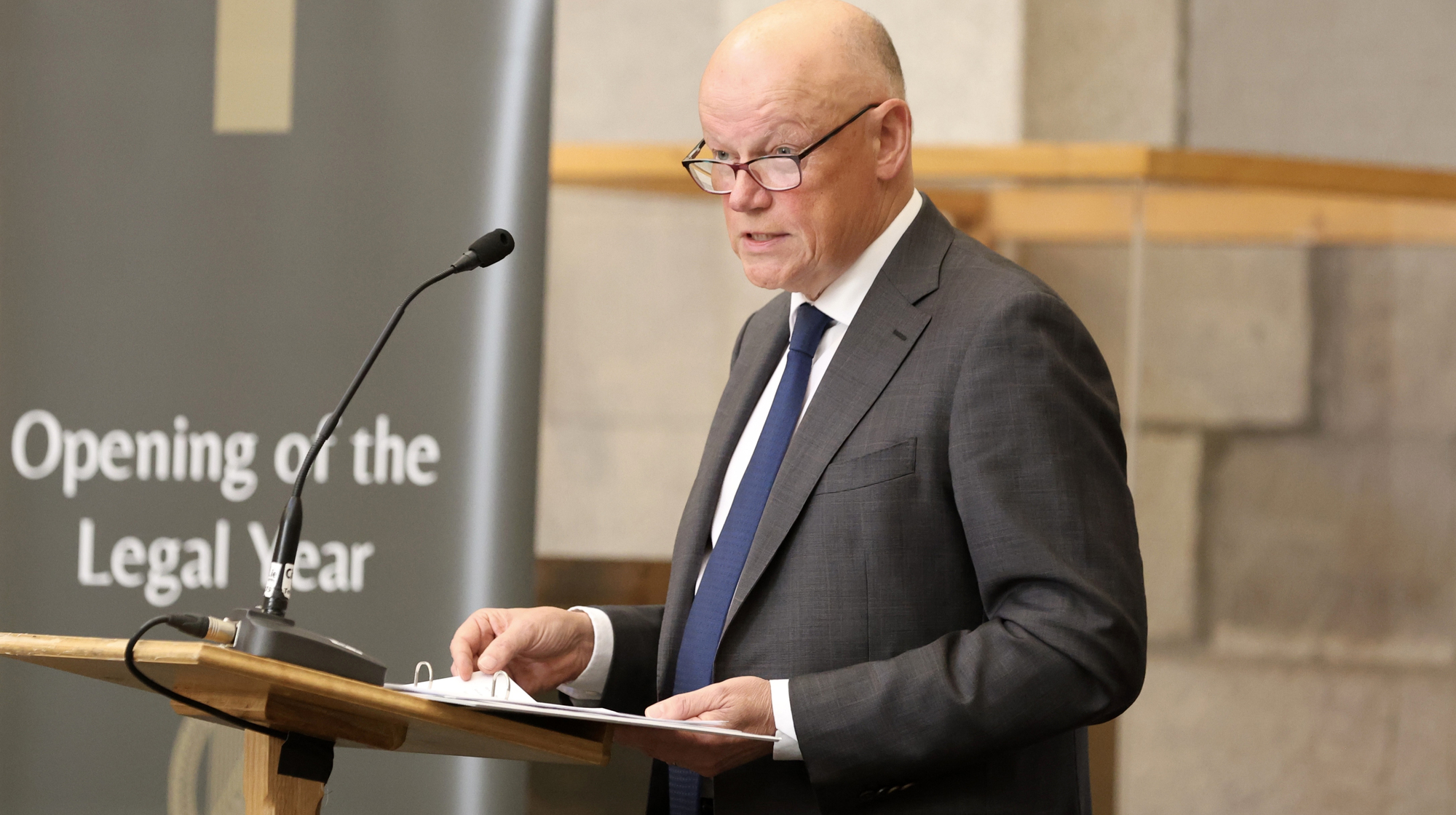
Chief Justice Donal O'Donnell said he hoped the dispute, which centres on a proposed flat fee to solicitors and where solicitors across the country have withdrawn their services 'can be brought to a conclusion soon'. File photo: Sasko Lazarov/Photocall Ireland
The continuation of the long-running dispute between solicitors on the criminal legal aid panel and the Department of Justice is a matter of concern, the Chief Justice Donal O’Donnell has said.
In his speech at a ceremony to mark the opening of the legal year on Monday, Mr Justice O’Donnell said the continuation of the row, which has been going on several months, is a matter of concern to him and judges generally.
“It would be remiss of me on this occasion not to recognise that there is a long-running dispute between solicitors on the criminal legal aid panel and the Department of Justice.
"Some issues relating to that are before the courts including the Supreme Court and that limits what I can say, but I think I can say that the continuation of the dispute is a matter of concern to me and, I believe, judges generally,” the judge said.
Chief Justice O’Donnell said he hoped the dispute, which centres on a proposed flat fee to solicitors and where solicitors across the country have withdrawn their services “can be brought to a conclusion soon”.
Mr Justice O’Donnell, referring to the issue of court security, said we have to face the fact that in Ireland and around the world behaviour in and around courts directed at litigants, witnesses, lawyers and judges is becoming more aggressive intrusive and disruptive.
“I welcome the fact that a Courts Security Bill has been included in the Government's autumn legislative programme for priority drafting,” he added.
Chief Justice O’Donnell said the court system has historically been severely under-resourced and that is a particular problem today as it faces the demands of technological change and the adaptation of court houses for those with disabilities and in responding to climate change.
He said he had no doubt that an analysis process carried out by any independent body “would conclude that the infrastructure of the court system is deficient and that we are attempting to make a 19th-century system work in a 21st-century world”.
Mr Justice O’Donnell said the traditional image of judges has been of a group reluctant to change and suspicious of modernity.
“I do not think that is true of the present day Irish judiciary. Since the introduction of the Judicial Council in 2019, I have been struck by the appetite for judicial education within the judiciary, and I believe it is more than willing to consider ways of effectively communicating with the public about how it performs its functions,” he said.
CONNECT WITH US TODAY



Be the first to know the latest news and updates