Cork father and son volunteering with restorative justice programme encourage others to sign up
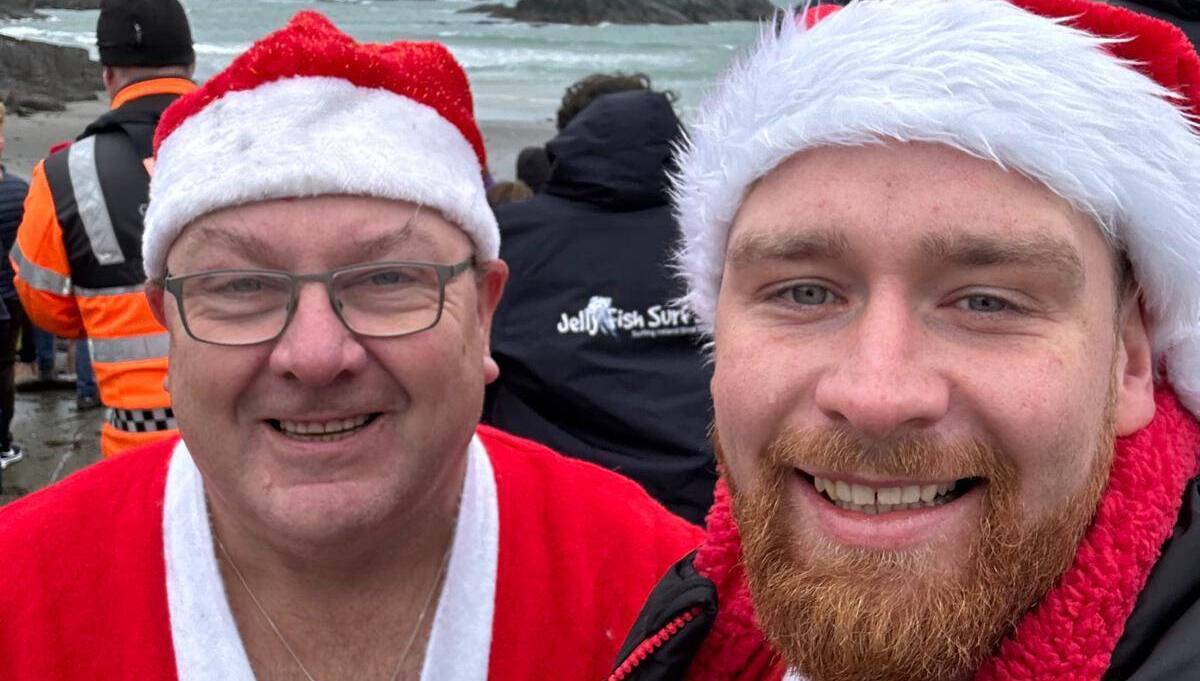
Father and son, Mick (left) and Paul McCabe from Bandon, Co Cork.
In an internet café in Cork City, a young man who had appeared before the courts worked to pass his driver theory after being matched with a volunteer as part of a restorative justice programme.
These kinds of interactions are what Le Chéile Mentoring is all about.
The restorative justice programme helps children and young people at risk of reoffending, by matching them with a local volunteer.
Established in 2005, Le Chéile work in partnership with the Probation Service, An Garda Síochána, Oberstown Children Detention Campus and other agencies to reduce the level of crime in the community.
When Mick McCabe signed up to become a volunteer with the organisation almost 20 years ago, he was among the first volunteers to be trained in Cork.
Two decades later, he is still mentoring young people.
And for the past eight years, his son Paul has been following in his footsteps.
Read More
After a judge recommended it would be beneficial for a young man at risk of reoffending to take part in the Le Chéile programme, Paul became his mentor.
“One young mentee, they came from a poor socioeconomic background.
“They didn't have a computer at home, didn't have a lot of money, and maybe wasn't fully literate.
“One of the tasks that we decided to work on together was getting them their driving license,” Paul told the .
For days, the pair spent time in an internet café in the city, where they went through the questions asked for the driver theory test.
“He wasn't always able to read the questions or understand them, but we worked on it together and then eventually he was able to go forward and get his driving license. That helped him massively,” said Paul.
Over the last couple of years he has been matched with three young men.
While sometimes the degree of success can vary from one interaction to the next, Paul said strong bonds can be built between mentor and mentee.
“When you get to talk to someone who might be in trouble, you feel like you're kind of walking in their skin [sic] for a little bit, you can understand more how they see the world."
“You can see why they've ended up in certain situations where they've maybe fallen in with a bad crowd or maybe they come from a home where one of the parents is in jail or a drug addict, or they don't have great role models,” he said.
The whole programme relies on one principle – having one good person to talk to “can dramatically help” a young person to go down a different path.
“I've seen people grow and evolve in front of me, which is really nice and I suppose the more that they engage with the programme, you can definitely see that they become more comfortable and move away from the trouble that they were getting in before.”
While the programme also caters for young women, Paul said there is a cohort of young men who seem to be falling into trouble.
“You can see more young men falling into trouble, falling out of school. They’re getting into trouble, and they're in front of the courts.
“So, it’s mostly young males who are coming through, from what I understand,” he said.
As part of the programme, Le Chéile pay for a mentee and their mentor to go on an activity.
“A lot of the young males don't want to sit down in a restaurant and stare you in the face and talk about their family, but [they might enjoy] going to play a game of pool together… paddleboarding ... or you might go for a walk together, doing things like this is kind of more beneficial to them.
“It's easier for them to open up and talk,” he explained.
Paul and his father have now called on more men in Cork to sign up as volunteers, an experience which is beneficial for both mentor and mentee.
Mick came across Le Chéile almost by chance while working in Ballincollig, when he heard about the new mentoring service through the local library.
Nearly 20 years on, he said mentoring is not about grand gestures.
“Most of them just wanted to have a cup of coffee and talk away. They’d tell you what they’d done at school, what matches they were following or what music they were listening to.
“They’re ordinary kids. They just need someone to listen to them and give them a bit of time.”
Le Chéile Mentoring is currently recruiting male volunteer mentors across Cork City and County and are also hosting online information sessions in October.
To find out more or apply, visit lecheile.ie or contact National Volunteer Coordinator Sara McDonnell at saramcdonnell@lecheile.ie.

CONNECT WITH US TODAY



Be the first to know the latest news and updates