Civil servant arrested for leaks to hostile foreign power charged with breaking Official Secrets Act
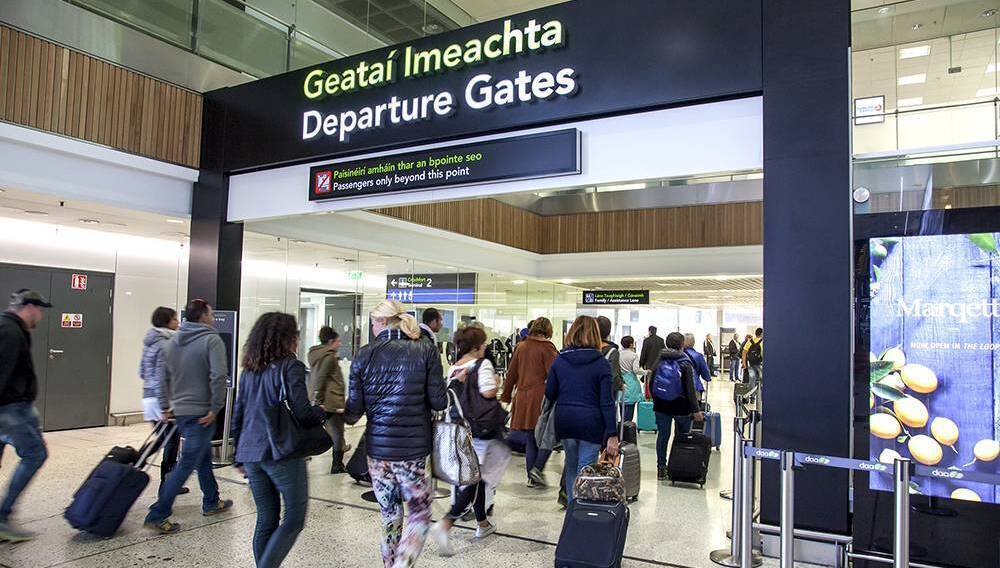
Yevgen McKeeffe, aged 46, originally from Ukraine but with Irish citizenship, had been arrested at the departures area in Dublin Airport on May 28, attempting to leave the country carrying €5,650 and a one-way ticket. File picture
A Dublin civil servant accused of leaking sensitive government information to a hostile foreign power now faces extra charges, including breaking the Official Secrets Act.
Yevgen McKeeffe, aged 46, originally from Ukraine but with Irish citizenship, had been arrested at the departures area in Dublin Airport on May 28, attempting to leave the country carrying €5,650 and a one-way ticket.
The Garda Special Detective Unit (SDU) had charged him under the Theft and Fraud Offences Act for the unlawful use of a computer.
The case was upgraded at Cloverhill District Court on Tuesday.
The original charge was withdrawn and replaced with four new allegations of offences between July 11, 2025, and May 28 this year.
The first is under section 7 of the Criminal Justice (Corruption Offences) Act 2018 for unlawfully disclosing confidential information from a specific government department, which cannot be named for legal reasons.
He also faces a charge of breaching the Data Protection Act, alongside two counts under the Official Secrets Act for retaining official data from the same department, and communicating that information, prejudicially to the safety and preservation of the State, to another person.
The Director of Public Prosecutions has directed the case proceed on indictment to a higher level, and a book of evidence must be served before he is returned for trial. He was remanded in continuing custody to appear again on Friday.
Two days after his initial arrest, the IT worker was denied bail in the District Court, and again in June in an appeal to the High Court.
Mr McKeeffe has lived in Ireland for 24 years and changed his name by deed poll.
Reporting restrictions imposed earlier bar journalists from revealing Mr McKeeffe's Dublin address, the specific government department in which he worked, the overseas country involved in the case, or the information allegedly disclosed.
During Mr McKeeffe's bail hearing in June, Detective Sergeant Shay Palmer said the accused had been in his current position since 2022 and, before that, in another department for six years.
He remains suspended from work pending the outcome of the case.
The Detective Sergeant said the SDU opened an intelligence-led investigation that led to Mr McKeeffe's arrest as he was about to fly to Turkey.
It was alleged the man was then to proceed "on to his final destination where he would meet with his contact and share confidential information which had the potential of creating risk to the Irish State".
The bail hearing was told that he had previously travelled out of the country in 2025 under his current name, but had used another name on an earlier flight.
The court heard gardaí seized electronic devices and documents during a search of his home computer.
His workplace was also examined, and his desktop computer was seized. It was claimed that he sent information, in the form of documents, pictures, or videos, to a "handler" in a foreign jurisdiction via the Telegram app on his mobile phone.
Detective Sergeant Palmer maintained that Mr McKeeffe received payments in a foreign currency equivalent to €250–€260 for his efforts, which were lodged into his mother's account.
Given the nature of the country involved, it was not possible to determine whether he received further sums in that nation.
The court heard he had signed the Official Secrets Act when he commenced his employment.
Detective Sergeant Palmer also raised significant flight risk concerns.
The court heard that the accused came to Ireland because he was homosexual and faced discrimination before, and had used four other variations of names.
The single man held an Irish passport and two other non-Irish travel documents but had been in Ireland lawfully since 2002 and had progressed to citizenship.
Defence counsel said the accused had changed his name to a more Irish one and he had ties to the country through his job, friends, and a mortgage on his home. He had no prior convictions and denies the charges.

CONNECT WITH US TODAY



Be the first to know the latest news and updates