'A tremendous victory for journalism': Ex-BBC correspondent awarded £20,000 in damages
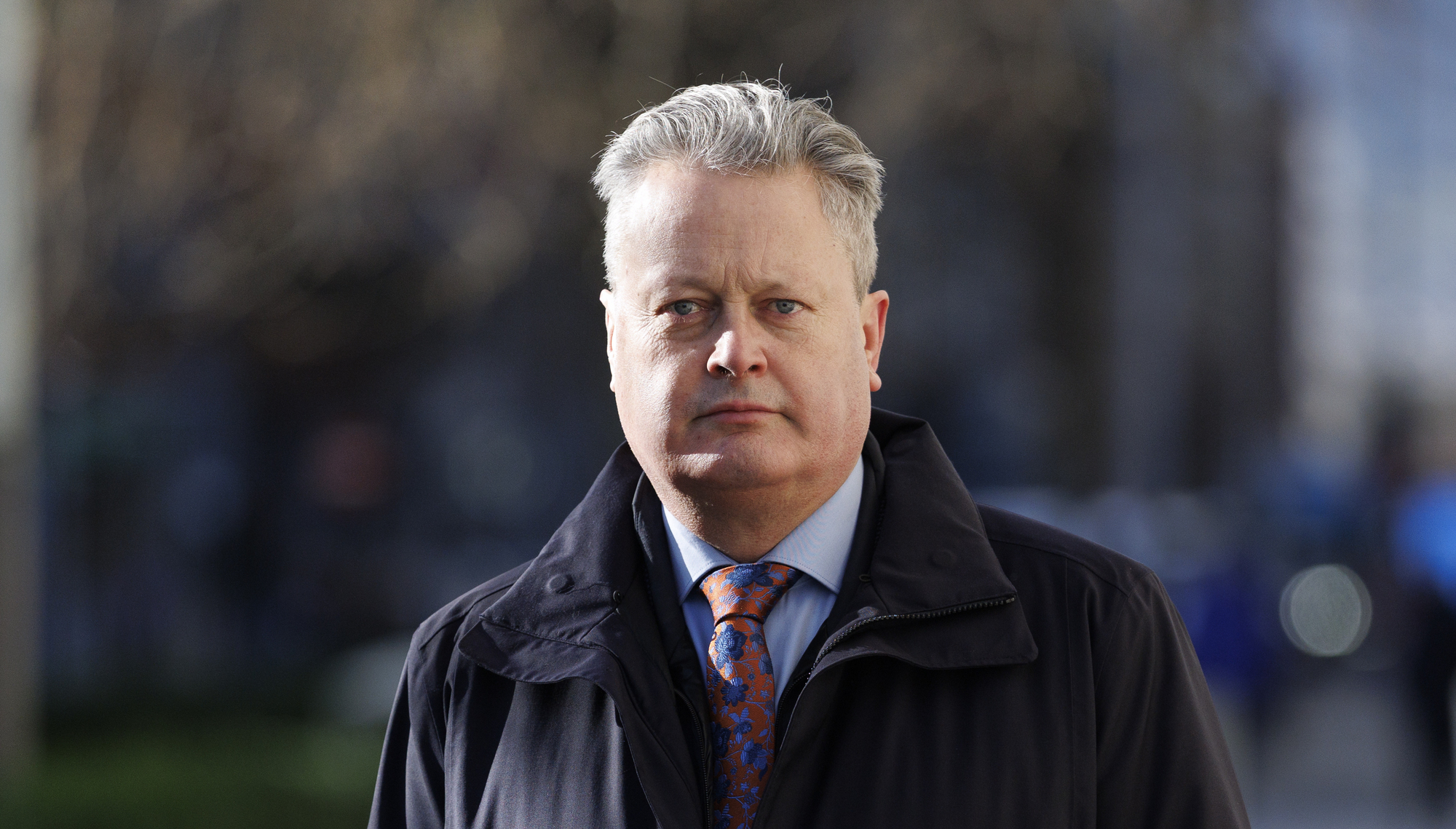
Vincent Kearney said the ruling was the first time MI5 had been ordered to pay damages to a journalist. File picture
A former BBC journalist whose communications data was unlawfully obtained by MI5 has been awarded £20,000 (€23,400) in damages by a specialist tribunal.
The Security Service previously admitted it breached the rights of Vincent Kearney, now the northern editor at RTÉ, when obtaining the data.
The Police Service of Northern Ireland (PSNI) and Metropolitan Police also made concessions during proceedings brought by Mr Kearney at the Investigatory Powers Tribunal (IPT) in London.
In a judgment on Thursday, three judges at the IPT awarded Mr Kearney £10,000 in damages from the PSNI and the same award against MI5, finding there was “no reason to distinguish between the conduct” of the two organisations.
The judges said that “the interferences in this case were numerous, and took place over a period of years”.
They continued: “The heightened protection provided to journalists is not for the benefit of the journalist personally, but for the public interest in the ability of his readers or audience to receive information from him.”
In the 16-page decision, the tribunal said that MI5’s bids for Mr Kearney’s data in 2006 did not identify him as a journalist, or that the data sought would reveal his sources.
They continued: “The authorisations do not explain why the data sought cannot be obtained by other means, nor why the public interest requires interference with journalistic sources.”
Mr Kearney, who worked as BBC Northern Ireland’s home affairs correspondent between 2006 and 2019, welcomed the judgment, describing it as “a tremendous victory for journalism”.
He continued: “The ruling is unequivocal; agencies tasked with upholding the law acted in ways that were ‘not in accordance with the law and disproportionate’.
“The IPT does not normally award damages, and that was never the purpose of this case.
“The aim was always to bring into the public domain the extent of the law breaking over a period of many years and the impact that had on my ability to perform my lawful duties as a journalist.”
Mr Kearney said the ruling was the first time MI5 had been ordered to pay damages to a journalist.
He concluded: “It is important that agencies charged with upholding the law know that they are not above the law and will be held to account.”
Mr Kearney brought legal action after reports that documents in the case of documentary makers Barry McCaffrey and Trevor Birney had suggested that public bodies, including police forces, had spied on Mr Kearney.
At a hearing in February, Jude Bunting, for Mr Kearney and the BBC, said there were seven separate police or MI5 operations where the intelligence services or forces unlawfully obtained the journalist’s or broadcaster’s confidential communications data between 2006 and 2018.
The tribunal in London was told that the PSNI had made a “detailed profile” of the journalist, including his date of birth, addresses, car details, phone numbers, and the names of his wife and mother-in-law, as well as an “extensive review” of his published work.
Mr Bunting said Mr Kearney should receive “substantial” damages.
Cathryn McGahey, for the PSNI, said the force had made “a number of clear and extensive concessions”.
The barrister said in written submissions that “the interferences in question were directed at the acquisition of communications data associated with an individual journalist, rather than at the BBC’s editorial autonomy, premises, systems, or journalistic archives”.
Ms McGahey continued that while the force did not object to the tribunal ruling that the PSNI breached Mr Kearney and the BBC’s rights, it opposed the journalist being awarded damages as it would be unnecessary “to award just satisfaction”.
Deirdre McCarthy, managing director, RTÉ News & Current Affairs, said: "The protection of journalist sources is the cornerstone of ensuring a free and independent media.
"The scale of the covert surveillance and accessing of journalist Vincent Kearney's communications data by British security and policing agencies has been deeply concerning."
She added: "Any deliberate circumventing of long established legal protections of journalists and their sources damages trust in media and ultimately our democracy."
A BBC spokesperson said: “The issues raised by this case were a matter of grave concern, not just to the BBC but to wider society, which is why we pursued them to the fullest extent possible.
“Journalistic freedoms are a basic part of how democracies work. Their importance is recognised in law and matters to all of us.
“What happened in this instance was wrong and must never be repeated.
“It caused harm to a journalist, jeopardised trust and threatened the safeguards on which public interest journalism depends, and has a right to expect.
“Today’s findings are welcome, necessary and significant. And we hope that their effect will be to protect journalists and their freedom to report and investigate stories into the future.”
NUJ assistant general secretary Séamus Dooley said: “This is a landmark judgement by the IPT, and is a clear and unambiguous vindication of our member Vincent Kearney and the BBC.
“It follows on the successful case taken by our members Barry McCaffrey and Trevor Birney, and represents a victory for journalists and investigative journalism. The outrageous treatment of Vincent and his family would not have been revealed without the action taken by Barry and Trevor.
“The revelations at the IPT hearings have given a deeply worrying insight into the actions of the police and security forces against journalists. The criminalisation of journalists is an affront to democracy and a fundamental breach of trust.
“It is important to acknowledge the courage and resilience of Vincent Kearney, a journalist of the highest integrity, and his family, who should never have been caught in the illegal network of surveillance. This has been a costly, protracted, and emotionally draining process."
He added: “Today’s judgment is not only a welcome vindication of Vincent, it also reinforces the need for a judge-led inquiry into the unlawful surveillance of journalists, lawyers, and human rights defenders by police and security forces."

CONNECT WITH US TODAY



Be the first to know the latest news and updates