Stephen Silver appeals conviction for murder of Detective Garda Colm Horkan
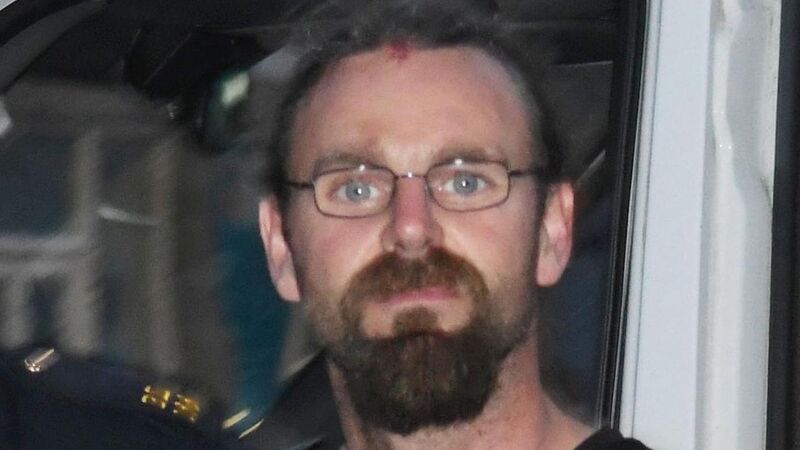
Stephen Silver (pictured) a motorbike mechanic from Aughaward, Foxford, Co Mayo, had pleaded not guilty to the murder of Det. Gda Horkan knowing or being reckless as to whether he was a member of An Garda Siochana acting in the course of his duty. File picture: Michael McCormack/PA
Stephen Silver, who shot and murdered Garda Colm Horkan after taking the garda's own gun from its holster, has appealed his conviction claiming that the State's psychiatric evidence contradicted the legal test for insanity.
Silver's lawyers had argued at his trial that his responsibility for the killing was substantially diminished by his mental illness and that he therefore qualified for a manslaughter verdict under the Criminal Law (Insanity) Act 2006.
They relied on the evidence of consultant psychiatrist Dr Brenda Wright who said that Silver was suffering a relapse of bipolar disorder which contributed significantly to his actions when shooting the acting detective.
Professor Harry Kennedy, who was called by the prosecution, disagreed with Dr Wright. He said Silver showed a functioning mental capacity by carrying out purposeful actions with specific intent.
The professor cited as evidence of his functioning mental capacity, Silver's ability to take control of the gun, pull the trigger, stand back from Gda Horkan and, supporting the gun in both hands, pointing and aiming at his victim's trunk.
Professor Kennedy said the capacity to form an intent can be inferred from purposeful actions where a person does "one thing after another, after another".
At Thursday's appeal hearing, Dominic McGinn SC, for Silver, said Professor Kennedy's evidence contradicted the legal test for insanity under the Act.
To get to a point where a jury can consider diminished responsibility, Mr McGinn said they must be satisfied that the accused intended to kill or cause serious injury. Therefore, counsel said, the law recognises that an ability to form an intent does not exclude the possibility that a person has a mental illness and qualifies for a manslaughter verdict due to diminished responsibility.
Mr McGinn said the trial judge should have told the jury that an ability to form an intent does not exclude a defence under the 2006 Act.
Michael Delaney SC, for the Director of Public Prosecutions, replied saying Professor Kennedy never suggested that purposeful actions could not co-exist with insanity or diminished responsibility. Counsel said the professor had simply said that it was "one thing to look at" when assessing mental capacity.
Mr Delaney said the trial judge's charge had been "entirely appropriate" in that she told the jury to consider the expert evidence in the context of all the evidence. Counsel said the jury understood that they were not engaged in a "trial by expert" and were required to consider everything they had heard, including Silver's own testimony.
Mr Justice John Edwards, presiding with Mr Justice Patrick McCarthy and Ms Justice Isobel Kennedy, reserved judgment.
Silver, aged 49, a motorbike mechanic from Aughaward, Foxford, Co Mayo, had pleaded not guilty to the murder of Det. Gda Horkan knowing or being reckless as to whether he was a member of An Garda Siochana acting in the course of his duty.
Gda Horkan died having been shot 11 times with his own gun in Castlerea, Co Roscommon on June 17, 2020.
In April 2023, Ms Justice Tara Burns jailed Silver for life with a minimum time to be served of 40 years.
The trial had heard that Silver had a long history of bipolar affective disorder, which required him to be hospitalised on psychiatric wards on numerous occasions. Following each admission, Silver would stop taking his medication, causing him to relapse and be readmitted.
However, Professor Kennedy said he found “no positive evidence” Silver had relapsed at the time he shot and killed Det. Gda Horkan. Dr Wright, then interim clinical director at the Central Mental Hospital, told the court that Silver’s illness contributed significantly to his actions at that time.
The trial heard that Gda Horkan was a well-regarded member of the force with 25 years’ service and no disciplinary issues on his record.
On the night he died, he responded to complaints from residents of a housing estate in Castlerea after Silver had started blaring music while driving his motorcycle dangerously and burning out his back tyre.
By the time the garda arrived, Silver had already left the estate on foot but Gda Horkan caught up with him near Castlerea town centre. CCTV evidence suggested that Silver spat in the garda car window, prompting Gda Horkan to get out of the car.
Silver took the stand at the trial, telling the jury that he believed Gda Horkan was “a heavy down from Dublin” who was trying to kill him. He said that Gda Horkan was wearing a Tommy Hilfiger jacket and “didn’t come across” as a garda.
He gave evidence that a struggle ensued between them before he fell to the ground, and in the process of getting up he felt the gun on Gda Horkan’s hip.
“He had his hand on the gun and I had my hand on the gun and we wrestled. The gun came out; I couldn’t tell you who took it out,” said Silver.
He said that he felt Gda Horkan “was trying to kill me”. “I kept shooting until the gun finished and there was no ammunition left,” Silver said.


CONNECT WITH US TODAY



Be the first to know the latest news and updates