Court of Appeal hears of 'mystery' disappearance of over 300 items of evidence in murder case
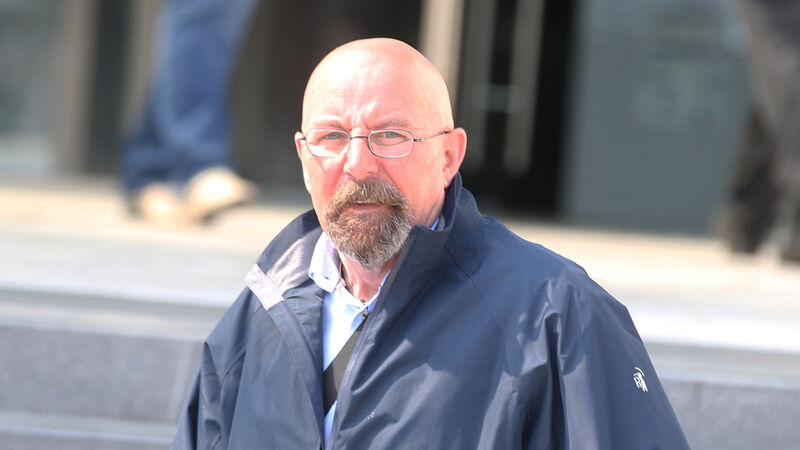
Noel Long, a former British Army soldier with an address at Maulbawn, Passage West, Co Cork, pleaded not guilty to murdering Mrs Sheehan between June 6 and June 12, 1981, at an unknown location within the State. File picture: Collins Courts
The Court of Appeal has been told it is “a mystery” how more than 300 physical exhibits were lost in the investigation into the 1981 murder of Cork woman Nora Sheehan, of which a cold case review ended in the oldest successful murder prosecution in Irish history.
Lawyers for killer Noel Long told the three-judge court that the most significant loss was the remnant of a vaginal swab taken from Mrs Sheehan's body in the wake of the murder.
Long's barristers contended that whether the exhibits were lost as a result of “downright carelessness” or a belief that the case wasn’t going to be pursued, this had resulted in prejudice to the now 77-year-old appellant.
In August 2023, a jury unanimously convicted Long of the murder of 54-year-old Mrs Sheehan, whose naked and bruised body was discovered in Shippool Woods, Co Cork, six days after she went missing in June 1981.
The trial, which began in July 2023, heard that a partial DNA profile generated from semen found in Mrs Sheehan’s body and preserved for decades matched DNA recovered from clothing taken from Long in 2021.
The jury accepted the prosecution’s case that all of the evidence pointed to the “inescapable conclusion” that Mrs Sheehan, a mother of three, died at Long’s hands.
The State also relied on evidence that Long had been in the same area as Mrs Sheehan when she disappeared, that fibres recovered from the victim matched fibres from the carpeting of Long’s car, and that paint fragments found on her clothing matched paint taken from the same vehicle.
Long, a former British Army soldier with an address at Maulbawn, Passage West, Co Cork, pleaded not guilty to murdering Mrs Sheehan between June 6 and June 12, 1981, at an unknown location within the State.
He has 31 previous convictions spanning 50 years, including convictions for sexual offences, common assault, burglary, and numerous road traffic offences in both Ireland and the UK.
Long has launched a bid to overturn his conviction for murdering the vulnerable Cork woman, arguing there was a prejudicial delay in bringing the case and that DNA evidence should not have gone before the jury.
At the Court of Appeal, Long’s senior counsel, Michael Delaney, appearing with Lorcan Staines SC, argued that the 42-year-lapse between the killing and the trial breached his client’s right to a fair and expeditious trial.
He referenced case law which states that unexplained prosecutorial delay may breach a defendant’s right to a fair trial.
Mr Delaney also told the court that all of the physical exhibits in the case, amounting to more than 300 items, had been lost over the years, describing how this occurred as “a mystery”.
He said whether this was due to “downright carelessness” or a belief that the case would not proceed, it resulted in prejudice to Long.
The most significant missing item, counsel said, was the remainder of the vaginal swab taken from the deceased during a post-mortem examination.
Counsel also submitted that a number of potential witnesses, including several gardaí, were deceased at the time of the trial, and that Garda files relating to an earlier robbery investigation were unavailable.
Long had initially been charged with murder in 1981, Mr Delaney said, before the charge was dropped. He was then prosecuted again more than four decades later. His counsel said:
Counsel also said there was “scope for debate” as to whether it had been appropriate to drop the charge at the time.
When the decision was later made to revive the investigation, Mr Delaney said there was “an onus on gardaí to pursue it with a sense of urgency”. However, the facts of the case did not demonstrate there was any such urgency until 2021, he said.
He pointed to a review of the killing that commenced and was due to conclude by 2008 but was returned to West Cork in 2016 without being completed, describing this as an “extraordinary feature” of the case.
While a DNA breakthrough occurred in 2008, Mr Delaney said “nothing of substance” was achieved thereafter.
He said the trial judge found the delay was not enough to presume prejudice.
“If the delay in this case isn’t sufficient to presume prejudice then I say what is?” said Mr Delaney.
Responding on behalf of the State, senior counsel Brendan Grehan, with Seoirse Ó Dúnlaing, said there was “no statute of limitations for murder” and that society had a strong interest in the prosecution of such crimes, regardless of the passage of time.
Mr Grehan said it is not enough that “some kind of presumed delay means this case shouldn’t have been prosecuted” and rejected the suggestion that Long's right to a trial with reasonable expedition was breached.
Counsel said Long had come under suspicion within days of Mrs Sheehan’s disappearance and was fully aware he was a suspect.
“There was actually quite compelling evidence,” counsel said, adding that Long was made aware of it in July 1981.
While acknowledging the difficulty of prosecuting a case after 42 years, Mr Grehan said it would not have been possible without scientific evidence.
The appeal hearing continues on Thursday.
CONNECT WITH US TODAY



Be the first to know the latest news and updates