Police officer defends notes of first meeting with Noah Donohoe’s mother
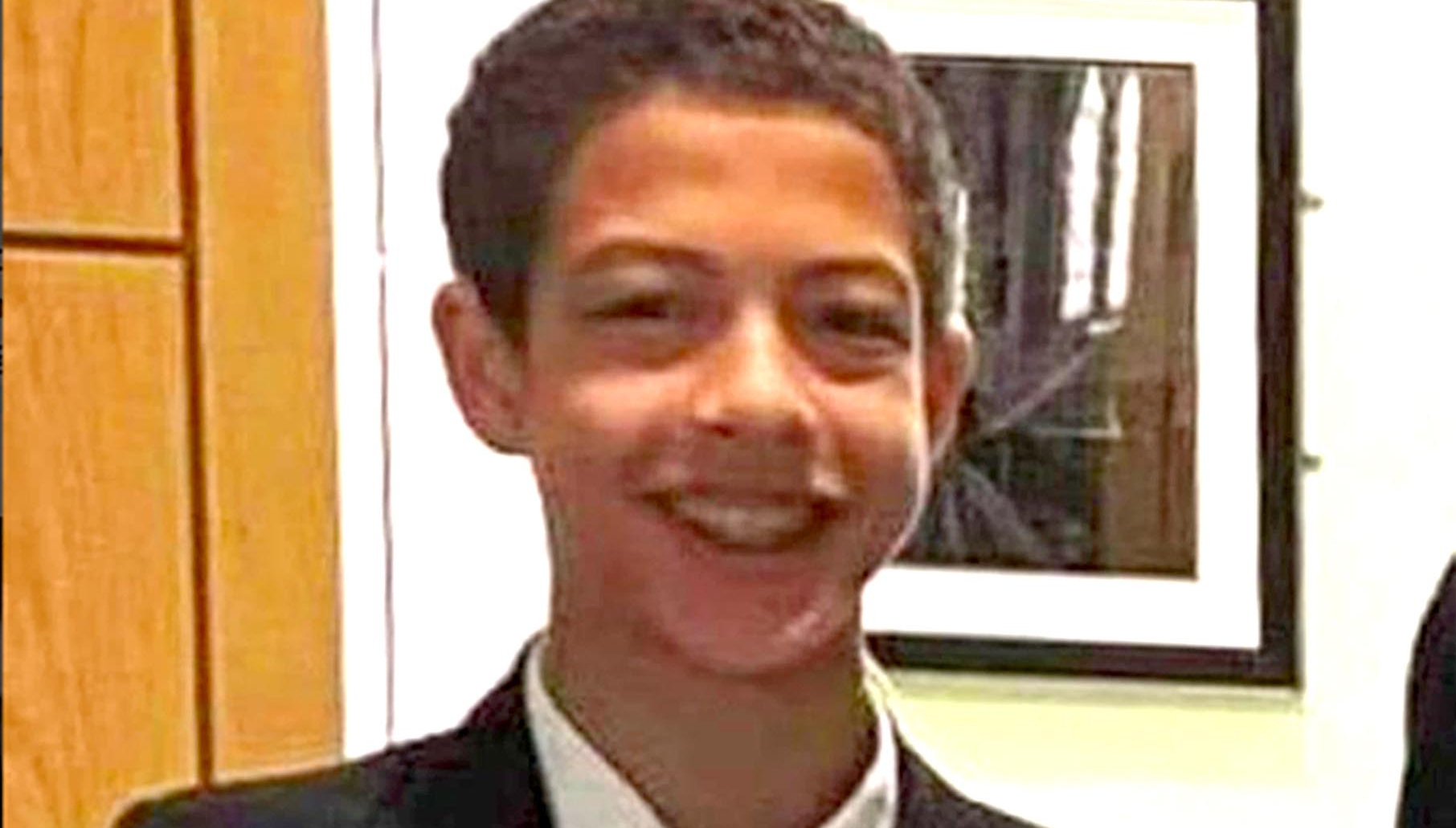
An inquest is examining the circumstances around the death of 14-year-old Noah Donohoe Picture: Family handout/PA
The first police officer to visit Noah Donohoe’s house following his disappearance in 2020 has said he is “content” with the notes he took during his initial meeting with the schoolboy’s mother.
The officer faced questioning at an inquest into why he had made only six lines of notes in his pocket notebook about the meeting with Fiona Donohoe, hours after Noah had gone missing.
Noah was 14 when he was found dead in a storm drain in north Belfast in June 2020, six days after leaving home on his bike to meet two friends in the Cavehill area of the city.
A post-mortem examination found his cause of death was drowning.
The inquest, which is being heard with a jury, is in its third week.
Noah’s mother has attended every day of the proceedings.
The first police witness gave evidence to Belfast Coroner’s Court on Tuesday.
The officer, who was a constable at the time, said he was made aware of a missing person investigation on the evening of June 21 2020.
He told Belfast Coroner’s Court that he spoke to Fiona Donohoe on the phone and later attended her home address in south Belfast.
Reading from his statement about Noah’s disappearance, the officer said: “It was also noted that this type of behaviour was completely out of character for the missing person and he would usually be home long before 10pm.
“He had no access to cash or access to a vehicle, apart from his bicycle.”
He said Ms Donohoe told him that her son had been very emotional earlier in the day.
The officer said Noah was not someone who had come to the attention of police before.
The officer’s log entry said he had searched Noah’s bedroom.
It said the room was “extremely tidy” and there was “nothing to suggest” the missing person did not intend to come home.
He told the jury he was used to dealing with missing persons investigations.
The officer told the jury that the risk assessment in the missing person investigation was changed to “high” after he spoke to Noah’s friend, Charlie Rocks, who told him the plan to visit Cavehill was cancelled because of the weather.
Barrister Brenda Campbell KC, who represents Ms Donohoe, suggested the first 24 to 48 hours are “critical” in a missing person investigation.
She said: “Time equals survivability, do you agree with that?”
The officer said he agreed.
The barrister showed the jury a PSNI service procedure document for dealing with missing persons.
Ms Campbell said the service procedure document stated that all relevant details should be recorded in an officer’s pocket notebook.
The officer’s notebook from the night was shown to the jury
Ms Campbell said: “We have over a 12-hour shift, six lines, including when you commenced, what your call sign was and when you terminated, so actually four lines in relation to this missing person investigation.
“Is it fair to say that all relevant details were not recorded in your pocket?”
The officer said he was “content with the notebook”.
Ms Campbell said: “I don’t suggest that you’re in a club of one officer who hasn’t completed a detailed notebook entry, but I think you would agree that you didn’t?”
The officer said he had not highlighted every action in his notebook but said all relevant information had been recorded separately in the occurrence enquiry log (OEL).
Ms Campbell said: “We don’t see anywhere in your notebook a record of what she said, words she used, information that she gave you. Do you agree?”
The officer said those details had been recorded by the call handler who had earlier dealt with Ms Donohoe’s 999 call.
Ms Campbell said: “When the service procedure says you should record details in your notebook, and when the aide to the investigation says you should complete investigation details in your notebook, and when you’re familiar day to day with missing persons inquiries, why don’t you do that as a matter of practice?”
The officer said: “I’m quite content with my actions in relation to that night, in relation to taking details off the reporting person, it may not have been ideal for me to be sitting with my head in my notebook, writing down notes continuously.”
Earlier, the inquest heard about the moment Noah’s mobile phone was discovered while he was missing.
Adelaide Armstrong told Belfast Coroner’s Court she was walking in Castleton Park on June 22 2020, the day after Noah disappeared, when she saw a black mobile phone lying in a grassy area.
She said: “I checked and the phone was off, and I took it home to charge and see if I could contact the owner.”
Ms Armstrong said the screen of the phone was broken, and it was possible it had been thrown into the park.
She added that she found it four or five feet from the park railings.
Ms Armstrong said she turned the phone back on after charging it and saw there were missed calls from a number listed as “Mum”.
She told the court: “I think I actually tried ringing that number first, and was just ringing out.
“And then I saw another number, and I tried to ring that, that was the police.”
The inquest continues.