TD's super junior ministers challenge seeks 'unprecedented' intervention of judiciary, court told
The Attorney General said the practice of ministers of state attending Cabinet meetings has been ratified and recognised multiple times by members of the Oireachtas
TD's super junior ministers challenge seeks 'unprecedented' intervention of judiciary, court told

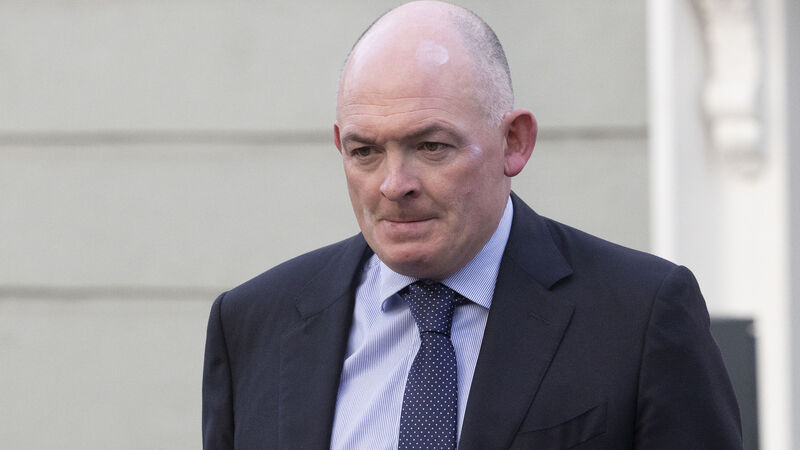
Attorney General Rossa Fanning (pictured) said the court should resist the Sinn Féin TD's attempt to have the judiciary involve itself in a 'political contest being played as an away fixture down at the Four Courts'.Photo SAM BOAL/Collins Photos

A Kerry TD’s High Court action challenging the constitutionality of super junior minister appointments seeks the judiciary’s “unprecedented” intervention in the inner workings of the Government’s executive branch, the Attorney General has said.

Rossa Fanning made the argument in presenting the State’s defence to Pa Daly’s case, which opened before a three-judge divisional court on Monday.


Mr Fanning said the court should resist the Sinn Féin TD's attempt to have the judiciary involve itself in a “political contest being played as an away fixture down at the Four Courts”.

Mr Daly’s case claims the appointment of super junior ministers is “completely anti-democratic”, and is a breach of various provisions of Bunreacht na hÉireann.

Mr Daly, Sinn Féin leader Mary Lou McDonald and Sinn Féin finance spokesman Pearse Doherty were present in court on Monday morning.

“Ministers of State attending Cabinet”, or super junior ministers, are appointed by the Government on the nomination of the Taoiseach. They participate at Government meetings but do not vote.

Opening Mr Daly’s case Feichín McDonagh SC said super junior ministers meet and act as a “collective authority” with other senior government members, in breach of the constitution.

Counsel opened to the court Article 28 of the Constitution, which limits the number of government members to 15, including the Taoiseach, and provides that they meet and act as a collective authority.

Under the current scenario, there are “extra individuals” – super junior ministers – who are present in the Cabinet room taking a full role in the formulation of Government policy, Mr McDonagh said.

Every decision taken by the Government with these extra individuals in attendance has been formulated in breach of Article 28 of the Constitution, Mr McDonagh said.

He said their case is not challenging a particular Government decision based on the legal points raised – but some other litigant could, which is a danger and possible problem, Mr McDonagh said.

Their case is trying to ensure the Government complies with the Constitution, Mr McDonagh said.

Counsel said the Attorney General attends Cabinet meetings to provide legal advice, and the secretary general takes meeting minutes, but they do not act collectively with the members of Government.

Pa Daly. His case claims the appointment of super junior ministers is 'completely anti-democratic'. Photo: Leah Farrell/©RollingNews.ie

Rossa Fanning, for the State respondents, said the court should resist Mr Daly’s case, which attempts to have the judiciary involve itself in a “political contest being played as an away fixture down at the Four Courts”.

He said Mr Daly was asking the court to “enter the political thicket”, and to intervene in an unprecedented way with the inner workings of the executive branch of the Government.

Mr Fanning said the case’s key question was whether the Constitution forbids the regular attendance by ministers of state at Government meetings, whilst simultaneously allowing the attendance of the secretary general, attorney general, and limited attendance of other ministers.

“Plainly, the answer to that question is the Constitution does nothing of the kind,” he said.

Mr Fanning said their case is because there is no Constitutional regulation of who attends Cabinet meetings, who attends is a matter exclusively for the Government itself.

Mr Fanning submitted that even if the court disagrees with this, for Mr Daly’s case to succeed, he must prove the Government’s “clear disregard” of the Constitution.

Mr Fanning said the practice of ministers of state attending Cabinet meetings has been ratified and recognised multiple times by members of the Oireachtas.

This arises from legislation passed, initially in 2001, providing for allowances to be paid to those ministers.

Earlier, Mr McDonagh said this allowance “is neither here nor there” when addressing the legal issues raised by their case.

Mr Fanning submitted that Cabinet meetings are only one element of Government decision-making, and cannot be looked at artificially in isolation of the other parts of that process. He noted the role of Cabinet Committees in the process, and other people and organisations that can influence a decision.

The idea that ministers of state must be hermetically sealed away from the formation of policy is completely unreal, he said.

Mr Fanning said Mr McDonagh was advancing an “unprecedented” argument, by positing that the attendance of additional people at a Cabinet meeting invalidates a consensus decision of the 15 senior government ministers.

Mr Fanning said Mr Daly’s side were seeking to reverse engineer an interpretation of the Constitution to suit their case.

The case continues, and is expected to run until Wednesday at the latest.

More in this section

Lunchtime News

Newsletter

Keep up with stories of the day with our lunchtime news wrap and important breaking news alerts.

Cookie Policy Privacy Policy Brand Safety FAQ Help Contact Us Terms and Conditions

© Examiner Echo Group Limited