Cork crime: With ambition and vision, we can upend this cycle of disadvantage and harm

Everyone faces adversity. But many growing up in disadvantaged areas endure multiple 'adverse childhood experiences'. And without sufficient supports, clusters of such experiences greatly increase the chances of that child growing up into destructive behaviours, from addiction to crime. Picture: iStock
The Cork crime analysis in the Irish Examiner reveals concerning findings on patterns of crime in the city.
It is perhaps to some, not a surprise, but nevertheless extremely saddening when we think of the direct victims, but also the hurt felt by the perpetrators’ own families, including children and communities. The impact is wide, but there is hope too. These findings are not inevitable; there are things that can be done to make sure the issues highlighted are not repeated.

The areas highlighted in this project are not homogenous populations.
The findings do not define a whole neighbourhood or community, home to people with strong social ties; children who care about their environment, about road safety, love their educators and grannies; new parents who want the best for their babies; sports stars and entrepreneurs who inspire the next generation.
Many move out, mobilising on their education, employment, and wider networks forged. New families are moving in too, choosing to live in these neighbourhoods, close to the city and places of work, education and amenities. Others wish to secure homes close to their families, where they grew up.
We cannot be blinkered to the challenges certain groups and communities face either. If this project was repeated in other cities, we would see similar, if not starker trends. This is a national and international story that many are trying to address, in a context where the vulnerabilities of economically poorer areas and groups are exposed.
It is not just patterns of crime, but of intergenerational educational attainment, employment, income, social capital, and more.
Last month, the ERSI, commissioned by Pobal, reported a widening health gap between the most and least disadvantaged communities.
We often blame parents. But parents who experience poverty, marginalisation, and enduring levels of toxic stress can find it hard to be the parent they wish to be. These are very deep wounds and deep barriers to break out of and can be passed on to the next generation.
The original adverse childhood experiences (ACE) study published by Vincent Felitti, Robert Anda, and colleagues in 1998 revealed that having four or more ACEs almost doubled the risk of heart disease and cancer, increased the likelihood of becoming an alcoholic by 700%, and the risk of attempted suicide by 1,200%.
While ACEs are present across society, children growing up in disadvantaged areas, in poverty, and those of a lower socioeconomic status are more likely to be exposed to ACEs and more likely to experience ‘clustering’ of ACEs.
Children carry these experiences into preschool and school, early adulthood, and into the parent they may become.
That people can succeed carrying all this on their back, without the resources many are accustomed to, I think is extraordinary.
Likely, people who have managed to traverse these challenges, growing up in the same areas highlighted in this report, experienced positive childhood experiences along the way. Their needs met by consistent, nurturing, caregiving relationships, high-quality secure homes, caring services, loving and responsive educators, a sense of belonging. Structural barriers buffered by community services, social support, welfare transfers, the presence of sports, culture, and arts.
Without those positive experiences and resources some may experience ill-health, unemployment, poor family relationships, and some may participate in crime.
But even these people were babies once. It didn’t start out like this. Many of the convictions indicate the involvement also of drugs and addiction. People can be drawn into crime, driven by addiction or by a social network that provides a sense of connection and identity.

We know from studies internationally that speech, language and communication needs are more prevalent in the prison population and people in contact with youth justice services than the general population.
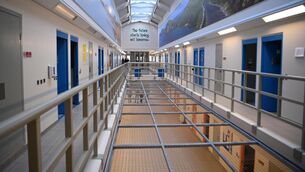
Prisoners are more likely to come from economically poorer backgrounds and can have severe unmet educational, learning, and development needs. Former prisoners sometimes describe prison as a relief, giving structure, education, routine, fitness, and an opportunity to begin addressing their addiction, reevaluating their lives, healing trauma, and healing relationships.
In 2023, then minister for justice Helen McEntee informed the Dáil that the average annual cost of a prison space during 2022 was €84,067. Probation and supervision in the community is less than 10% of that, according to the Irish Penal Reform Trust.
In 2024, the CSO reported that re-offending declines with age, but over 84% of young adults under 21 re-offended within three years. Furthermore, how many return to homelessness and addiction?
It is a huge economic expense to respond to crime and deal with its wider human toll.
What if it could have been prevented, or intervention occurred much earlier? A big part of that is by reducing inequalities felt by poorer communities, especially reducing child poverty, which simply steals away childhoods for a lifetime and more. We also need to ensure we have well-resourced community service provision, early relationship support, trauma-informed care and education, available therapies, and access to services.
This is the idea of the “village” that raises a child. It is society that makes up the village, intercepts the risks and harms and sets a stronger, more positive foundation for children and their families.
Let’s Grow Together works with a village of parents, caregivers, children themselves, schools, youth services, early years services, health and social services, and policy-makers to create opportunities for children and their families to reach their potential. The Department of Children’s own research in 2024 showed that early childhood home-visiting programmes — one of the services provided by Let’s Grow Together — have a 1:4 return on investment for the exchequer.
But how do you invest in something that causes something else to not happen?
Especially in a policy world that is so determined by the political cycle and siloed government departments and agencies. It is also incredibly hard to justify when you see the crisis in front of you, you must react, but then get caught in a firefight. I get it, how could you not put the fire out?
This is played out in all kinds of ways on a daily basis across all kinds of services and systems for children and their families.
Barriers and gaps from sectors, services, and policies which weaken the village as a whole and can lead a child or young person to engage in activities harmful to themselves and others.
In every interaction, we need far more kindness, empathy, flexibility, more access, more understanding.
We need bravery and ambition to turn the findings of this project on its head, go upstream and build the village even stronger and break the intergenerational cycle of harm and get back to celebrating these communities for what they really are.
- Katherine Harford is executive director of Let’s Grow Together and is the chair of the national Prevention and Early Intervention Network.