Gerry Adams wins €100k damages saying case was 'about putting manners on the BBC'
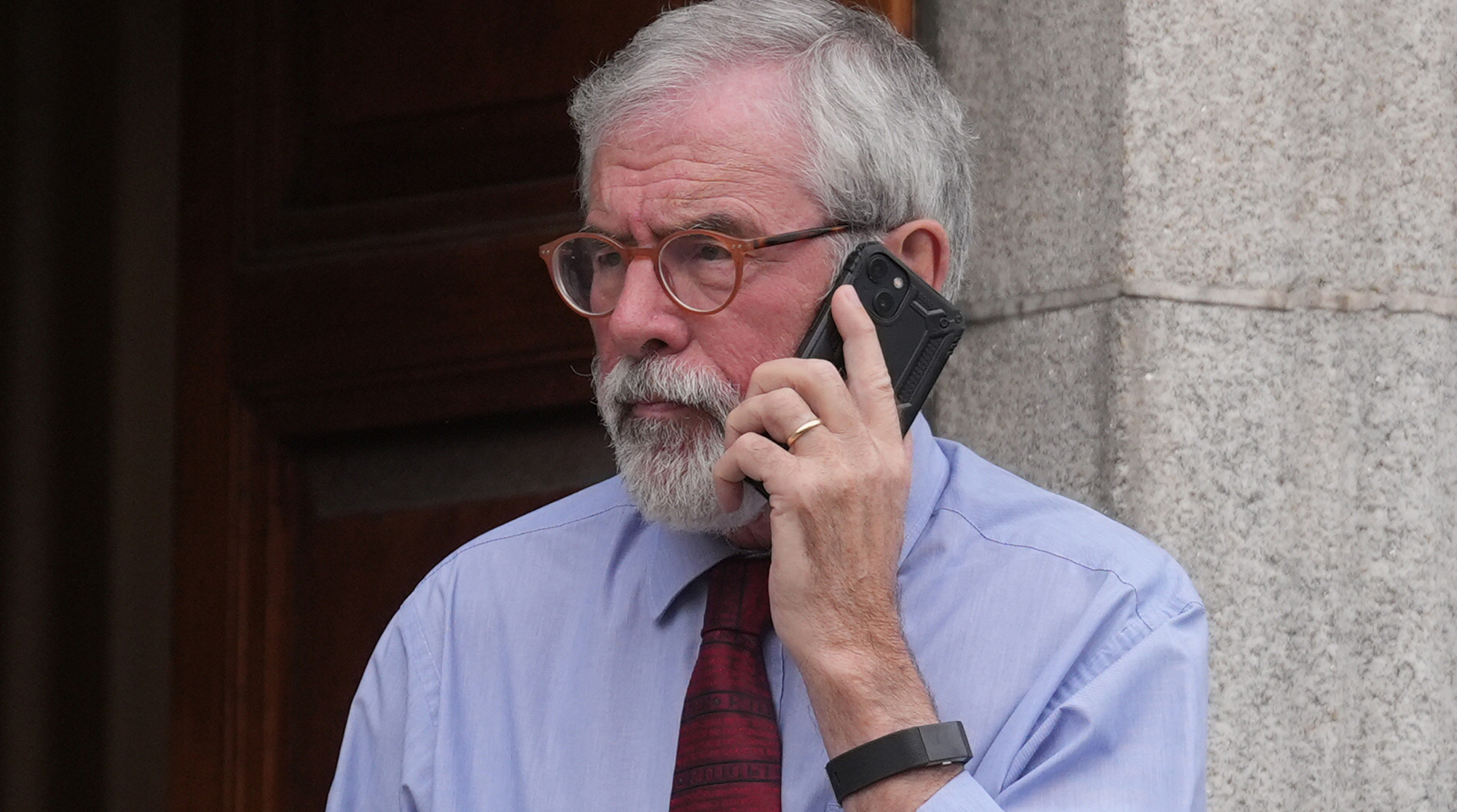
Gerry Adams (pictured) immediately went on his phone once the verdict was in and also accepted congratulations from well wishers. File picture
The BBC defamed Gerry Adams by publishing a claim that he sanctioned the murder of a British agent, a High Court jury has found, awarding the former Sinn Féin leader €100,000.
Mr Adams claimed a BBC programme and a related article published in 2016 defamed him by falsely accusing him of sanctioning the killing of British agent Denis Donaldson at a cottage in Glenties, Co Donegal, in 2006. He described the allegation as a “grievous smear”.
He insists he had no involvement in Mr Donaldson’s death. Dissident republicans claimed responsibility for the killing in 2009.
The BBC had denied it defamed Mr Adams.
The jury agreed, as Mr Adams pleaded, that words published in the programme and article were understood to mean he sanctioned and approved the murder. The broadcaster argued the claim against Mr Adams was couched as an allegation.
The jury rejected the BBC’s defence in the case – the broadcaster had argued the publication of the allegation was fair and reasonable, and in the public interest.
The jury decided Mr Adams should be awarded €100,000 to vindicate and restore his reputation following the defamation.
The verdict came on the 21st day of the case. The jury spent about seven hours deliberating.
Gerry Adams wearing a navy suit sat at the back of the court as the verdict came in. He immediately went on his phone once the verdict was in and also accepted congratulations from well wishers.
Outside the Four Courts Mr Adams in Irish thanked the judge, the court and his family and said he was very satisfied with the verdict.
He said he was mindful of the Donaldson family in the course of the long trial and “indeed all of the victims families who have had to watch all of this” and he said the Justice Minister Jim O’Callaghan should meet the family of Denis Donaldson as quickly as possible.
He said there is an onus on both governments and everyone else “to try and deal with these legacy issues as best as we can”. Mr Adams said from his perspective taking the action was “about putting manners on the BBC”.
“The BBC upholds the ethos of the British state in Ireland and in my view it is out of sync on many fronts with the Good Friday Agreement.
He said he was mindful the licence fee payers are going to pay for the case. “The BBC and Spotlight are not using their own money. It is the licence payers. This could have been sorted out a long time ago,” he added.
Asked about his reputation, Mr Adams said: "I have always been satisfied with my reputation. The jury made the decision. Let's accept the outcome and what the jury said."
Mr Adams' solicitor, Paul Tweed, in a statement said the case should have been resolved some considerable time ago "thereby avoiding these very significant financial consequences".
He said it "begs the question as to whether there has been any political or other outside pressure on the BBC to take the stand they had taken”. "Our client is relieved and satisfied that these legal proceedings have concluded overwhelmingly in his favour after arduous years of litigation," Mr Tweed said.
He said the fact the false allegation had been left online for almost nine years has "done much to undermine the high standards of accuracy that is expected of the BBC".