Pensioner found near Donegal cliffs had injuries in keeping with blunt weapon, says pathologist

Mr Wilkin's body was found eight days after it is alleged the defendents put it over the Sliabh Liag cliffs.
A pensioner whose body was found near the bottom of Ireland's tallest cliffs suffered two depressed fractures to the back of the head that were not in keeping with the pattern of injuries from the fall into the sea, a pathologist has said.
State pathologist Dr Margot Bolster also found bruises to the dead man's hands that, she said, were in keeping with offensive or defensive injuries.
The Central Criminal Court trial heard further evidence on Monday from a garda who pepper-sprayed the accused man, 39-year-old Alan Vial, later on the day of the alleged murder, when Mr Vial became verbally aggressive and confronted a garda at the scene of a car crash.
Nikita Burns, aged 23, of Carrick, Co Donegal, and Mr Vial, of Drumanoo Head, Killybegs, Co Donegal, have pleaded not guilty to the murder of Robert 'Robin' Wilkin, 66, on June 25, 2023, in Donegal.
Mr Wilkin's body was found eight days after it is alleged Mr Vial and Ms Burns put it over the Sliabh Liag cliffs.
Dr Bolster told Emmet Nolan, prosecuting, that Mr Wilkin was identified using DNA.
It was, she said, a "most difficult case to interpret" due to the level of decomposition and predator damage after eight days in the water. Virtually all the organs had been lost, making it impossible for the pathologist to determine the cause of death.
The fall from a cliff of at least 200m meant there was a potential for many of the injuries she observed to have been caused after death. Multiple fractures to all the bones of the face did not have associated bruising, which is in keeping with injuries inflicted after death, she said.
However, two depressed fractures to the back right side of the skull were not in keeping with the pattern of injuries caused by the fall. They were, she said, "more likely to be inflicted with a blunt weapon".
One of the depressed fractures was associated with an area of bruising of soft tissue. The bruising, Dr Bolster said, shows that the injury was inflicted before death while blood was still flowing in the body.
A rock found near where Mr Wilkin is said to have been thrown over the cliff was "entirely consistent" with having caused the depressed fractures to the skull. Dr Bolster said she was unable to say how severe the brain damage would have been from those injuries, but they would have caused "at least concussion if not coma".
Under cross-examination, Dr Bolster agreed with Shane Costelloe, defending Mr Vial, that a bruise on the deceased's foot could have been caused by him kicking violently. The bruising to the deceased's hands could also have resulted from him striking something with his hand.
If the rock was used to inflict the injuries to the back of the skull, Dr Bolster agreed that moderate force would have been required. She further agreed that it would have been possible for a healthy female in her 20s to wield the rock and cause those injuries.
The prosecution alleges that Mr Wilkin was inside a Volkswagen Passat for at least part of the assault on him.
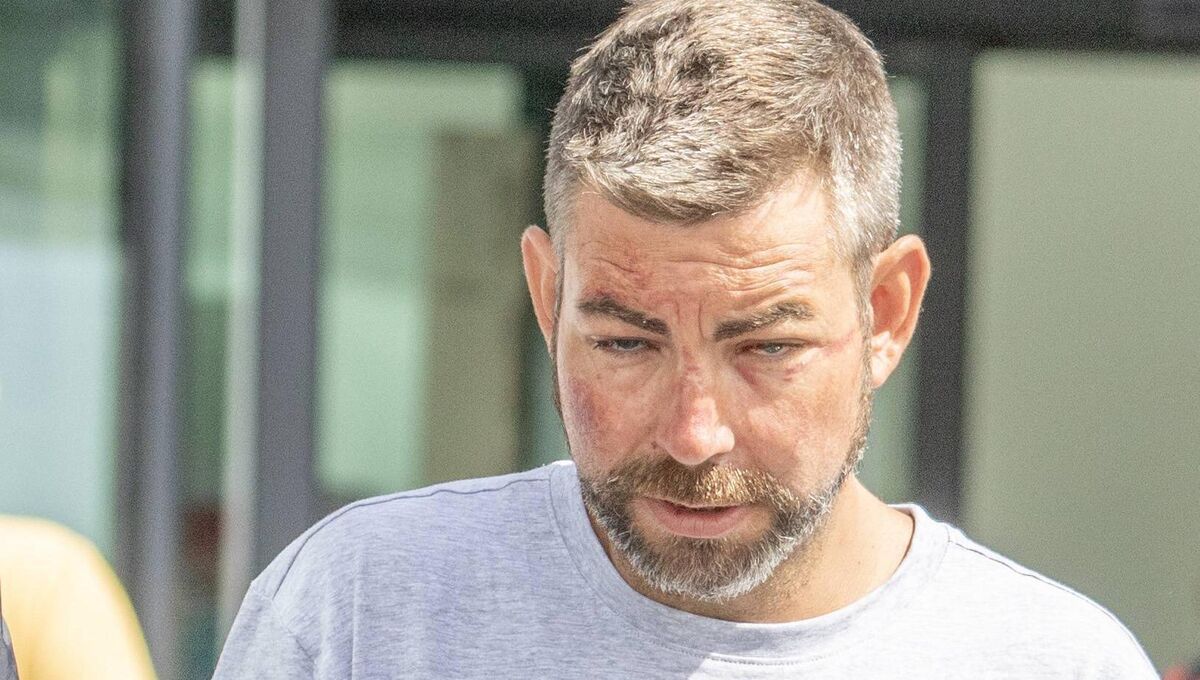
It is also the State's case that, after throwing the body off the cliffs in the early hours of the morning, Ms Burns and Mr Vial drove to various locations before Mr Vial crashed the vehicle that evening.
Gda Aaron Meenaghan told Bernard Condon, prosecuting, that he arrived at the scene of the crash in an area known as Meenmore, near Fintown, at about 7.50pm.
The Passat was in a ditch and Ms Burns was vomiting by the side of the road. Both she and Mr Vial appeared to be intoxicated, he said.
Ms Burns had a can of cider and ignored the garda's requests that she stop drinking. She said she was not injured, but the garda became concerned when she said she was three months pregnant — so he called an ambulance.
Mr Vial was "very adamant" that he wanted to get the car back on the road so he could leave "as soon as possible". The garda said Mr Vial was annoyed when he heard that an ambulance had been called and became "verbally aggressive" towards the garda.
Gda Meenaghan said Mr Vial was unpredictable, seemed enraged at times, and appeared to be "trying to bait me into an argument".
When backup arrived, Gda Meenaghan arrested Mr Vial for driving while drunk and placed him in the back of a garda car.
However, Mr Vial managed to get out of the car and confronted another garda at the scene. Gda Meenaghan said that, as a consequence of Mr Vial's behaviour, it became necessary to use pepper spray to subdue him and affect the arrest.
Paramedic Christopher McFadden told Mr Condon that when Ms Burns discovered that she would not be going to hospital with Mr Vial, she became agitated, refused treatment, and walked out of the ambulance.
He said it took 20 to 30 minutes to get her to calm down, at which point she was taken to Letterkenny University Hospital.
Shane McCrudden, a volunteer with the Irish Coast Guard, said he took part in the search along the coast after it was reported that a man had gone over Sliabh Liag. He said a body was spotted in the water in the early hours of July 2. However, due to heavy seas, it was some time before they could recover it.
The Irish Coast Guard from Killybegs recovered the body during a "weather window" and took it to Teelin Pier, where a doctor formally pronounced death.
The trial continues before Mr Justice Paul McDermott and a jury of five men and seven women.
CONNECT WITH US TODAY



Be the first to know the latest news and updates