Prisoners injured when truck collided with prison transport van awarded damages of €7,500 each
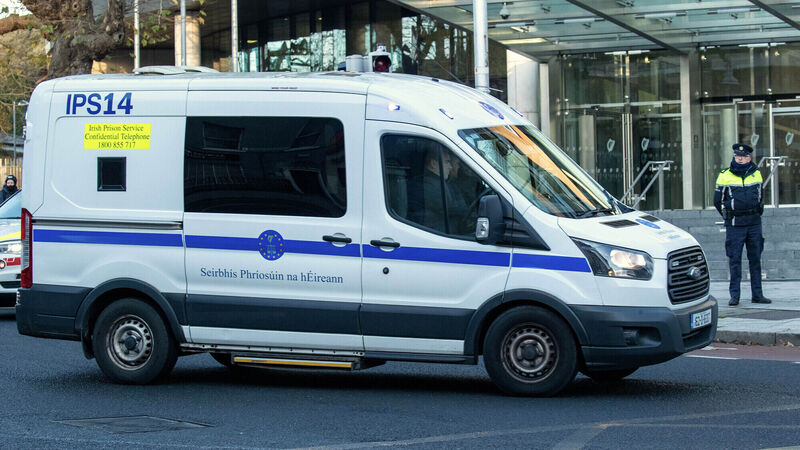
Each of the prisoners told the court they had been handcuffed and locked in the very small cells when the prison transport had been shunted sideways when struck by the food delivery lorry near the prison. File picture: Collins Courts
Three prisoners, injured while trapped, handcuffed and without safety belts in filthy cubicle cells in a prison transport wagon, have been awarded damages in the Circuit Civil Court.
They were being transported from Mountjoy Prison to the Central Criminal Courts of Justice at the entrance to Phoenix Park, Dublin, when the mobile prison van was struck by a food delivery truck owned by Lynas Food Services, Lusk, Co Dublin.
Barrister David Burke, who appeared with John M Quinn Solicitors for one of the prisoners, Anthony Ward, 33, told Judge Jennifer O’Brien each of them had suffered soft tissue injuries and had been treated by prison and medical staff before being taken to the Mater Hospital.
Ward and other two prisoners, Mark Egan, 44, and Dean Heapes, 39, were confined while handcuffed in a 3ft x 2ft locked cell in the prison wagon with prison staff.
Ben Clarke, counsel for Lynas foods, told the court the food delivery company had accepted liability for the accident on September 20, 2018, and was indemnifying the Prison Service and the minister for justice in relation to the three €60,000 claims.
Mr Clarke said the court was being asked to assess damages in what he described as a minimal impact accident in which, he submitted, none of the prisoners could have suffered the injuries they were alleging.
Each of the prisoners told the court they had been handcuffed and locked in the very small cells when the prison transport van had been shunted sideways when struck by the food delivery lorry near the prison.
Forensic engineer David Semple told Judge O’Brien that Heapes, similar to his fellow prisoners, were presented with a trapped situation. He said the collision, while not high impact, was capable of causing injury to the occupants of the small cells, particularly when handcuffed and unrestrained.
Sean Walsh, forensic engineer called on behalf of Lynas Food Services, said six prisoners were being transferred to the courts at the time and handcuffing was normal practice. He said although the motion of the prison transport on impact would have been perceptible to the occupants of the cells, it would not have been a violent movement of the type associated with injury.
Judge O’Brien said a medical consultant who had examined one of the prisoners on behalf of the defendants, had, in a medical report, stated the prisoner could not have been injured in the manner described and had made some comment regarding the mechanism of the cells.
She said this was going beyond the duties of a medical adviser and she was going to disregard that aspect. It had been a reasonably significant impact and while she agreed injuries were minor and recoveries had been speedy, she awarded each prisoner €7,500 damages.
Judge O’Brien awarded the plaintiffs district court costs together with certificates for counsel and the forensic engineers in each case.
CONNECT WITH US TODAY



Be the first to know the latest news and updates