Tipperary judge gets four years for sexually abusing six young men when he was a teacher
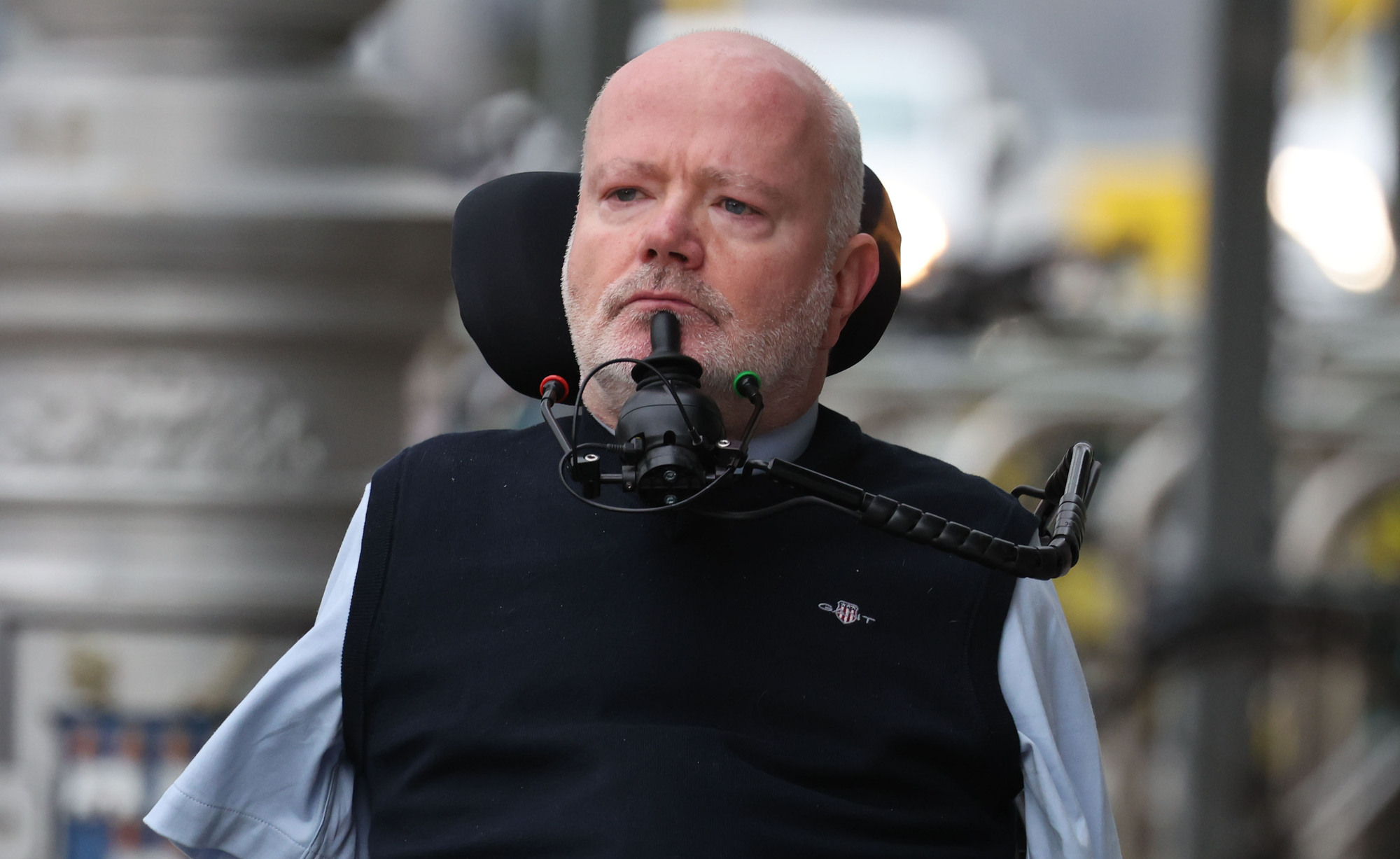
Gerard O’Brien (pictured) was handed an effective global sentence of five years and nine months with 21 months suspended under strict conditions. File picture: Paddy Cummins
A former Circuit Court judge who sexually abused six young men when he was a teacher 30 years ago was “unsuitable to hold judicial office”, the sentencing judge has said.

Mr Justice Alexander Owens made the comments on Friday as he jailed Gerard O'Brien (59) to five years and nine months' imprisonment with the final 21 months suspended under strict conditions. O'Brien will also be subject to a two-year post release supervision order.
O’Brien, of Old School House, Slievenamon Road, Thurles, Co. Tipperary, was convicted last December at the Central Criminal Court of one count of attempted anal rape and eight counts of sexual assault in relation to six victims.
The offences occurred at locations in Dublin between March 1991 and November 1997. During this period, O'Brien was a teacher at CBC Monkstown and aged between 27 and 33. The victims — four of whom were students or former students — were then aged between 17 and 24.
The six victims have previously indicated they wished for O'Brien to be named but to maintain their anonymity.
O'Brien denied all of the charges. He resigned as a Circuit Court judge in January, having been appointed in 2015. He had been on leave since the allegations came to light.
Imposing sentence, Mr Justice Owens said the breach of trust involved in the offending and its significant impact on the victims were among the aggravating features of the case.
He said O'Brien's legal career after he left teaching in 1997 and his subsequent appointment to the judiciary made it “perhaps inevitable” that his victims would come forward.
Mr Justice Owens remarked that O'Brien's conviction “shows, in my view, he was unsuitable to hold judicial office”. The judge said he had taken into account the mitigating factors including O'Brien's age and disability when devising the sentence.
He noted the contents of a report from the Irish Prison Service and that prison will not be a “pleasant place” for O'Brien due to his age, disability and “former position in society”.
All six victims, along with a large number of supporters and family members, were in court for Friday's hearing.
At a previous hearing, Garda Inspector Jonathan Hayes told Anne Marie Lawlor SC, prosecuting, that five of the six victims woke up to find O’Brien performing sexual acts on them that they had not consented to. Of these victims, four woke to O'Brien performing oral sex on them, with the fifth saying he woke to O'Brien licking his face and pressing his penis against his buttocks.
One of these five victims also said O'Brien attempted to rape him anally. The final injured party's allegation related to an act of masturbation in the toilets of a pub.
O’Brien was born with a rare congenital condition, Phocomelia, a side effect of the drug Thalidomide. During the trial, O'Brien said in evidence that his mother was “convinced” she took the drug.
This condition resulted in O’Brien being born with no upper limbs and missing one lower limb. The court heard he requires assistance with everyday tasks, including toileting. He has no previous convictions.
Insp. Hayes outlined that the six victims had all provided assistance to O'Brien with everyday tasks, including toileting on occasions before the sexual assaults occurred. The court heard that alcohol was a feature of each incident, with drink taken by the six young men and O'Brien.
Michael O'Higgins SC, defending, asked the court to take into account all relevant mitigating and personal circumstances when determining a sentence. He suggested the court consider a non-custodial sentence and asked for as much leniency as possible for his client.
Mr Justice Owens said the sentencing process was “not as simple as it might appear” and he had to consider the evidence, the relevant sentencing principles, victim impact statements and the contents of reports submitted on O'Brien's behalf.
He said that O'Brien's disability meant he faced a “very serious physical limitation” on his life and had to depend on others for assistance. But Mr Justice Owens also said that O'Brien had misused his disability to “take advantage” of his victims.
He said O'Brien engaged in “predatory behaviour” and the jury could have had no doubt that he had manipulated things to provide himself with the opportunity to engage in these activities.
The judge noted O'Brien accepts the jury had evidence from which they could decide he was guilty of these offences. But, he said, O'Brien had expressed no remorse and maintains his position from the trial, that he engaged in consensual sexual acts with three of the victims and the remaining incidents didn't happen.
Mr Justice Owens said O'Brien “appears to blame others for his predicament” and feels “he is the one manipulated, not the manipulator”. Mr Justice Owens said O'Brien's victims did not agree with this and he didn't accept it either.
“This attitude is unrealistic, self indulgent and in my view, lacks insight,” the judge said. He said O'Brien is not fully rehabilitated as he hasn't fully addressed his offending behaviour.
Mr Justice Owens noted that four of the six victims in this case were students or former students at the school where O'Brien worked. He said O'Brien was “fully trusted and admired” by these boys and they had wanted to help him.
The judge said O'Brien was aware his behaviour was inappropriate and there was no reason why any student should have been put in a position to share a bed with him.
The trial heard that three of these four victims woke up to O'Brien performing sexual acts on them. The fourth student was subjected to an act of forced masturbation in the toilets of a pub.
Mr Justice Owens noted the age disparity between O'Brien and his victims, particularly the four who were secondary school students when the offences occurred.
The judge noted O'Brien gave evidence that he never intended to cause harm, but said this was an inevitable consequence of his actions. It was more likely that O'Brien didn't reflect at the time on the harmful consequences of his actions, the judge continued.
Mr Justice Owens said alcohol was a “disinhibiting factor” in the offending and while some of the offending was opportunistic, the rest displayed elements of planning.
Mr Justice Owens said he agreed while there is a greater societal understanding of the impact of sexual offending now than during the 1990s, this did not greatly reduce O'Brien's culpability, adding that sexual offenders don't tend to “reflect too deeply” on the effects of their actions.
The judge said in his view O'Brien's culpability was not reduced by the lack of supports available to O'Brien at the school or the difficulties he faced at the time as a gay disabled man.
Mr Justice Owens said the fact that O'Brien was himself the victim of sexual abuse as a child provided a degree of mitigation, but didn't excuse his behaviour or remove his duty of care towards his students.
He said he would give O'Brien credit for his lack of previous convictions and his contribution to society since 1997, when the final offence occurred.
He expressed the view that O'Brien's disability “precludes the risk” of further offending. He also noted that the events which led to the end of O'Brien's teaching career may have “frightened him” while his subsequent treatment and later legal training would have made him aware of the likely consequences of these activities.
At an earlier sentencing hearing, three victim impact statements were provided to the court. These men outlined mental health difficulties, trust issues and other effects of the sexual assaults.
One victim, who was sexually assaulted by O'Brien in the toilets of a pub, said he believed for many years he was “stupid or naive” to allow the abuse happen, but now believes he was being “manipulated and groomed”.
This victim described O'Brien as a “fraud” and a “horrible individual” who was not willing to admit wrong-doing.
“You conned and manipulated not just me and the other victims but the school community you worked in.
“I don't want your pity or apology as it is too late, but maybe someday you should strip away your arrogance and ego and reflect...how wrong it was what you did to me at that time.”Â
Another complainant who made an impact statement was the victim of a sexual assault and attempted rape by O'Brien. He said that he would continue to attend therapy after the conclusion of the criminal process.
The third complainant to make a victim impact statement woke up to O'Brien performing oral sex on him and felt obligated to return the act. He said he was “happy, outgoing and a trusting person” before he met O'Brien.
“It is impossible to say how my life would have turned out had I not experienced his abuse of trust, his grooming and manipulative actions. There is no doubt that things would have been better for me and that I would be a very different person had I never met O'Brien.”Â
O'Brien is a former teacher and solicitor who served as State Solicitor for North Tipperary. He was appointed to the Circuit Court in 2015 but was put on leave after the allegations came to light, the court heard.
Mr O'Higgins said O'Brien “scaled lofty heights but has come crashing down” and “lost everything”. He said his client was not in receipt of compensation as a Thalidomide survivor as there was some “causal doubt” if his mother had taken the drug.
He submitted that while there are six complainants, these were one-off incidents, and the attempted rape was at the lower end of the scale. A probation report, psychological report and occupational health report were handed to the court.
Mr O'Higgins said the psychological report states O'Brien is psychologically vulnerable, has limited coping skills, has suffered episodes of major depressive disorder and is assessed as at low to medium risk of re-offending.
Mr O'Higgins asked the court to take into consideration his client's lack of offending since 1997 and suggested he is “effectively rehabilitated”. He also said his client was the victim of sexual abuse as a child.
He said his client accepts that the jury was entitled to hear the evidence and reach a verdict, but “his position on the offences is as was outlined in [his evidence]” during the trial.
- If you are affected by any of the issues raised in this article, please click here for a list of support services.